- Children exposed to war news may feel fear, anxiety, or confusion depending on their age and environment
- Parents should start by understanding what their children already know about global conflicts
- Simple, honest explanations without graphic details help children grasp the situation appropriately
The ongoing tensions involving Iran, Israel and the United States have dominated global news cycles in recent weeks. Although the conflict is geographically distant from India, today's always-connected digital world means that children are frequently exposed to war-related news through television, social media, school discussions and conversations among adults. Psychologists warn that repeated exposure to distressing news images and discussions about conflict can influence children's emotional health. Younger children may feel confused or frightened, while adolescents may experience anxiety, anger or a sense of helplessness. According to the World Health Organization, exposure to traumatic or violent content, especially without proper explanation, can increase stress responses in children and adolescents.
For parents, the challenge lies in addressing these global events honestly while protecting their children's sense of safety. Experts say avoiding the topic entirely may not work, because children often sense when something serious is happening around them.
Indian paediatric and mental health specialists say that thoughtful conversations, reassurance and responsible media exposure can help children understand global conflicts without becoming overwhelmed. Here's how parents can navigate these difficult discussions.
Children Process Conflict Differently
Children's reactions to war-related news can vary widely depending on their age, personality and what they hear from adults around them. Dr. Sujatha Thyagarajan, Lead and Head of Pediatric Intensive Care and Pediatric Emergency at Aster Women & Children Hospital, Whitefield, Bengaluru, explains that children's emotional responses can take many forms. "Children may have variable emotions and responses about the war or traumatic events, in general. Emotions may vary based on age, the narratives of adult conversations, the graphic contents visualised in media and could be in the form of anxiety, curiosity, fear and sleep disturbances," she says.
She also notes that children may begin consuming more news if adults around them constantly follow updates. "They may get hooked on to the media based on the adults in the household," she adds. According to the UNICEF, children exposed to distressing news may experience emotional reactions such as fear, sadness or confusion. In younger children, stress may manifest through clinginess or sleep problems, while teenagers may show irritability or withdrawal.
Also Read: Conflict Zones And Mental Health: Hidden Wounds Of Iran, Ukraine, Gaza Crises
Start With What Children Already Know
Mental health experts say that the first step is to understand what a child has already heard. Dr. Naveen Kumar Dhagudu, Senior Consultant Psychiatrist at Yashoda Hospitals, Hyderabad, advises parents to initiate calm conversations rather than avoid the topic altogether. "Parents should check in with their children and create space for calm, age-appropriate discussions. Many adults assume that avoiding difficult topics protects children. In reality, children often sense that something serious is happening," he says.
Children may hear about conflicts in different regions, from Ukraine and Gaza to Iran or Sudan, through social media or peers. Asking them what they already know helps parents correct misinformation and understand their emotional reactions. The American Psychological Association recommends open dialogue as a key strategy for helping children process distressing news. Listening first allows parents to respond to fears without overwhelming children with unnecessary information.

Share Facts, But Avoid Graphic Details
When discussing global conflicts, experts recommend providing simple and honest explanations without exposing children to disturbing details. Dr. Dhagudu explains that younger children only need a basic understanding of the situation. "Younger children may only need to understand that sometimes countries disagree and conflicts happen, but many people are working to restore peace," he says.
Older children, especially teenagers, may have deeper questions after encountering news reports online. In such cases, honest answers can help build trust while reducing confusion. Research supported by the U.S. National Institutes of Health shows that clear, developmentally appropriate communication helps children cope better with stressful information.
Limit Exposure To Distressing News
Constant exposure to news updates can intensify anxiety in children. Dr. Thyagarajan recommends limiting access to graphic content. "Limitation to graphic contents, mindful adult conversations and timely reassurance as well as seeking professional help as required will go a long way in navigating conversations with children about traumatic events," she says.
The Centers for Disease Control and Prevention (CDC) also advises parents to monitor media consumption during stressful events, as repeated viewing of distressing content can amplify emotional distress. Parents can encourage children to focus on school activities, hobbies and outdoor play rather than continuous news consumption.
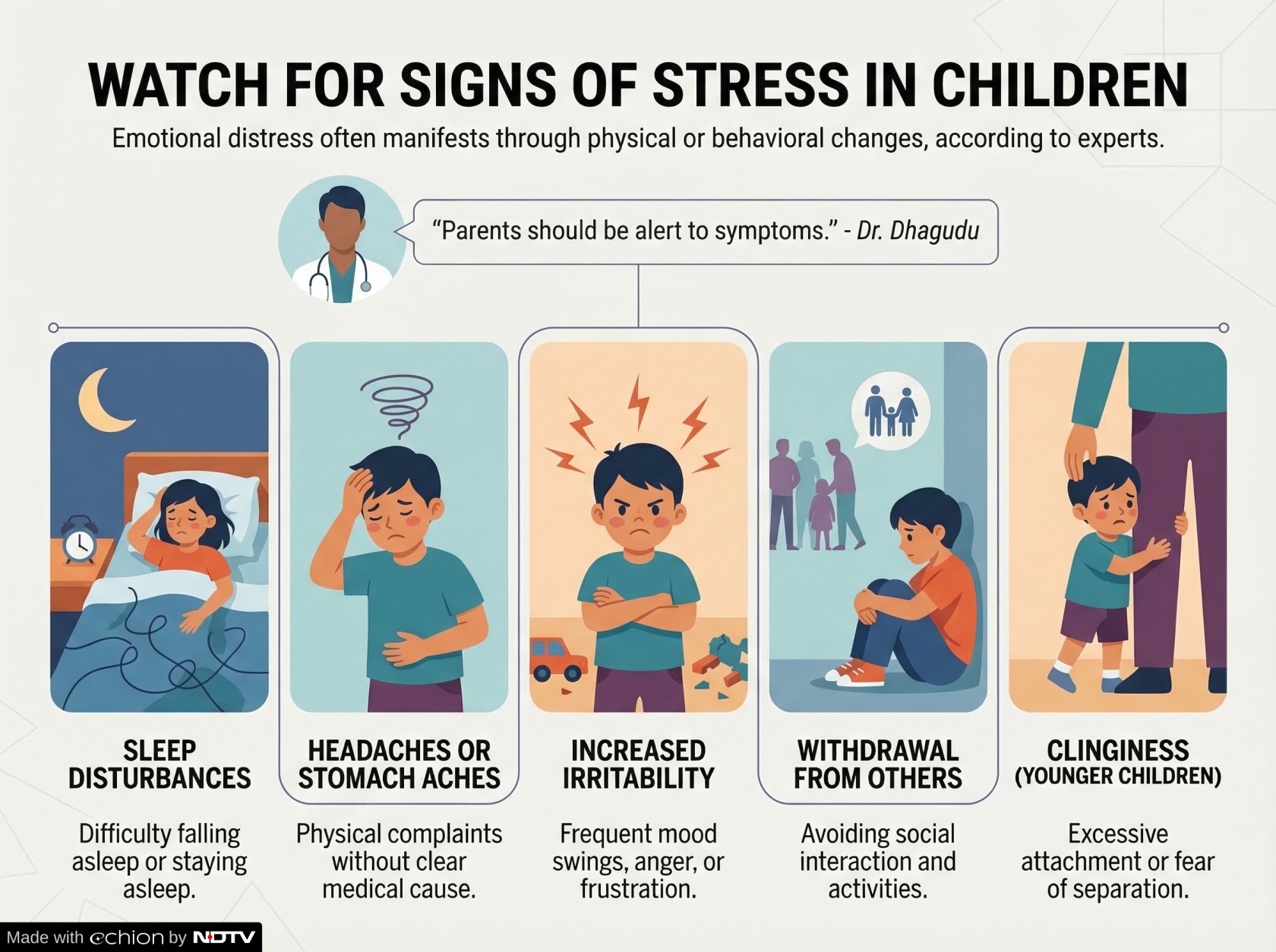
Watch For Signs Of Stress
Children often express emotional distress through physical or behavioural changes.
Dr. Dhagudu says parents should be alert to symptoms such as:
- Sleep disturbances
- Headaches or stomach aches
- Increased irritability
- Withdrawal from family or friends
- Clinginess in younger children
"In such situations, reassurance and supportive routines can help restore a sense of security," he explains. Maintaining predictable daily routines, such as regular meals, study time and bedtime, can help children feel safe during uncertain times.
Use The Conversation To Build Empathy
Experts also emphasise that discussions about global conflicts can become opportunities to teach compassion. Instead of portraying any nation or group as inherently "bad", parents can highlight the humanitarian perspective, focusing on civilians affected by war and the work of relief organisations helping those in crisis. Such conversations can encourage children to think critically about global issues while reinforcing values like empathy and kindness.
In an era where global events unfold instantly across screens, children are inevitably exposed to news about wars and geopolitical tensions, even those far from home. While such exposure can trigger anxiety or confusion, experts say supportive conversations within families can make a powerful difference. By listening patiently, offering age-appropriate explanations, limiting distressing media exposure and maintaining reassuring routines, parents can help children understand world events without feeling overwhelmed.
Ultimately, children take emotional cues from the adults around them. When parents remain calm, honest and empathetic, they help build resilience, allowing children to navigate difficult global realities with confidence and emotional security.
Disclaimer: This content, including advice, provides generic information only. It is in no way a substitute for a qualified medical opinion. Always consult a specialist or your own doctor for more information. NDTV does not claim responsibility for this information.