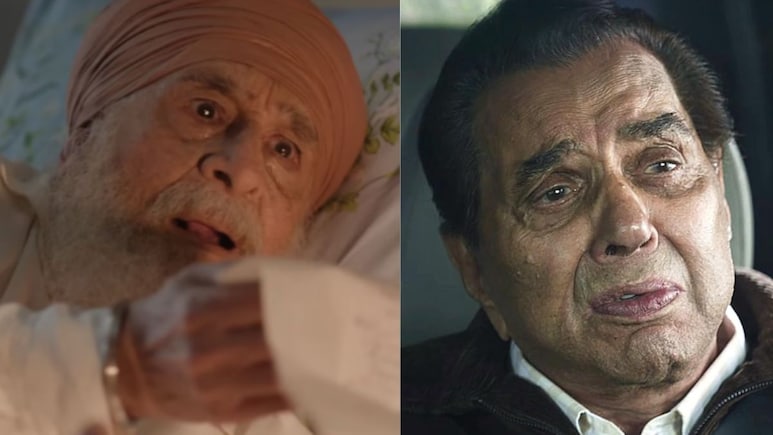
'For 18 years, my grandfather used to visit the station to check if the train carrying the women of his family after the Partition had arrived or not.
It never came.'
The lines in Imtiaz Ali's Main Vaapas Aaunga echo the wounds of the Partition of 1947 that many patriarchs of Sikh families have borne till their last breath.
It's heavy, at times unbearable, laden with guilt, inexplicable trauma and pain, overshadowing the present with a looming past.
Love was lost, family was broken and the men could not protect the women of the family; specifically, the honour of the women, which became synonymous with Partition violence.
Imtiaz Ali's Main Vaapas Aaunga released last Friday, barely six months after Sriram Raghavan's Ikkis. The former is a Partition drama, whereas Partition was a subplot in Raghavan's war drama.
Fronted by two film veterans, Naseeruddin Shah and the late actor Dharmendra, the films tread the path of the Partition — a genre Hindi films have explored from time to time.
What this article attempts to do is document the women's voice in these two films (figuratively and literally) during the Partition as shown.
Because no Partition film or piece of art is complete without chronicling women though they largely remain 'missing' in the public eye.
Women's bodies were violated; they were robbed of their identities and agencies as the body became the cultural contestation of power, violence and supremacy of one religion over the other in time of war.
'Missing' Women in Main Vaapas Aaunga
The Grewals (young Naseeruddin Shah and his family) left the women of their family in the protection of Muzaffar Ahmedzai (played by Manish Chaudhary) when the Partition fire spread far and wide in the city of undivided Sargodha (now in Pakistan).
The women, led by the grandmother (Dolly Ahluwalia), didn't want to be left behind. They wanted to stand side by side with the men of the family no matter what came their way.
But the men of the family felt they would be safer in a haveli of undivided Sargodha until they found a way to come back.
Two of the men did come back. But they didn't find the women they had left behind. They came to know what happened to them, but couldn't share the news with the rest of the family.
Approximately 83,000 women were abducted during the Hindu‑Muslim‑Sikh riots that followed the Partition of British India in 1947, historical documents claim. Women were raped, gang‑raped, and murdered during the period. They were missing in the public eye and reduced to numbers in the annals of history.
The 'Missing' Women Voice in Ikkis
While a 95‑year‑old Ishar Singh Grewal (Naseeruddin Shah) assimilates the trauma of the Partition, Brigadier Madan Lal Khetarpal (Dharmendra in Ikkis) longs to visit his homeland wistfully.
The soil of his homeland in Sargodha also witnessed the last drop of blood of his 21‑year‑old son who was killed in action in the Battle of Basantar during the 1971 India‑Pakistan War.
Brigadier Madan Lal Khetarpal visits Lahore, goes to his ancestral home, and receives cordial treatment at a Pakistani brigadier's home.
While reliving moments of his childhood, he wistfully shows Brigadier Nisar a binocular placed inside a tree that his father had kept. Essentially a father‑son story, Ikkis doesn't unearth the wounds of women during Partition.
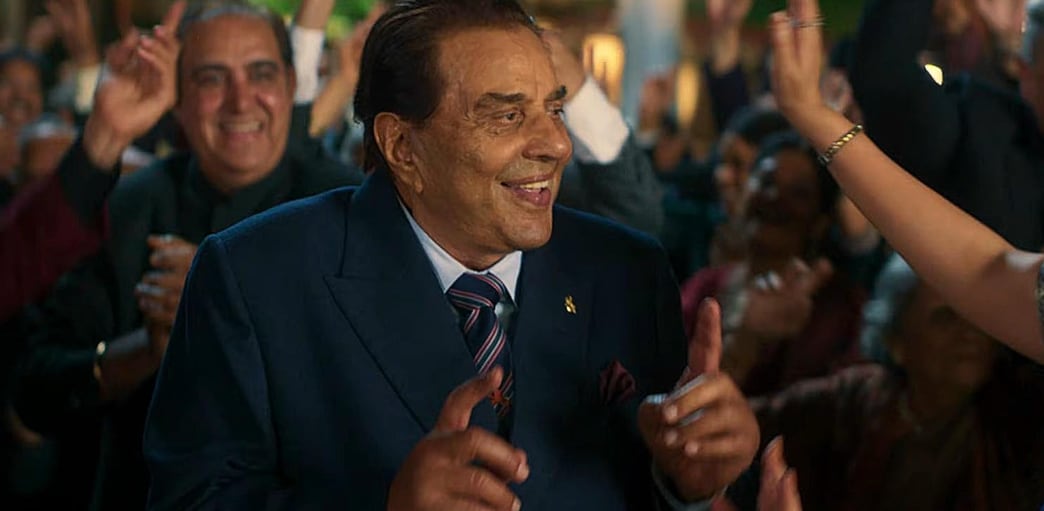
Dharmendra in Ikkis
Unlike the Grewals, Khetarpal's Partition memories are laden with nostalgia, longing and a wish to touch the motherland after all these years.
Pinjar, Qissa and the Dominant Woman Voice In Partition Films
The 2003 film Pinjar, based on Amrita Pritam's novel of the same name, harps upon the dominant themes of religious supremacy over women's identity as the lead character Puro (a Hindu woman) is kidnapped by a Muslim man, Rashid.
Puro escapes and returns to her family, but she's not accepted because the preservation of the woman's 'honour' is questioned.
Even when Puro claims she is 'untouched', her sobs fall on deaf ears. Rashid marries Puro and they live with the unsettled feelings of a husband and wife.
The Partition tensions in the outer world shaped the narratives of domestic politics, marital relationships, man‑woman equations and interpersonal relationships among families in a community.
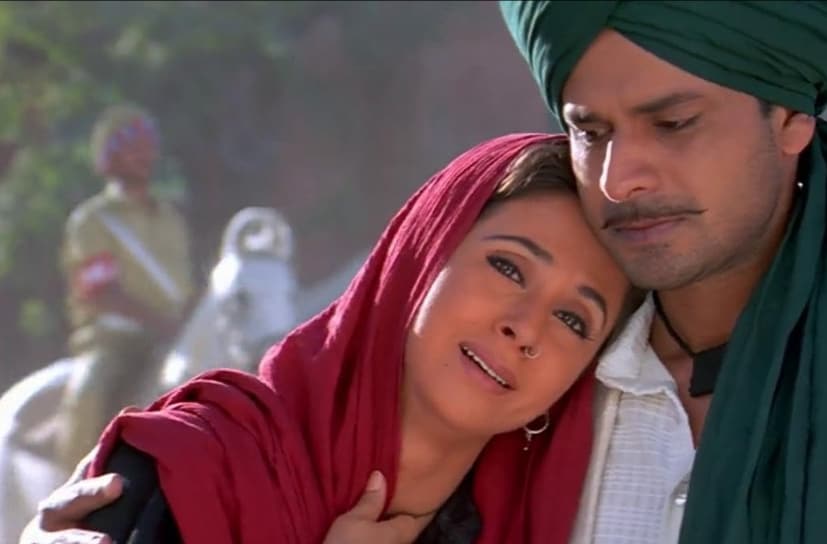
Urmila Matondkar and Manoj Bajpayee in Pinjar
Led by a powerful cast — Urmila Matondkar, Manoj Bajpayee, Sanjay Suri, Sandali Sinha, Isha Koppikar — the film received critical acclaim, winning the National Film Award for Best Feature Film on National Integration and the Special Jury Award for Bajpayee.
Set against the backdrop of Partition, Qissa delves deep into a Sikh father's wish to have a son. After three daughters, when the fourth child is born, Umber Singh declares his daughter a son. He names him Kanwar Singh. Kanwar eventually marries childhood friend Neeli.
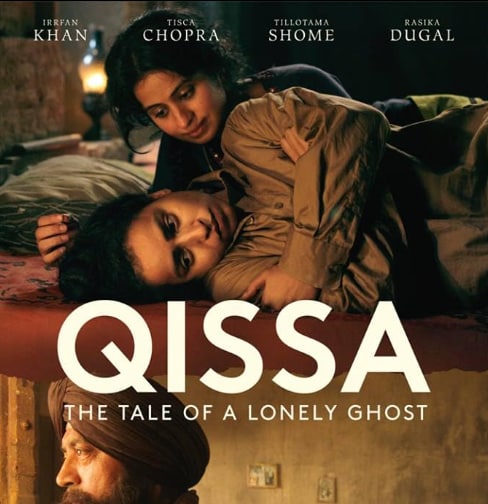
A poster of Qissa
After the marriage, when Neeli discovers that Kanwar is not biologically a man, she attempts to leave the house. Umber Singh wrestles her to the ground and attempts to rape her. He says it's the last chance to have a son in the family if he forcibly impregnates his 'daughter‑in‑law'.
Kanwar shoots his father as he catches him with Neeli.
Bizarre, blood‑boiling, horrendous — adjectives may fall short. But this was the fate of a large section of women before the country saw the sun of a free nation.
Conclusion
Two mainstream directors, with solid casts to bank on, turned the clock back with their respective films, commenting on the socio‑political narrative of the nation in a time defined by war and dissent. The larger conversation around these films is not only about whether they mint money at the box office.
The wound of Partition women, a leitmotif in the work of that time, is a constant reminder of what a culture reduces itself to in times of war, riot or Partition.
Women bear the wounds of cultural violence, become the wounds and in the process their identities are defined by one word — 'missing'.
