Education has emerged as one of the strongest pillars of the India-Australia comprehensive strategic partnership, with expanding student mobility, the establishment of Australian university campuses in India, growing research collaborations, and deeper institutional partnerships reinforcing ties between the two countries.
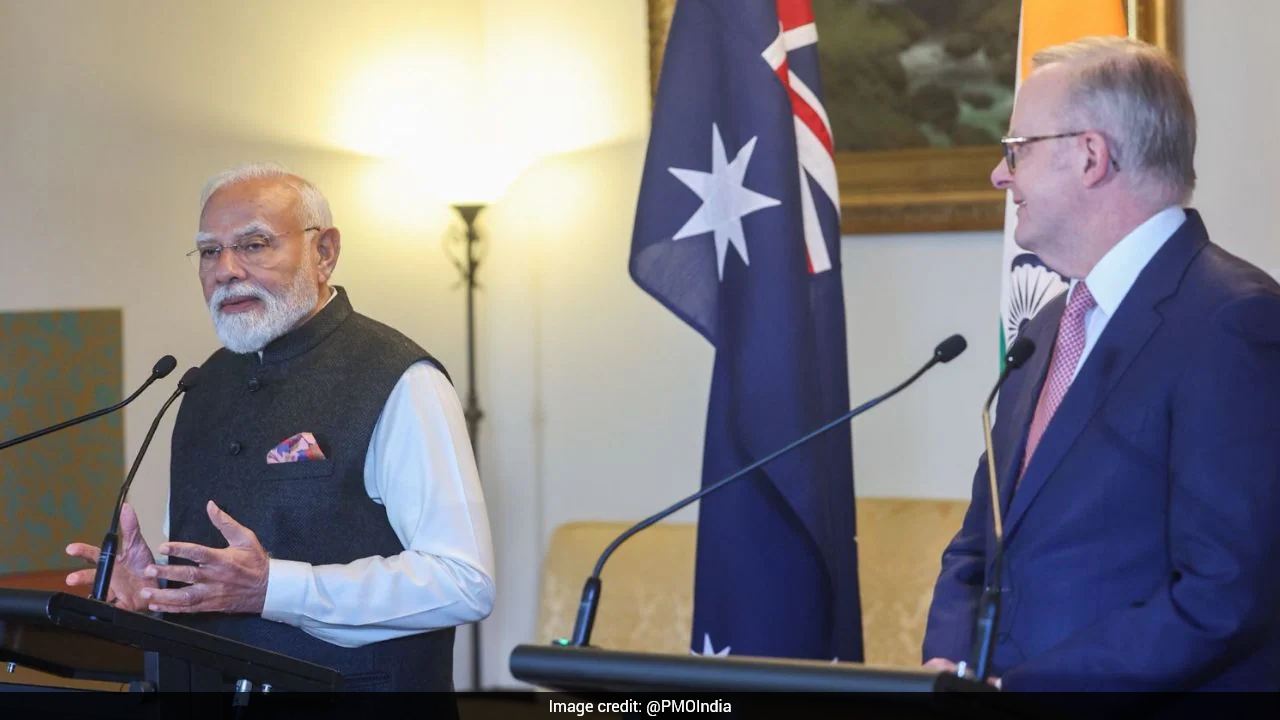
During a joint press conference with Australian Prime Minister Anthony Albanese, Prime Minister Narendra Modi highlighted the growing people-to-people connections between the two nations, noting that the Indian diaspora continues to make significant contributions to Australia's social and economic development.
Prime Minister Modi also underscored Australia's position as a preferred study-abroad destination for Indian students and said the opening of Australian university campuses in India has added a new dimension to bilateral knowledge cooperation.
"The greatest strength of the India-Australia relationship is our people-to-people ties. People of Indian origin are making a positive contribution to Australia's social and economic life. Australia has been a preferred study destination for Indian students. With Australian universities opening campuses in India, a new chapter has been added to our knowledge partnership. We will continue our efforts to increase exchanges of students, professionals and tourists between our two countries," he said.
Australian Education Minister Jason Clare echoed the sentiment, describing education as a critical component of the bilateral relationship.
"This is a critical relationship between two great friends-India and Australia. Education is a key part of that. There are now more than 100,000 Indian students studying here in Australia. It's part of a living bridge between our two great countries," Clare said.
Highlighting the rapid expansion of Australian higher education institutions in India, Clare noted that Deakin University and the University of Wollongong have already established campuses in GIFT City, while the University of New South Wales (UNSW) is set to open its Bengaluru campus in the coming weeks.
He also announced that Flinders University and Victoria University have received authorisation to establish campuses in India. Additionally, Western Sydney University and the University of Western Australia are expanding their presence through campuses and academic collaborations.
Clare said several Australian universities are also introducing dual-degree programmes that allow students to complete part of their studies in India and the remainder in Australia, enabling them to graduate with degrees from both partner institutions.
Education Strengthens Bilateral Ties
Experts from academia and the international education sector believe education has evolved beyond student mobility to become a strategic driver of innovation, workforce development, and long-term economic cooperation.
Professor Attila Brungs AO, Vice-Chancellor and President of UNSW Sydney, said education remains one of the most enduring foundations of the India-Australia relationship.
He said universities play a vital role in advancing bilateral ties through collaborative research, academic exchange and student mobility, while equipping graduates with the global outlook and cross-cultural capabilities needed to address shared challenges.
A Cornerstone Of The Strategic Partnership
Vik Singh, Trade and Investment Commissioner for South Asia at Austrade, described education as a cornerstone of the growing India-Australia partnership.
He said Indian students, one of Australia's largest international student communities, continue to deepen people-to-people connections between the two nations. According to Singh, the expansion of Australian university campuses in India and transnational education partnerships will create greater opportunities for research collaboration, skills development and academic mobility.
Beyond Student Mobility
Sagar Bahadur, Executive Director - Asia and Head of Regional Strategy at Acumen, said the India-Australia education partnership is among the most comprehensive bilateral education relationships globally, spanning school education, higher education, research collaboration, transnational education and institutional partnerships.
He noted that collaboration is increasingly extending into strategic sectors such as healthcare, advanced manufacturing, critical technologies and sports, reflecting the evolving priorities of both countries.
Bahadur said international education is no longer viewed solely through the lens of student mobility but as a strategic tool for workforce development, innovation and economic resilience. He added that Prime Minister Modi's visit provides an opportunity to deepen collaboration in research, skills development, innovation and transnational education.
Universities Driving Long-Term Collaboration
Oliver Fortescue, Director of International Recruitment and Admissions at Swinburne University of Technology, said institutional collaboration is becoming increasingly important alongside student mobility.
He highlighted the growing emphasis on joint academic programmes, research partnerships and student exchange initiatives, adding that stronger engagement between governments, universities, and industry will help develop globally competent graduates while delivering long-term value for both countries.
International Campuses Mark A New Phase
Professor Nimay Kalyani, Campus Director of the University of Wollongong India, said the India-Australia education relationship is entering a new phase where universities are increasingly investing directly in India's higher education ecosystem.
He said the mutual recognition of qualifications between the two countries has strengthened confidence in cross-border education and created greater certainty for students, institutions, and employers.
According to Kalyani, the emergence of international branch campuses in India represents a significant evolution in transnational education. Rather than focusing only on students travelling abroad, universities are now embedding themselves within India's innovation and economic ecosystems, contributing to research, workforce development and industry collaboration while expanding access to globally recognised education within the country.
