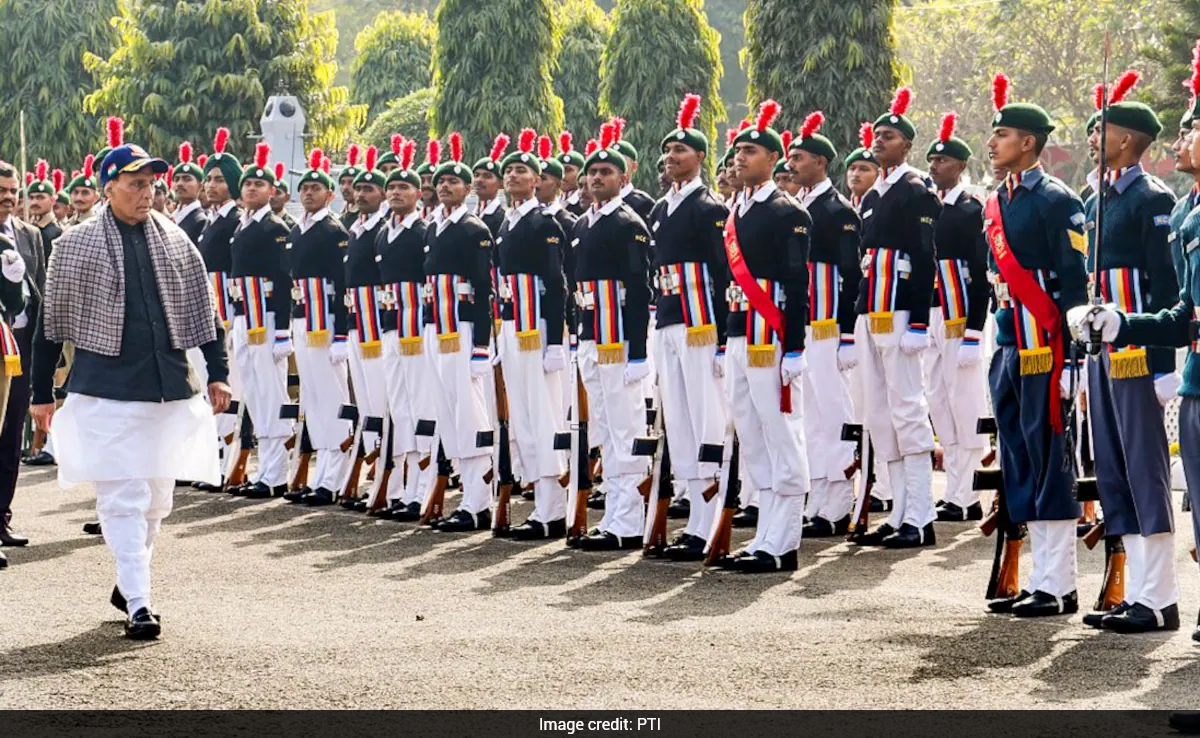
As India prepares to mark Republic Day on January 26, 2026, the occasion offers an opportunity to revisit the document that defines the country's democratic foundation, the Constitution of India. Drafted by the Constituent Assembly between December 1946 and November 1949, the Constitution was formally adopted on November 26, 1949, and came into effect on January 26, 1950. It lays down the framework of governance, citizens' rights and duties, and the pursuit of social and economic justice.
To help readers engage more meaningfully with constitutional ideas beyond the text itself, Uma Mahadevan Dasgupta, a senior Indian Administrative Service officer of the 1992 batch, Karnataka cadre, and currently serving as the Additional Chief Secretary and Development Commissioner of Karnataka, has recommended six books on the Indian Constitution. She suggested these titles in an article she wrote for The Hindu's Books section, highlighting works that examine constitutional values, power, participation, and justice from diverse perspectives.
One of the key recommendations is Partha Chatterjee's For a Just Republic: The People of India and the State (Permanent Black/Orient Blackswan, 2025). The book examines the relationship between the state and political society, questioning how institutions often manage populations rather than empower individuals. Chatterjee draws attention to the tension between constitutional ideals and lived realities, echoing BR Ambedkar's warning that power and knowledge do not always coexist. He argues that a truly just constitutional democracy depends on coalition-building and equal respect for all parts of the Indian federation.
Economic justice forms the core of Prabhat Patnaik's Socialism and the Indian Constitution (Speaking Tiger, 2025). Patnaik links constitutional principles to material conditions, citing Supreme Court interpretations that view "socialist" in the Preamble as a commitment to welfare and equal opportunity. The book expands the constitutional conversation to include social policy and redistribution.
Caste and constitutional morality are examined in Anand Teltumbde's Dalits and the Indian Constitution (Speaking Tiger, 2025). Teltumbde critically assesses whether the Constitution has lived up to its emancipatory promise for Dalits. Drawing on Ambedkar's idea of constitutional morality, he stresses that the Constitution demands more than procedural compliance - it requires a collective commitment to its spirit.
In TM Krishna's We, the People of India: Decoding a Nation's Symbols (Westland Books, 2026), the Constitution is approached as a cultural and ethical text. Krishna urges citizens to internalise constitutional values through everyday civic life, arguing that "We, the people" must actively live and defend these ideals.
Questions of authority and interpretation take centre stage in Gautam Bhatia's The Indian Constitution: A Conversation with Power (HarperCollins, 2025). The book traces how power is structured, exercised, and contested within India's constitutional system. While acknowledging that constitutional interpretation has at times enabled centralisation, Bhatia also highlights moments of resistance and dissent, stressing the importance of public participation and forgotten histories of popular constitution-making.
Rohit De and Ornit Shani's Assembling India's Constitution (Penguin, 2025) revisits the making of the Constitution as a deeply participatory process. The authors document letters sent to the Constituent Assembly by ordinary citizens and marginalised communities even before Independence, from demands for the abolition of untouchability to calls for the right to recall elected representatives.
As Republic Day 2026 approaches, these readings offer an opportunity to better understand the values, struggles, and responsibilities embedded in the constitutional promise of India.
