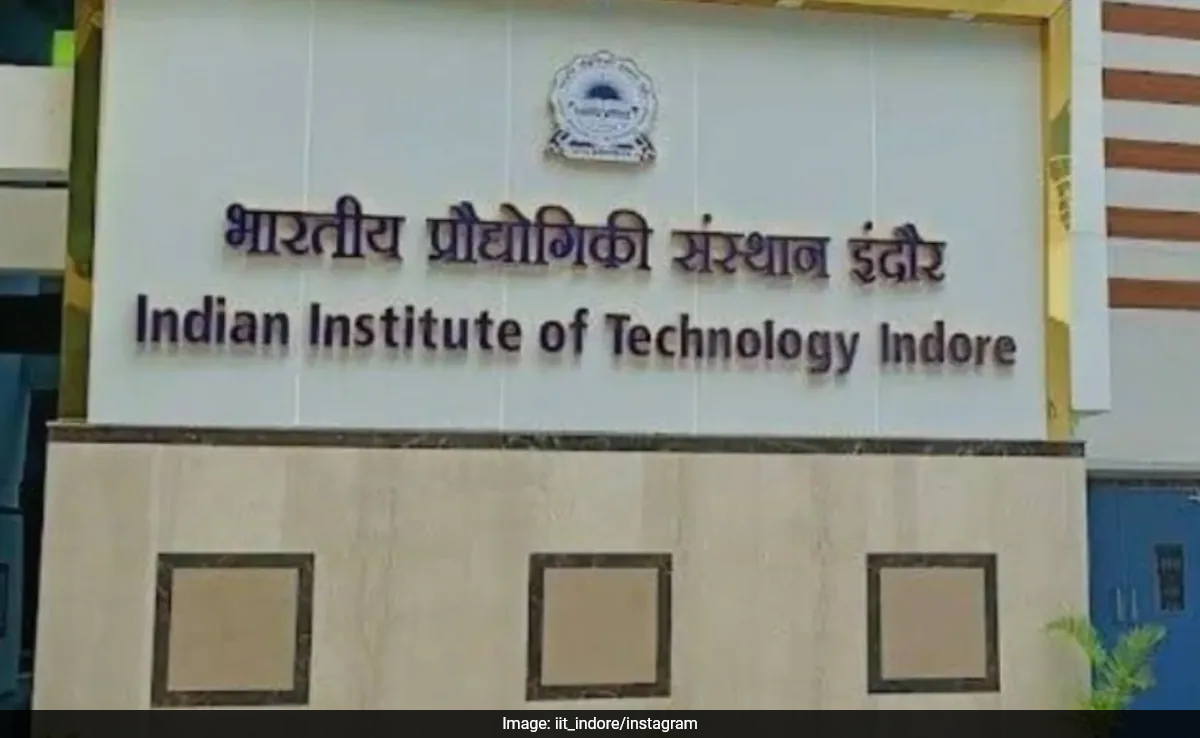

In a significant leap toward sustainable construction, the Indian Institute of Technology Indore (IIT-I) has developed an eco-friendly, cement-free concrete that could slash carbon dioxide emissions by up to 80%, The Times of India reported.
The breakthrough uses geopolymer technology and industrial waste materials like fly ash and ground granulated blast furnace slag (GGBS).
Unlike conventional concrete, which relies on cement, a major contributor to carbon emissions, this new material eliminates the need for it altogether. According to the institute, the innovation not only reduces environmental impact but also slash construction costs by around 20%.
-

-
 Is AI Bubble Waiting To Burst? Nikhil Kamath Warns Of Tougher Months Ahead
-
 "We Don't Have 5 Years": Celebrated American General Sounds Alarm On War
-
 "There Will Be Issues Between Big Countries": S Jaishankar On India-China
-
 Neha Goyal Makes Stunning Asian Games Gold Revelation At NDTV World Summit 2026
-
 Big NDTV Summit Impact: RBI Governor's Tata Sons Listing Remark Makes Top Newspaper Headlines
-
 "Certainty Is A Problem": Nikhil Kamath On Marriage, Children And Future
-
 "High Inflation Is Like Tax On Everyone": RBI Governor At NDTV World Summit
-
 RBI Governor Sanjay Malhotra's Big Hint On Tata Sons Listing Row At NDTV World Summit
-
 The Mystery Of A Bare Nail In Ashwini Vaishnaw's Office
-
 To PM Modi's "Failed Product" Jab At Rahul Gandhi, A Shashi Tharoor Counter
"This development is a step toward transforming the way we build our future infrastructure as stronger, faster, and greener," TOI quoted Dr Abhishek Rajput, who led the research team, as saying.
"The goal is to find a practical solution that benefits both the environment and the construction industry."
One of the most promising features of this geopolymer concrete is its ability to gain strength rapidly, making it suitable for critical, time-sensitive construction like military bunkers, highway repairs, emergency shelters, and precast railway infrastructure. It also needs no water curing, a crucial advantage at a time of increasing water scarcity.
Ordinary Portland Cement Concrete (PCC) currently accounts for about 8% of global CO₂ emissions, largely due to limestone processing and fuel consumption.
Commenting on the significance of the development, IIT Indore Director Prof Suhas Joshi said, "This is an excellent example of how IIT Indore is contributing to national priorities through sustainable technology. Such developments align with India's vision for green infrastructure and carbon neutrality."
