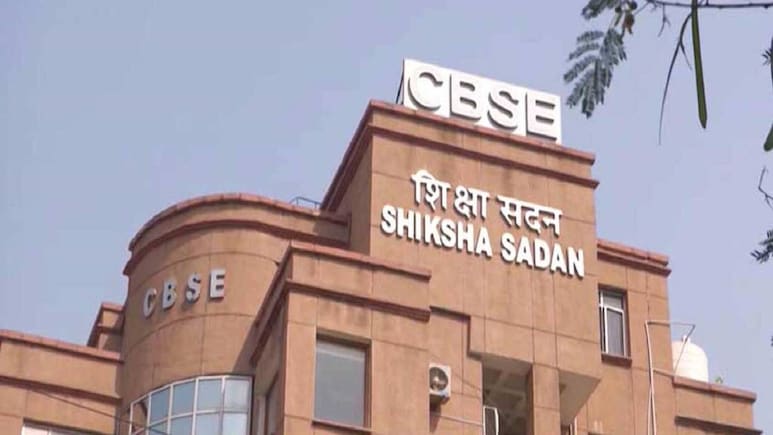

The Central Board of Secondary Education (CBSE) has released the Sample Question Paper-1 for Artificial Intelligence to empower students navigating the rapidly evolving field of AI. The exam is scheduled on March 24. Designed for Class 12 students in the 2025-2026 session, the sample paper aims to familiarise learners with the exam format, helping them score the 50-mark, two hour test.
The paper is divided into two parts: Part A on Employability Skills (10 marks) and Part B on Subject-Specific Skills (40 marks).
Part A covers essential soft skills like communication, self-management, ICT, entrepreneurship and green skills, with 6 objective-type questions (answer any 4) and 5 short-answer questions (answer any 3).
Part B dives deep into AI core concepts, featuring 24 objective questions (answer 20), 6 short-answer questions (answer any 4) and 5 descriptive questions (answer any 3). Key units include Capstone Project (16 questions), Model Life Cycle (10 questions), and Story Telling through Data (8 questions).
Some questions test the knowledge on AI phases: scoping, design, deployment, loss functions-RMSE, MSE, and data storytelling techniques. For example, students are asked to compute RMSE given some data or to describe the advantages of cross-validation over train-test splits.
Click For Sample Paper Here
As explained by officials from CBSE, the paper is oriented to practical skills, with scenarios such as predicting house prices using regression or stating AI tools like DataRobot and Scikit Learn. The inclusion of visual elements-icons depicting processes related to data and diagrams illustrating the effects of data storytelling-adds an interactive layer.
Students are advised to download the official PDF from the CBSE website cbseacademic.nic.in) and practice it thoroughly before the deadline, as it reflects the exact blueprint and difficulty level expected in the March 2026 board exam.
