India's New Real Estate Luxury Isn't A Bigger House. It's More Bathrooms
The growing demand for additional bathrooms creates a new challenge: how do developers accommodate them without making the bedrooms smaller?
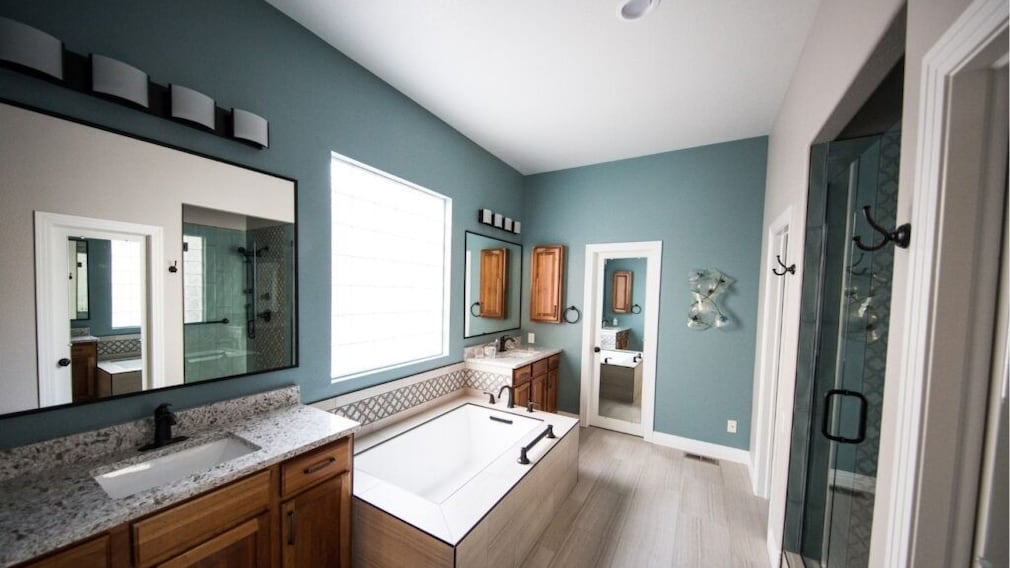
There was a time when it was not unusual for the entire family to share a single toilet. Until the early 2000s, a typical 2-BHK or 3-BHK apartment often had just one common bathroom.
Today, homebuyers increasingly expect a 2-BHK apartment to have two bathrooms and a 3-BHK to come with three. An attached bathroom for every bedroom is no longer an extravagant demand. For many, it is becoming a basic requirement.
The changing preference says something about India's evolving lifestyle. It also tells a story about how Indian homes are being redesigned as more family members pursue careers, attend college and follow different daily routines.
A few decades ago, a typical household often had one earning member leaving for work in the morning. Today, both spouses may be working, children may be attending school or college, and elderly parents may be living with them. When everyone has to get ready around the same time, one common bathroom can quickly become a source of daily frustration.
Privacy has also become more important. A bathroom is no longer just a functional corner of the house. It is increasingly seen as a personal space.
And real estate developers are taking note.
From One Common Toilet To A Bathroom For Every Bedroom
The evolution of bathrooms in Indian homes has followed the country's changing aspirations.
In the 1960s and 1970s, a single toilet for the entire household was common in many homes. The idea of having a separate bathroom attached to every bedroom was largely associated with bigger, more expensive houses.
By the late 1990s and early 2000s, urban apartments had become more common, but bathroom planning remained relatively basic. A 2-BHK or 3-BHK flat would often have one common bathroom, sometimes accompanied by another attached to the master bedroom.
Now, expectations have moved further. A family buying a 2-BHK increasingly wants two bathrooms. In a 3-BHK, three bathrooms are becoming a preferred configuration. The idea is simple: each bedroom should ideally have access to a bathroom without disturbing another family member.
Anindita Sarkar, Senior GM - Projects at Ambuja Neotia, says the evolution of luxury housing is no longer simply about building larger homes. It is about creating spaces that respond to the changing needs of residents.
"We believe the evolution of luxury housing is not merely about creating larger homes, but about giving greater importance to spaces that enrich everyday living," she says. Sarkar also pointed to changing family structures, multiple working members and diverse daily routines as some of the factors driving this shift.
Multigenerational households are adding to the demand. Elderly parents, younger couples and children may have different requirements when it comes to privacy, accessibility and comfort.
The younger generation, meanwhile, has also become more particular about home design.
Greater exposure to hotels and contemporary hospitality spaces has changed expectations. Bathrooms are increasingly being imagined as personal retreats rather than purely functional spaces.
How Much Space Does A Bathroom Take Up In A Flat?
The growing demand for additional bathrooms creates a new challenge for real estate developers: how do they accommodate them without making the bedrooms and living areas smaller?
Bathrooms may occupy a relatively small portion of an apartment, but adding one involves more than finding a few extra square feet.
Shiv Garg, Director at Forteasia Realty, says bathrooms typically account for around 7-10 per cent of the carpet area in a 2-BHK apartment. In a 3-BHK, the share can rise to 9-12 per cent.
The actual allocation depends on the apartment's size and layout. However, planning an additional bathroom also requires developers to account for plumbing, waterproofing, ventilation and circulation. These factors can affect the overall floor plan.
"Thus, developers need to find a compromise between providing homebuyers with the desired level of convenience and ensuring that the floor plan of the apartment is optimised," Garg says.
This is where bathroom planning is becoming an important part of residential design. Developers can no longer treat bathrooms as leftover spaces that are fitted into a floor plan after the bedrooms and living areas have been decided.
Instead, the number, placement and design of bathrooms are increasingly influencing how an apartment is planned.
From Modular Kitchens To Modular Bathrooms
Not too long ago, a modular kitchen was among the most sought-after features for homebuyers. It was something people specifically asked for while purchasing a new apartment or renovating an existing one.
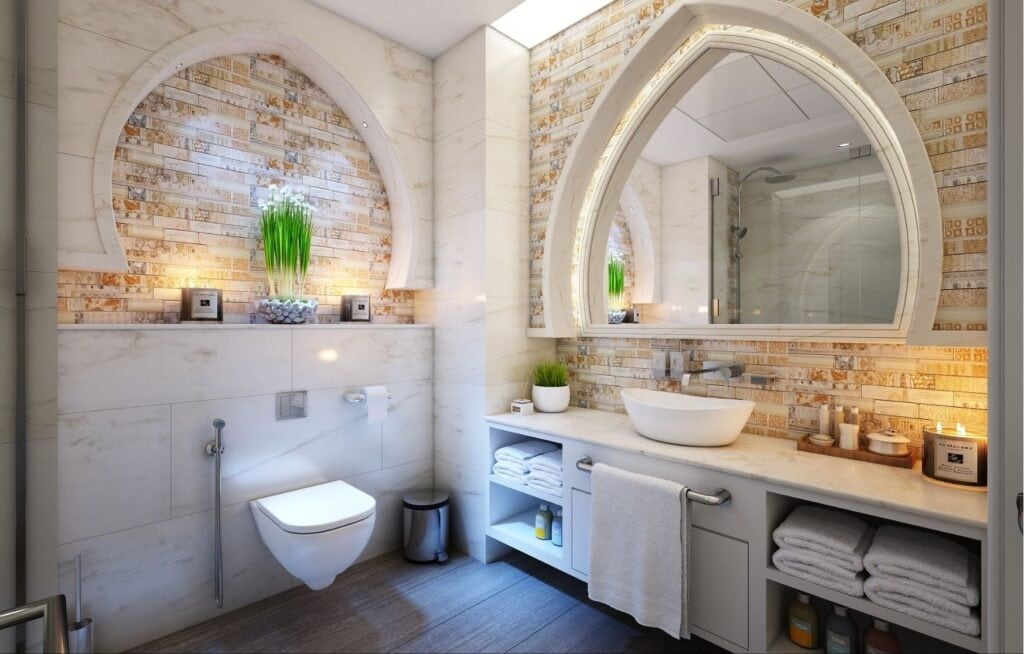
Now, bathrooms are going through a similar transformation. Homeowners are paying greater attention to the fittings, storage, tiles, shower enclosures, vanity units and overall finish. They want bathrooms that complement the rest of the home's interiors.
In other words, having an additional bathroom is only one part of the aspiration. Having a well-designed bathroom is becoming equally important.
Garg says homeowners are increasingly willing to spend more on better bathroom fittings. A mid-range bathroom renovation involving tiling, sanitaryware, fittings and a vanity unit can cost approximately Rs 1 lakh to Rs 2 lakh, he says.
The expenditure can rise considerably if homeowners opt for premium fittings, shower enclosures, customised storage and upgraded surfaces. The final cost depends on the city and the scope of renovation.
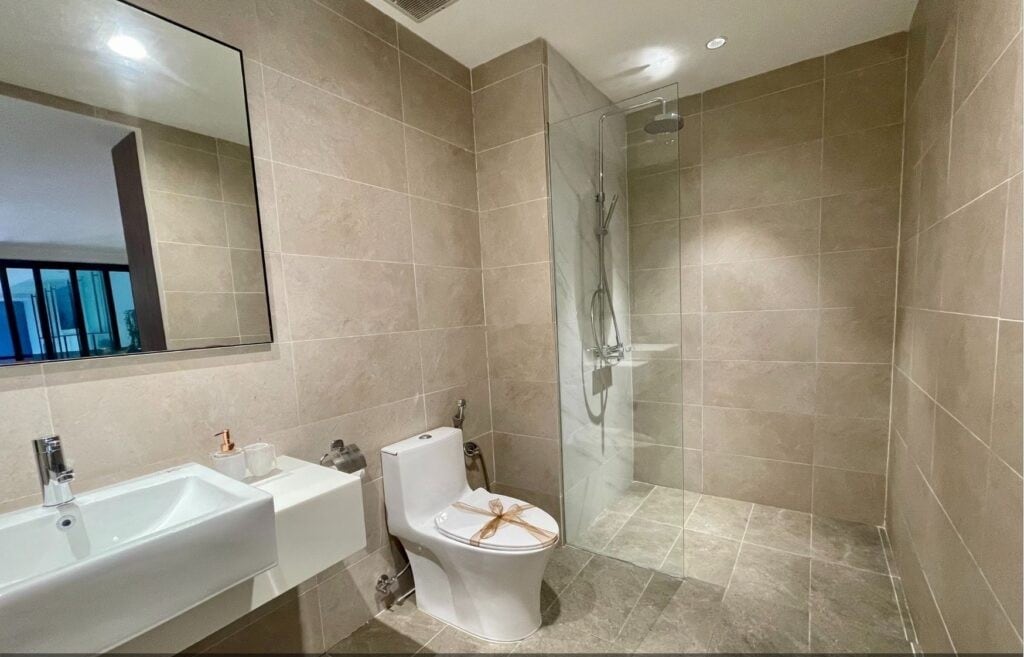
Garg says both modular kitchens and high-end bathroom fittings initially entered homes as premium additions. Over time, they became an integral part of interior design.
The shift is also influencing the materials used in bathrooms. Vansh Jain, Director of Global Partnerships at Petros Stone LLP, says homebuyers are increasingly looking beyond the number of bathrooms to their design, finishes and durability.
The preference is for bathrooms that blend with the overall interiors of the home rather than look like isolated functional spaces. Marble and other natural stones continue to find favour in high-end homes. However, homeowners are also considering engineered surfaces for areas that remain in frequent contact with water, such as shower spaces and counters.
Durability and ease of maintenance are becoming important considerations. Jain says bathrooms are undergoing a transformation similar to kitchens, where better layouts, storage and finishes have changed how the space is designed.
India's Changing Definition Of Luxury
The evolution of Indian bathrooms reflects a larger change in the country's housing preferences.
Earlier, luxury was often measured by the size of a house, the number of bedrooms or the location of the property. Today, homebuyers are increasingly evaluating how comfortably a house accommodates their everyday lives.
A second bathroom in a 2-BHK may not look like a major upgrade on a floor plan. But for a family of four getting ready for work and school every morning, it can make a considerable difference.
Similarly, a third bathroom in a 3-BHK can offer privacy to parents, children and guests without disrupting the family's routine.
As Sarkar puts it, contemporary homes are increasingly being designed around attached bathrooms, private dressing areas and separate powder rooms. Attention is also shifting towards ventilation, intelligent storage, refined fittings and ease of maintenance.
The aspiration, she says, is no longer simply to have more bathrooms but to have better-designed ones. And that perhaps captures the changing definition of luxury in Indian real estate.
-
BJP Leader's Singer Wife, A Kabir Bhajan, And Some 'Jantar Mantar': How 15th Century Saint Entered 2026 Row

A video of Sivasri Skandaprasad's singing performance went viral, interpreted as a dig at protests at Delhi's Jantar Mantar. What she's singing is actually attributed to the saint-poet Kabir, and he did not really mean that particular "jantar mantar". He meant something far more profound.
-
Opinion | Sardar Patel, And The Art Of Holding A Nation Together
A true Gandhian, he reminded his countrymen that gaining freedom from foreign rule was merely the first step; true internal Swaraj required much, much more.
-
Opinion | How India Is Making Its Stock Market An Expensive Place To Invest
FPIs sold Rs 1.66 lakh crore of Indian equities in 2025 and a record Rs 3.08 lakh crore in 2026 through October 12. Foreign ownership of the Indian market is at a 15-year low
-
Jail Is No Bar: How Gangsters Call The Shots From Inside Prisons
Jail can become a safe haven from enemies, a recruitment ground for fresh gang members and, in some cases, a command centre for criminal operations
-
From King Edward III To Neha Bora, A 1361 Law Lives On In 'Peace Bonds': NDTV Explains
CJP leaders Abhijeet Dipke, Saurav Das, and Ashutosh Ranka signed peace bonds; two of them even faced jail over an alleged breach, while AISA's Neha Bora questioned such a bond's very logic. Here's what a peace bond is, and what the questions are.
-
Air Force Golf Course Near PM House Closed. How This Land Has Seen Many Turns Of History
The Air Force Sports Complex, which includes the golf course, is the latest property near the Prime Minister's residence set to be taken back this year, as the land is owned by ministries.
-
Opinion | How A Poland 'Experiment' Could Change India's Defence Industry
Europe is spending billions on arms in a historic rearmament drive. Indian firms can cash in. But there's a catch
-
Opinion | The Muslim World Is Seeing An Unexpected 'Experiment' - In Kazakhstan
The country has a long history of using mediation to mitigate conflict; now, it has added another, much-wanted dimension to it.