




On Thursday Donald Trump launched his 'Board of Peace' – an "international organisation that seeks to promote stability... and secure enduring peace in areas affected by conflict".
Within 24 hours Trump was talking about using military force against Iran.
United States officials said an aircraft carrier strike group of by the USS Abraham Lincoln and guided-missile destroyers is expected in the Arabian Sea or Persian Gulf region in the coming days, as Washington steps up pressure on Tehran, ostensibly over a violent crackdown on nationwide protests.
The last confirmed location of the strike group – which includes an attack sub and was in the South China Sea till Trump turned it west – is from three days ago. It was in the Indian Ocean region but it is now no longer publicly trackable via open-source AIS, or Automatic Identification System, feeds.
F-15E Strike Eagle fighter jets – from the same squadron that was deployed in April 2024 to counter Iran's drone and missile attacks on Israel – are already in West Asia; US Central Command, or CENTCOM, posted on X Tuesday showing a plane landing at an unnamed base.
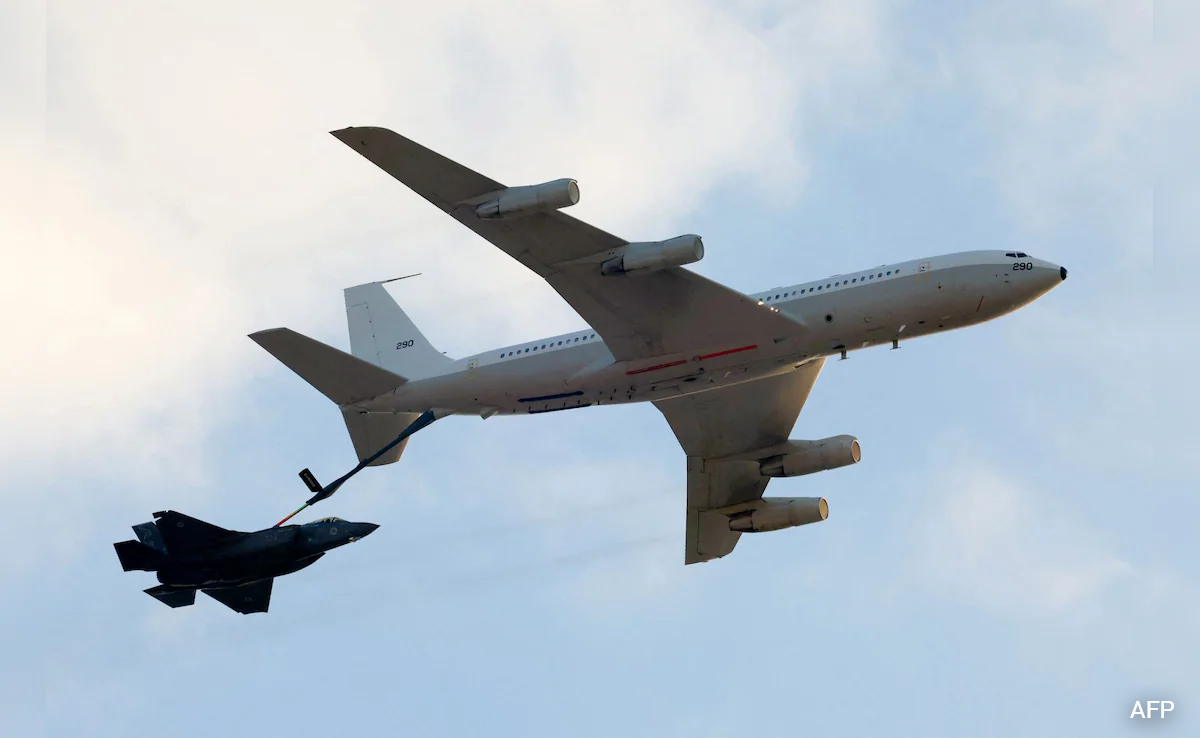
This was part of a larger re-deployment that, US media reports said, included shifting KC-135 aerial refuellers to allow fighters the option to refuel in mid-air, extending the strike range.
And American media has also reported on additional anti-missile systems – THAAD and Patriot – being deployed across West Asia, most significantly in US allies like Israel and Qatar.
US targets Iran over protests
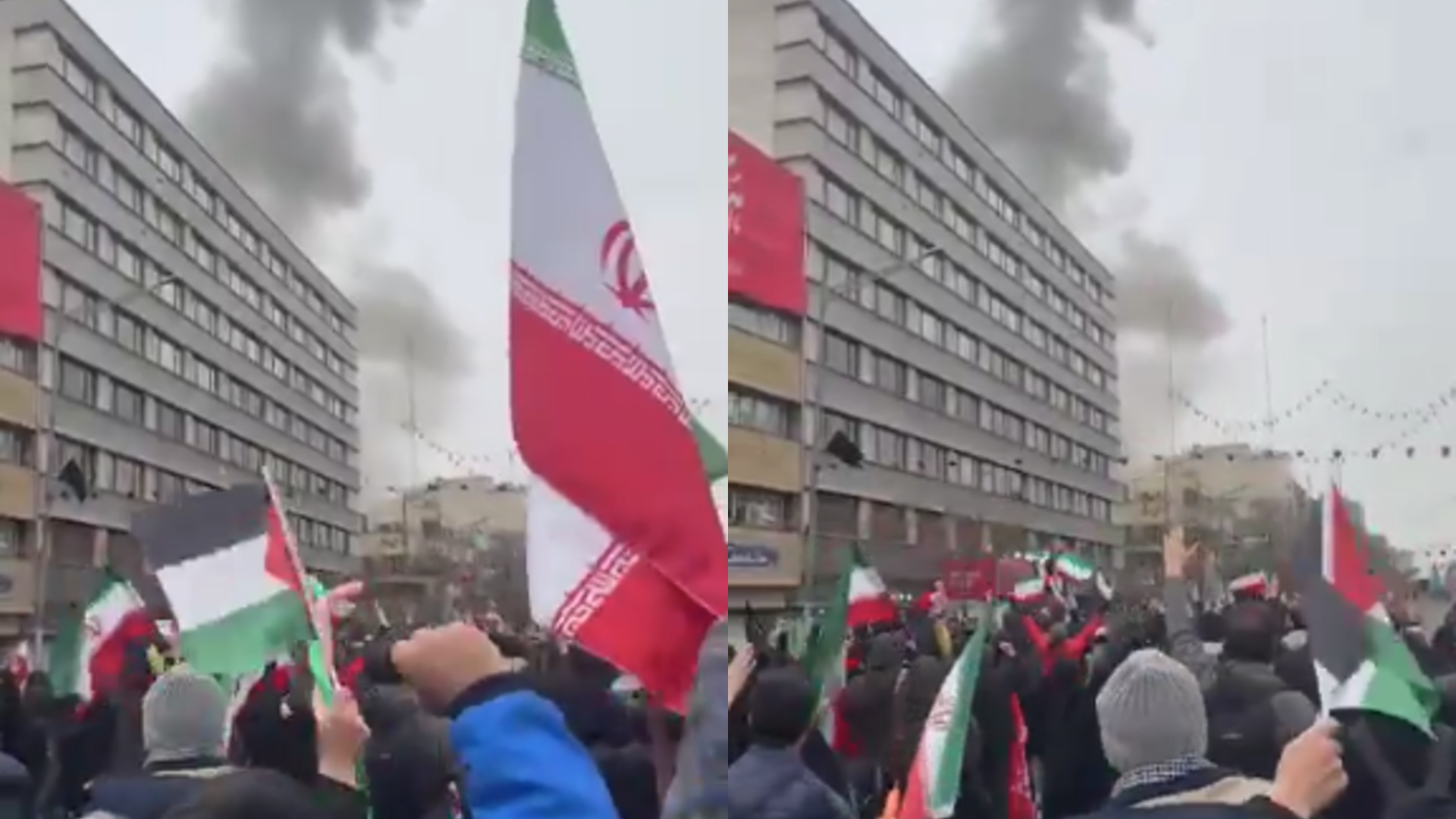
All of this is part of a large-scale US military build-up, the proximate cause of which is civil unrest and violence as Iranians protest an economic crisis. A report this week by Al Jazeera citing Iranian state media network said 3,117 people had been killed, including 2,427 civilians and security forces.
However, rights groups say the actual number could be far higher, possibly over 20,000.
Trump has repeatedly threatened military action against Iran over the protesters' deaths, even claiming American pressure had forced Iran to cancel plans to execute thousands of people.
He repeated that claim Thursday, saying Iran cancelled nearly 840 hangings after his threats.
However, in his typical oscillatory style, which analysts indicate combines coercion and military pressure with tactical off-ramps to force concessions, Trump has since softened his rhetoric.
Earlier this week, for example, he said Iran would be 'wiped off the face of this earth" but, after backchannel confirmation the executions had been called off, he seemed to walk back.
Iran, meanwhile, has said it has its 'finger on the trigger" and even threatened Trump. Iranian President Masoud Pezeshkian, meanwhile, accused the US, and Israel, of stoking the protests as 'cowardly revenge... for the defeat in the 12-day war', referring to strikes on nuclear facilities in June 2025.
Why US action against Iran now (and again)
But there is ambiguity behind the US moving significant strike capabilities into the region.
There is also the stockpile of 400kg of enriched uranium – enough to make 10 nuclear weapons – missing since the US dropped 'bunker busters' on Iranian nuclear facilities in June 2025.
RECAP | Fears Over Iran's Missing 400kg Of Uranium. Can Make 10 Nukes: US
Trump has said the US will act if Tehran resumes its nuclear program; "If they try to… they have to go to another area (but) we'll hit them there too…" he said on his way back from Davos.
As part of a broader deal, Iran must report to the International Atomic Energy Agency, the United Nations' nuclear watchdog, on what happened to nuclear material at sites struck by the US in June. This includes the missing stockpile that was thought to be at the Fordow facility.
Images of Iran's Fordow nuclear facility before and after the US' 'bunker buster' attack.
It has, however, been seven months since that strike and an IAEA inspection.
The IAEA's own guidance is that it should be done monthly.
It is also unclear if the protests could surge again. They began December 28 as modest demonstrations in Tehran's Grand Bazaar over economic hardship and spread nationwide.
What would US action look like?
F-35 stealth fighters and B-2 bombers, not unlike the strikes on the nuclear facilities in June, according to The Wall Street Journal. But neither have been deployed to the region so far, though that need not be required, as Washington showed in the strike on the Fordow mountain base.
READ | B2s, Bunker Busters, Tomahawks: Weapons US Used To Strike Iran
That said, the scale of the US military build-up and Israel putting its air defence network on alert indicates the window for military action is open, if only as a show-of-force to bring Tehran in line.
Would American military action against Iran be a single strike? Unlikely.
Military observers indicate the US has an established protocol in such cases, beginning with limited 'punitive' strikes meant to serve as a warning shot. This is usually paired with a diplomatic off-ramp. The second and third levels target an enemy's strike capabilities, focusing on destroying missiles, drones, and launch infrastructure, and command networks.
READ | As Tensions With Iran Escalate, A Note On US Bases In Middle East
A direct strike on Iran's nuclear facilities is the next level and not entirely out of the question, as far as a volatile Trump administration is concerned, though it asks the question – is the US (and its regional allies, who will expect protection from Washington) ready for Tehran's retaliation?
The highest level of action is regime change, as in Venezuela. This, though, is highly unlikely for it will involve committing the US to years, if not decades, of an expensive war.
What will the US strike signals be?
Carrier strike group movements are usually a big clue because it significantly enhances the US military's operational capabilities. The movement of the USS Lincoln, therefore, is a big red flag.
Deployment of aerial refuellers is another. And, again, this has been checked off, as have the stationing of strike-capable aircraft, such as the F-15E and the F-35C and F/A-18 on the Lincoln.
Coordination with regional allies, including overflight permission, and the clearing of civilian flights from potential combat airspace is also a signal of a potential US strike.
What are Iran's options?
Calibrated retaliation against American military assets in the region is one option, but it is unlikely to be Tehran's preferred course of action because it risks escalation and will invite a direct response.
The June 23, 2025, attack on Al Udeid Air Base in Qatar – reported as a limited and signalled response after US strikes a day earlier – illustrates the kind of action Iran may opt for when it wants visibility without a larger war.
This is designed to create friction without giving the US a clean and justifiable reason to strike back, and is typically done via the ‘axis of resistance', i.e., Hezbollah, Iraqi networks, and the Houthis. This presents as action for which attribution can be blurred and the tempo dialed up or down to shape negotiations and deterrence.
US Air Force C-17 Globemasters at Qatar's al-Udeid Air Base (File).
Iran's playbook is generally read as 'calibrated pressure with plausible deniability', i.e., using aligned proxy military, cyber activity, and maritime harassment to minimise direct involvement.
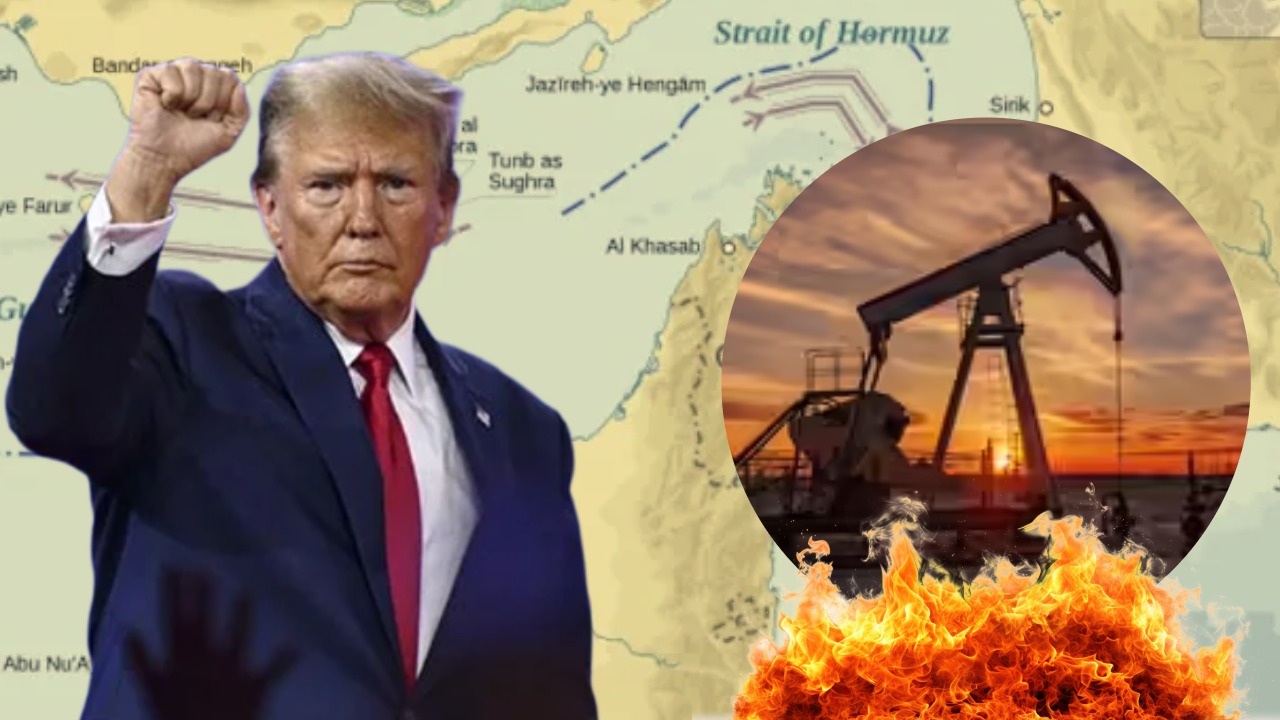
The most consequential lever, however, is geoeconomic – oil flows through the Strait of Hormuz.
An estimated 20 million barrels per day of crude and petroleum products moved through the strait in 2024, making it one of the world's critical chokepoints. Iran does not 'control' the area, in a legal sense, but it has, in the past, raised risk and disrupted traffic around the waterway.
Credit: Google Maps
Iran need not even formally close the waterway to have an impact.
Even episodic harassment, seizures, or attacks, whether carried out directly or by related actors, can increase war-risk premiums, insurance costs, and freight rates. This situation raises political pressure on Washington through global energy prices and market anxiety.
And what about Israel?
If the US does attack Iran then Israel will become a key player, whether it wants to or not, for the simple reason that it will be seen as an acceptable 'secondary' target.
And, curiously enough, Israel could have an important role to play in that scenario.
The country's famous multi-layered air defence system, which includes the famous Iron Dome and Arrow systems, have been framed by some observers as essential to damage limitation in the region and to buy time for the US to react to Iranian strikes.
What that means is that Israel is simultaneously a central arena for escalation and an independent actor: a high-sensitivity target in Iran's signaling strategy, but also a state whose decisions can accelerate - or contain - spiralling military actions.
Israel could also opt to join the US in striking Iranian targets, but that is unlikely given it is already mired in conflict in Gaza. Joining the US risks opening a multi-front war it may not be able to manage, even with American support.

