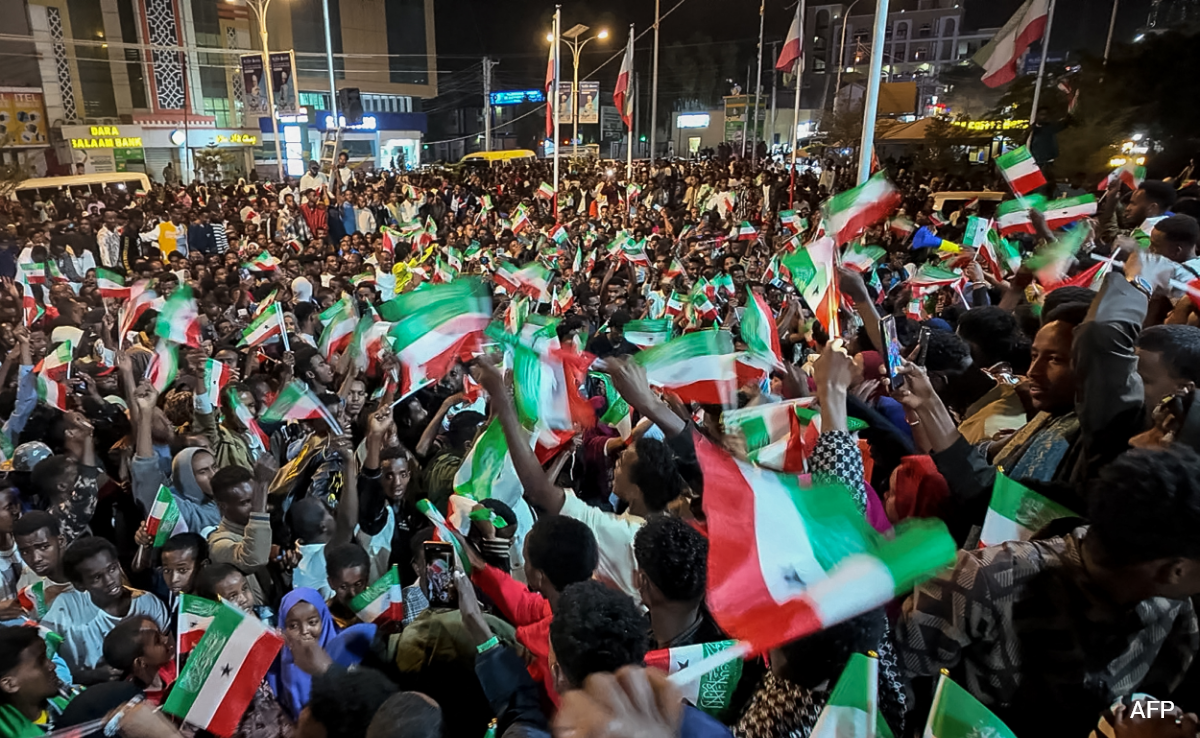
Israel on Friday formally recognised Somaliland as an independent and sovereign state and announced plans to establish diplomatic ties. This is the first official recognition of Somaliland by any country. Prime Minister Benjamin Netanyahu confirmed the decision, saying Israel had officially recognised the Republic of Somaliland.
Somaliland
Somaliland is located in the Horn of Africa, in northern Somalia. Despite its unrecognised status, it has long functioned like a country.
Somaliland broke away from Somalia in 1991, following the collapse of the central government and years of brutal civil war. Since then, it has operated with its own elected leadership, parliament, police force, currency and passport system, and it has maintained relative peace compared with the rest of Somalia. Recognition has been a priority of President Abdirahman Mohamed Abdullahi since he took office last year.
Somaliland also runs its currency, the Somaliland shilling, collects taxes, manages public finances, and regulates trade through its ports, especially Berbera, a key gateway on the Gulf of Aden that attracts foreign investment. It also issues passports and national ID documents, operates schools and universities, and manages healthcare and public services independently.
Residents rely on Somaliland's institutions rather than Somalia's federal government in Mogadishu.
Why Somaliland Was Not Recognised
Even though Somaliland has a strong government and functioning institutions, it went unrecognised for more than 30 years. Most countries and international organisations follow the rule that borders set at independence should not be changed without agreement. Recognising breakaway regions could encourage other separatist movements and cause instability.
Somalia has always rejected Somaliland's independence, saying it is still part of its territory. The United Nations, the African Union (AU), and most countries have supported Somalia and refused to recognise Somaliland as a separate country.
Countries Refusing To Accept Somaliland As A Country
Israel's decision triggered an immediate international backlash from many countries and regional bodies.
- Somalia described the recognition as an act of “state aggression” and a violation of its sovereignty. It has demanded that Israel reverse the decision and vowed to pursue diplomatic efforts to challenge the recognition.
- The African Union is in support of Somalia.
- A joint statement by more than 20 mostly Middle Eastern and African countries, along with the Organisation of Islamic Cooperation (OIC), rejected the recognition as a dangerous precedent that threatens security in the Horn of Africa and the wider region.
- Arab states including Saudi Arabia, Egypt, Qatar, Kuwait, Iraq and Jordan said this was a violation of international law.
- Regional blocs such as the Intergovernmental Authority on Development (IGAD) also denounced the step, calling it contrary to international law and the principles underpinning regional cooperation.
- The United States has made it clear it will not follow Israel's lead and continues to recognise Somalia's territorial integrity.
- US President Donald Trump said Washington would not follow Israel's lead, dismissing the idea of American recognition. “No,” Trump said when asked about recognising Somaliland, adding, “Does anyone know what Somaliland is, really?”
Somaliland's Response
Somaliland's leadership welcomed Israel's recognition as a historic breakthrough. President Abdirahman Mohamed Abdullahi described it as the start of a “strategic partnership” with Israel and expressed hope that other countries would follow suit.
Track Latest News Live on NDTV.com and get news updates from India and around the world


