The United States has made oil the centrepiece of its global strategy. From imposing a 500% tariff on India for importing Russian crude to targeting Venezuela and intercepting Russian tankers that may be carrying Venezuelan oil, Washington's actions underscore a single reality: much of today's geopolitical friction revolves around energy.
But why this relentless focus? After all, the US is already the world's largest oil producer.
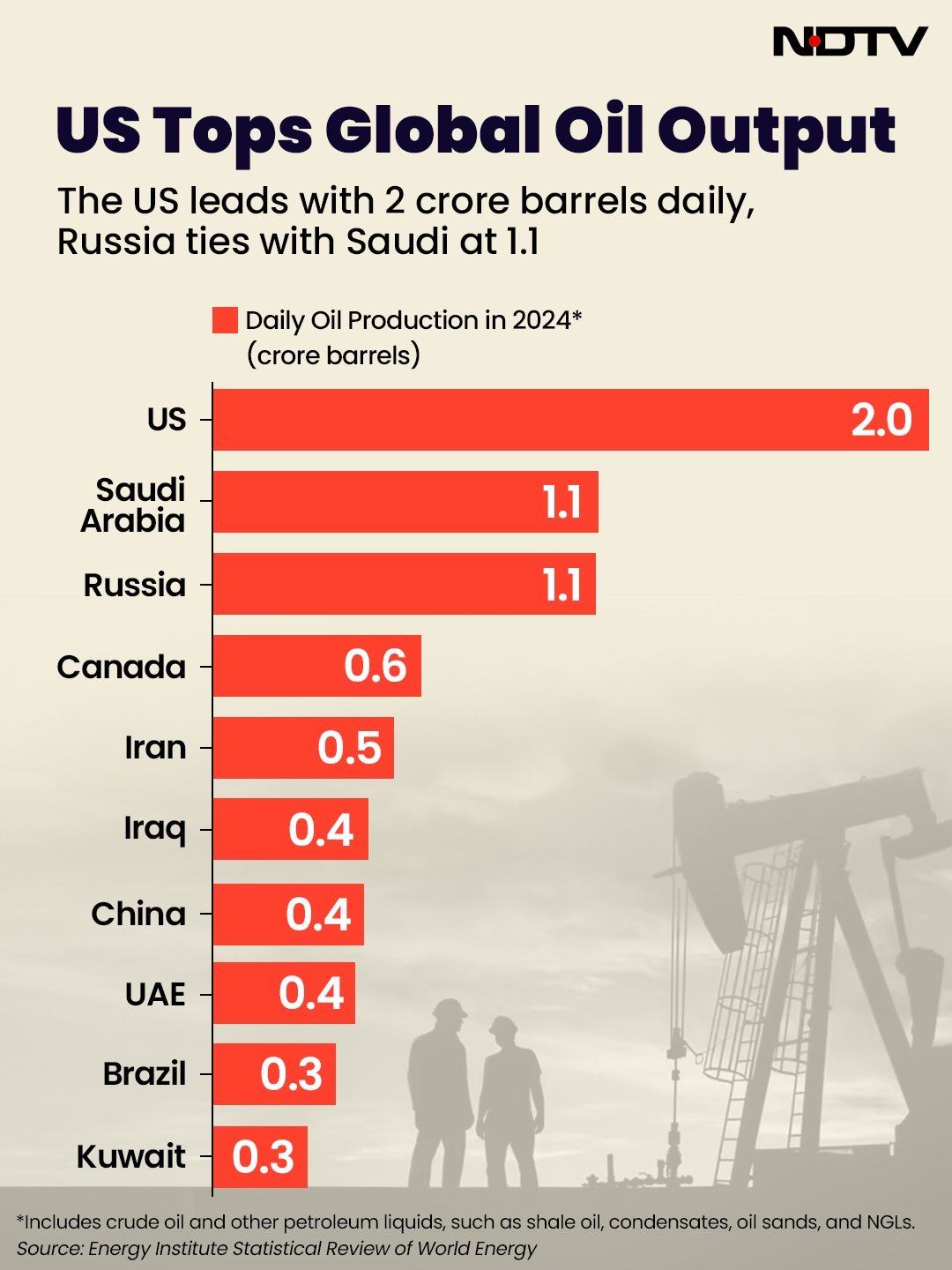
According to the Energy Institute Statistical Review of World Energy, the US produced approximately 20 million barrels per day in 2024, more than double the output of traditional energy heavyweights like Saudi Arabia and Russia, each producing around 11 million barrels daily. This dominance extends beyond crude oil to include other petroleum liquids, such as shale oil, condensates, oil sands, and natural gas liquids. Canada followed with about 6 million barrels per day, while Iran, Iraq, China, the UAE, Brazil, and Kuwait each ranged between 3 and 5 million barrels daily.
Yet, despite this record-breaking production, the US continues to import significant volumes of oil. The reason lies in the quality mismatch. Much of America's surge comes from shale oil, which is lighter and sweeter than the heavier grades required by many US refineries. These refineries were built decades ago to process heavier crudes from the Middle East and Latin America. As a result, even as domestic output has soared, imports have not fallen proportionately.
READ: World's Largest Oil Reserves, Yet Venezuela's Energy Sector Collapsed
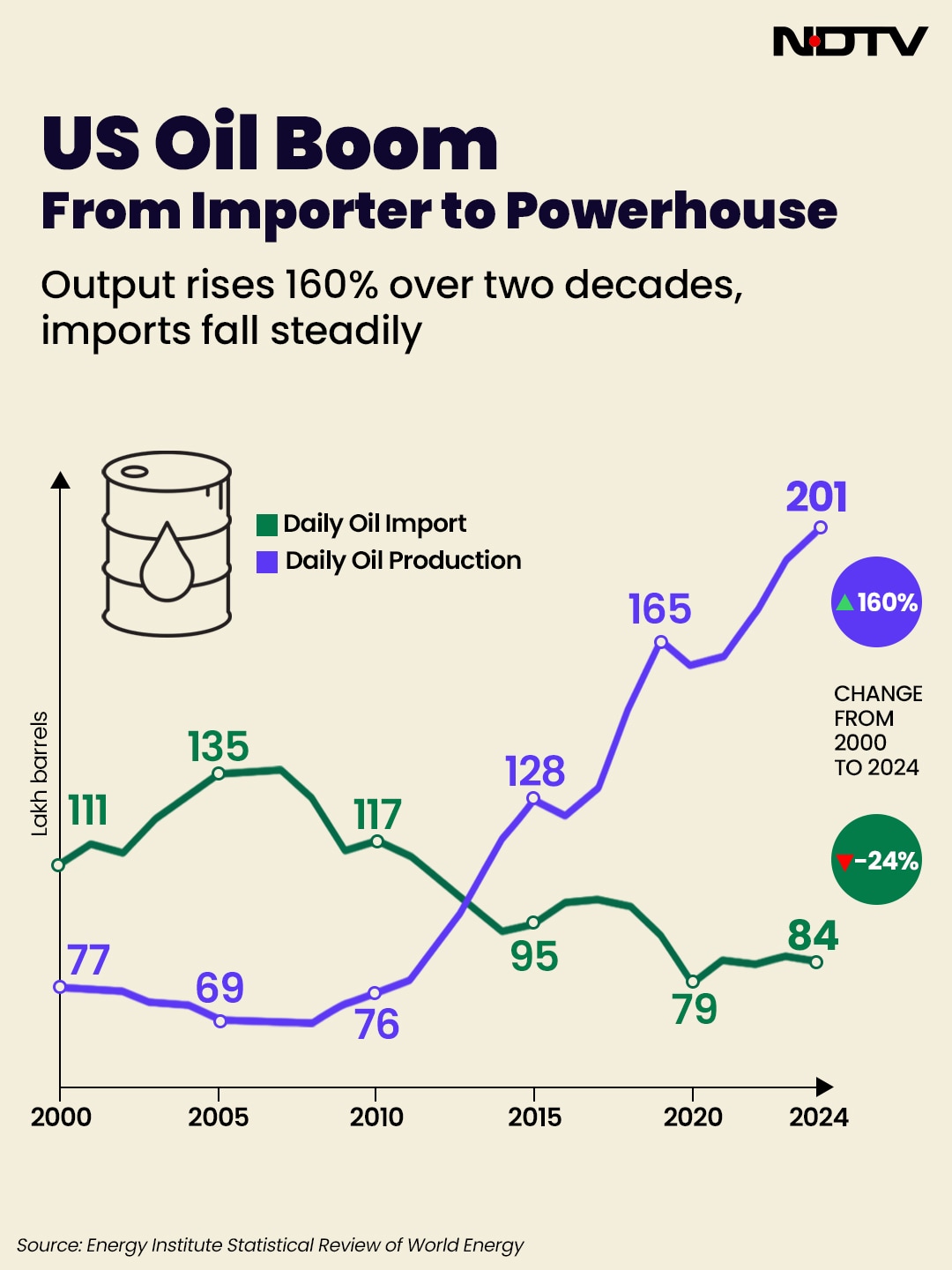
The numbers tell the story. Between 2000 and 2024, US oil production jumped by over 160%, rising from 7.7 million barrels per day to 20.1 million barrels per day, driven largely by the shale revolution. During the same period, imports declined, though modestly, by about 24%, from 11.1 million barrels per day to 8.4 million barrels per day. Even in 2024, when production hit an all-time high, imports remained substantial.
This structural reliance explains why oil remains central to US strategic calculations. Control over global oil flows ensures energy security, price stability, and geopolitical leverage, even in an era of record domestic output. For Washington, producing more oil than any other country does not eliminate the need to import specific grades, and this reality keeps oil at the heart of US foreign policy.
Track Latest News Live on NDTV.com and get news updates from India and around the world


