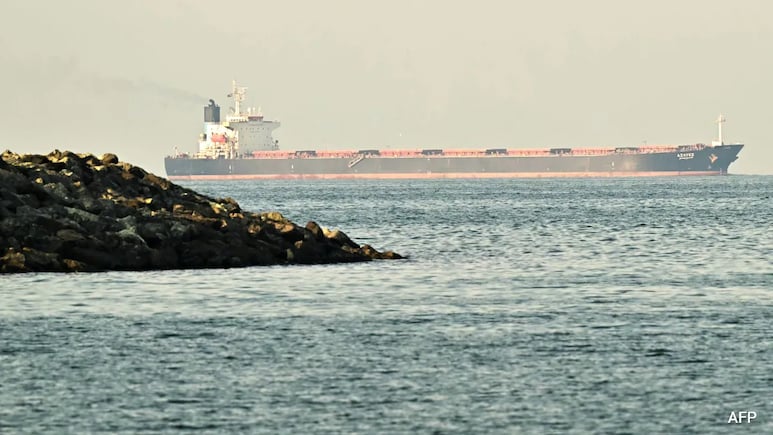
- Oil firms are using dark transits by switching off tankers’ transponders to avoid Iranian attacks
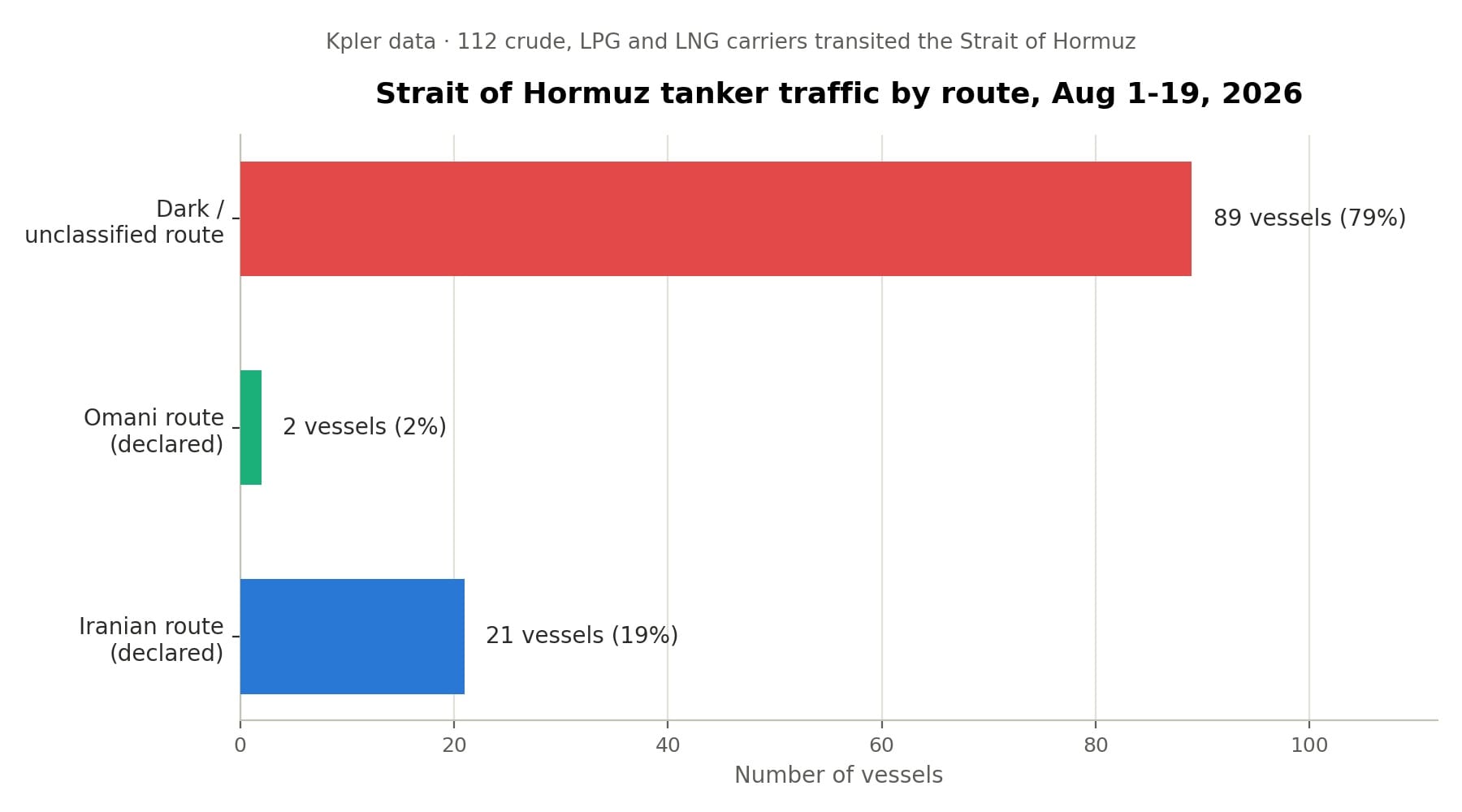
- Over 80% of oil through the Strait of Hormuz has recently used dark or Omani-approved routes
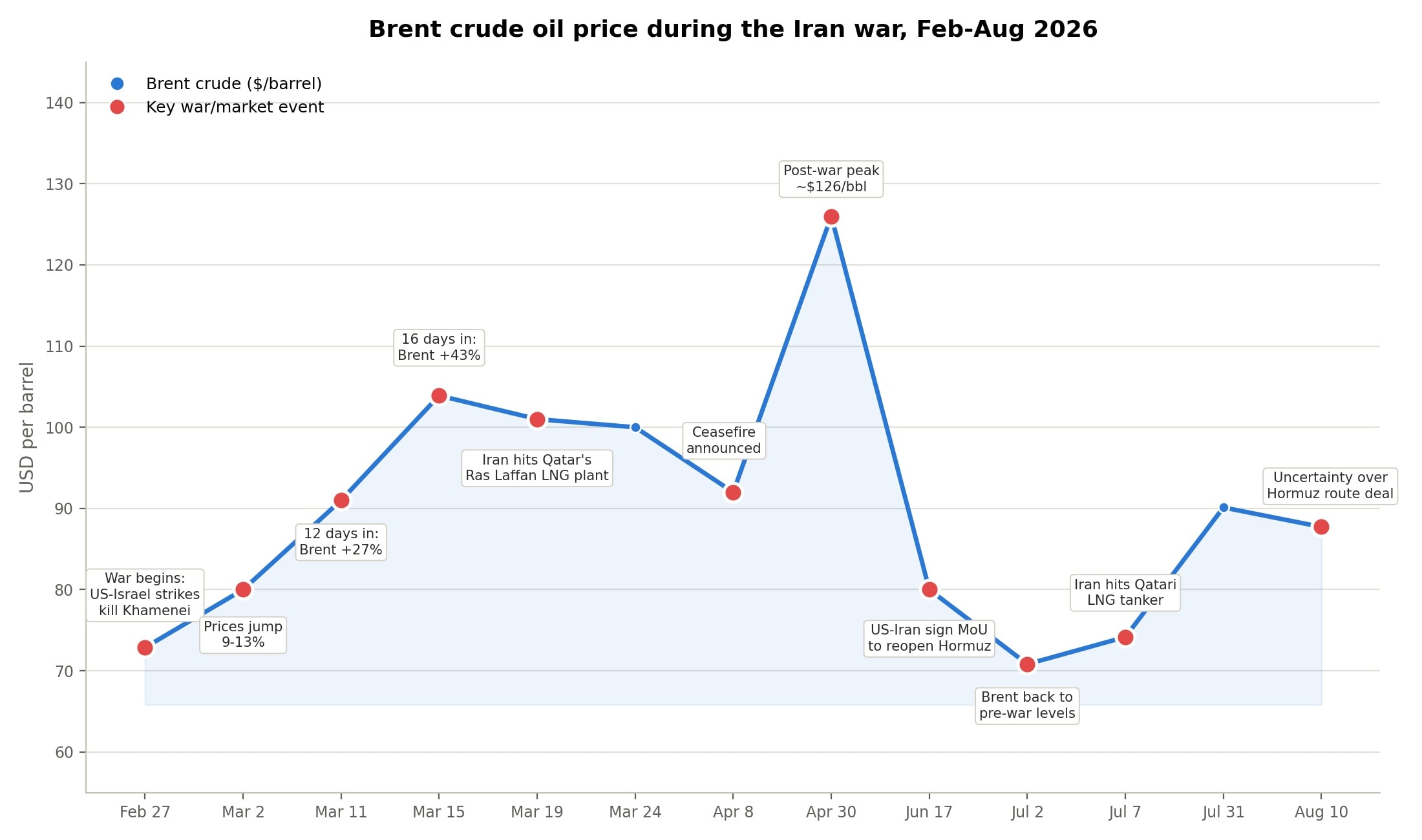
- Global producers increased output to offset Strait risks, stabilising oil prices below $100
Sixteen days into the war between Israel, the US and Iran, oil hit $103.90 a barrel, a jump of 43 per cent. Six months on, prices have settled well below that peak, and the reason has less to do with diplomacy than with tankers going dark at sea.
The strikes on February 28 hit thousands of targets inside Iran and killed several senior leaders, tipping the region into war. Soon after, Brent crude prices jumped to over $100 a barrel. It was one of the worst oil shocks the world had seen in decades. Yet despite the fighting dragging on far longer than expected, oil prices have stayed below $100 a barrel in recent months.
The "Dark" Transit
With Iranian drones threatening tankers in the Persian Gulf, oil companies from Saudi Arabia, Kuwait, Qatar and the UAE turned to a workaround: chartering tankers, switching off their transponders and moving crude out of the Gulf under US Navy escort, according to a report by CNN. These "dark" voyages pass through the Strait of Hormuz into the Gulf of Oman, where the cargo is transferred to tankers waiting to carry it onward, before the empty vessel heads back through the strait.
This shifts the financial and physical risk away from ordinary commercial shippers. Instead, the burden of insurance costs and the danger of attack now falls on the US government and the oil producers themselves.
Shipping data firm Kpler, which tracks vessels using transponders and satellite imagery, found that more than 80 per cent of liquid cargo transits through the Strait of Hormuz over a recent two-week period either used the Omani route, a UN-approved shipping channel that Iran objects to, or were dark transits believed to have followed the same path.
Also Read: Trump Warns Iran's Trading Partners Of Economic Action: India's Exports To Take A Hit?
The US Department of Energy says the strategy is working. Data released by the department in August estimates that oil traffic through the strait has averaged between 8 million and 9 million barrels a day, roughly double the figure transponder-based tracking would suggest.
.@POTUS on Iran: "The Strait is open. A lot of boats are coming through. People aren't reporting that... the Naval blockade has been extremely effective... We're going to see what happens." pic.twitter.com/1V13bQMUK5
— Rapid Response 47 (@RapidResponse47) August 19, 2026
Kpler's records show 1,514 dark crossings in and out of the Persian Gulf since March 1.
Kiku's Vanishing Act
The scale of the tactic is best explained by the journey of Kiku. On the afternoon of July 25, the Greek-owned supertanker Kiku docked at Qatar's Mesaieed export terminal, CNN reported.
Four days later, now loaded with crude, the Kiku entered the Strait of Hormuz. Then, on July 31, just off the coast of Dubai, the Kiku disappeared from tracking systems. Its AIS transponder, the marine radio device that broadcasts a ship's identity, speed, course and position, had been switched off. To anyone monitoring global shipping traffic, the tanker had simply vanished.
Also Read: Why Iran Might Be Losing Its Control Over The Strait Of Hormuz
It reappeared on August 1, on the other side of the Strait of Hormuz.
Rerouting Around Hormuz
Dark transits are only part of the picture. Middle Eastern producers have also found ways to move more oil away from the strait altogether, undercutting Iran's ability to control the flow of crude.
Saudi Arabia has redirected around 5 million barrels a day that would otherwise have loaded onto tankers in the Persian Gulf, sending it instead through its East-West pipeline to the Red Sea port of Yanbu. Other Middle Eastern producers have rerouted a further 2 million barrels a day around the strait entirely.
Producers elsewhere have also raised output to help fill the gap. Brazil, Guyana and Venezuela together have added more than 1 million barrels a day in extra production, while the United States has added several hundred thousand more barrels daily to the market.
The Strait of Hormuz became the central front of the wider conflict, which US President Donald Trump said was launched to ensure "Iran does not obtain a nuclear weapon." Tehran used the waterway as a form of deterrence, effectively obstructing traffic through it, while the United States responded with a blockade of its own.
Both sides have, at different points, claimed control of the strait, each calling themselves the "Guardians of the Strait" and setting out their own version of a toll for vessels crossing the narrow waterway, which measures just 23 miles across at its width.
That narrowness makes the dark transit strategy imperfect. There are few places for a tanker to hide, and radar can still detect a vessel even with its transponder switched off, but it buys time.
Track Latest News Live on NDTV.com and get news updates from India and around the world


