The ongoing General Assembly session in New York will be the last for UN Secretary-General Antonio Guterres, who is due to step down at the end of December 2026 after a decade in office.
The process of choosing his successor formally began in November 2025 and is now gathering pace. At its centre is the UN Security Council, which must recommend a candidate to the General Assembly for appointment.
The Council has held three informal straw polls so far, without reaching a consensus. In the latest round on September 18, Rebeca Grynspan of Costa Rica received nine "encourage" votes, the minimum needed for a formal Council decision. But she also received five "discourage" votes, and it remains unclear whether any came from the five permanent members.
To secure the job, a candidate needs the support of at least nine of the Council's 15 members and must avoid a veto by any of its five permanent members: China, France, Russia, the United Kingdom and the United States.
Whoever succeeds Guterres will inherit a formidable challenge: stabilising the UN's finances, something that remained a persistent problem throughout much of his 10-year tenure.
The UN relies on both assessed and voluntary contributions to finance its administrative, humanitarian and peacekeeping operations. Member states are required to make assessed contributions under two principal categories: the regular budget and peacekeeping.
The regular budget supports work including conflict prevention, international justice, disarmament and counterterrorism. Peacekeeping assessments finance the deployment and operation of UN missions in conflict-affected countries.
Each country's contribution is calculated under separate assessment formulas that take into account factors including its capacity to pay. The United States and China are the two largest contributors.
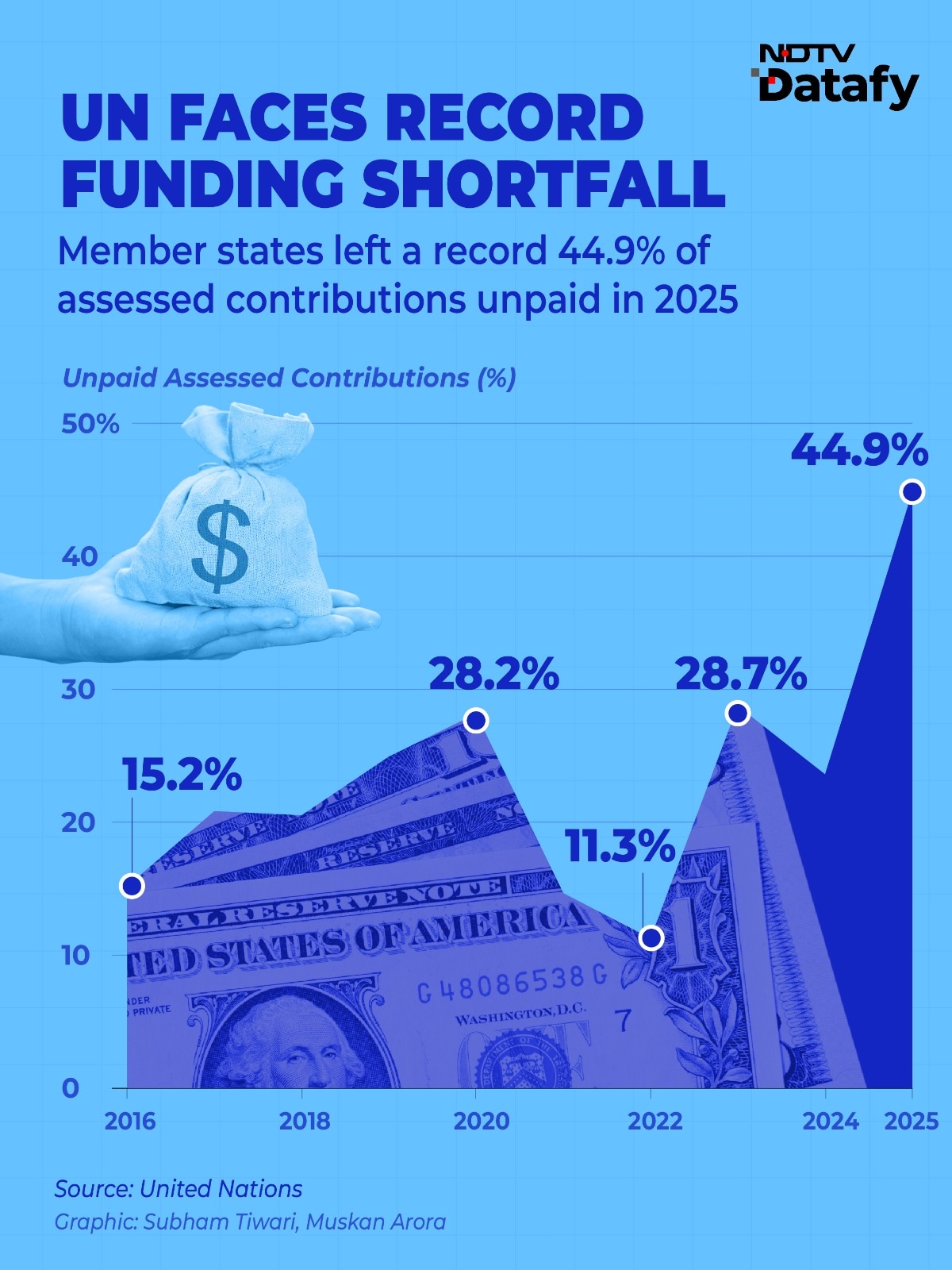
In late 2025, Guterres warned that chronic late and non-payment of dues had left the organisation facing its most fragile cash position in years. The UN ended 2025 with a record $1.57 billion in unpaid regular-budget assessments, after member states paid only 76.7 per cent of the amount due during the year.
The figures reveal a sharp deterioration in the UN's finances. Unpaid regular-budget assessments reached nearly 45 per cent of the annual assessment in 2025, compared with around 15 per cent a decade earlier.
Peacekeeping finances have also come under strain. The 2025-26 financial period began with $2.1 billion already outstanding. By April 30, unpaid peacekeeping assessments had climbed to $3.54 billion, including arrears from previous periods.
The crisis has been aggravated by the retreat of the UN's largest contributor, the United States, from multilateral institutions under President Donald Trump. US officials have openly spoken of putting the organisation on a "starvation diet", while Washington has delayed mandatory payments and sharply reduced voluntary funding to several UN agencies.
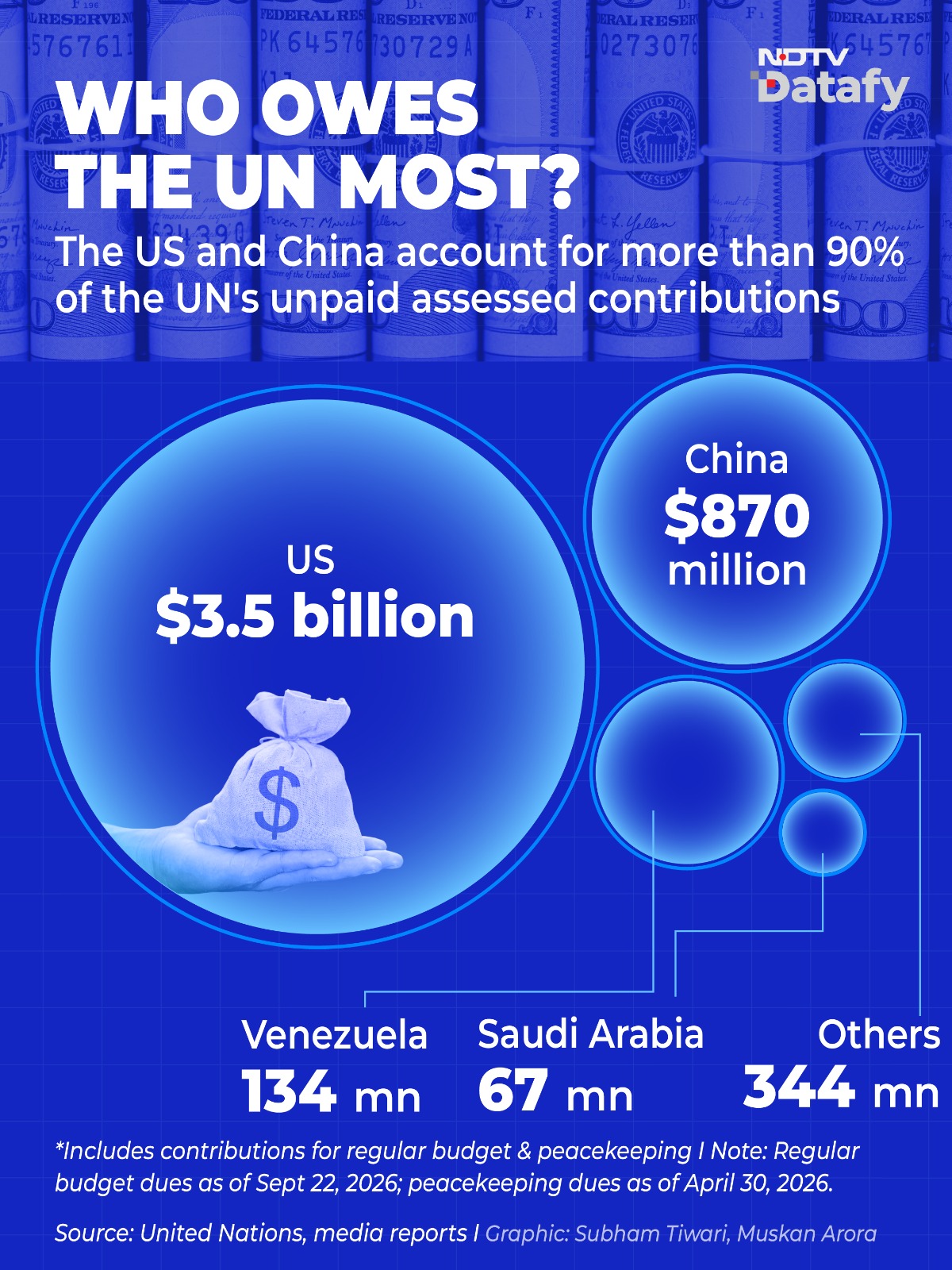
In April, the United States accounted for $2.04 billion of the UN's $2.80 billion in unpaid regular-budget assessments and another $2.25 billion in outstanding peacekeeping assessments. China owed $429 million toward the regular budget and $870 million for peacekeeping. Together, the two countries were responsible for about 88 per cent of the $6.34 billion outstanding across both categories as of April 30.
The picture changed somewhat in September after both countries made substantial payments.
On September 15, the United States paid $725 million toward the UN regular budget, reducing its outstanding regular-budget debt to $1.31 billion and removing the immediate threat to its General Assembly voting rights in 2027. Washington also paid $102 million toward peacekeeping operations.
China, meanwhile, paid its full annual regular-budget assessment of $641.4 million on September 1.
But late payments provide only limited relief. Many countries pay their dues in the final months of the year, leaving the UN unable to spend the money when programmes and operations require it.
"Predictability in the timing and amount of collections from Member States is critical for managing the Organisation's cash outflows and planning spending properly and safely," the UN said in a financial statement.
The next secretary-general will therefore inherit not only wars, geopolitical divisions and mounting doubts about multilateralism, but also an institution struggling to secure the money needed to carry out the mandates its members have given it.
Track Latest News Live on NDTV.com and get news updates from India and around the world


