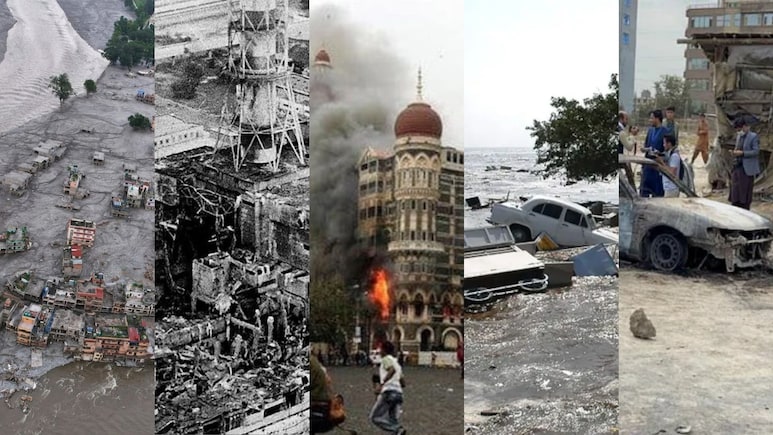
Co-incidence, or a cruel curse? The date '26' on the calendar has an unusual number of catastrophes attached to it - whether the tragic Nepal flash floods on August 26, 2026, or the 1939 earthquake in Turkey on December 26, which killed thousands.
Throughout recent history, the date has seen grim events - both natural and man-made disasters. Be it the the 2004 Boxing Day tsunami or the 2008 Mumbai terror attack, the disasters that shook the world have one thing in common - the calendar date.
-

-
 Best Of NDTV World Summit 2026 | Defining Conversations, Big Ideas
 -
 PM Modi Says 'Parasite' Congress Hurts 'Honest' Dissent Movements
 -
 "Some Dreaming Of Disorder": PM Modi's Dig At Rahul Gandhi
 -
 PM Modi Highlights India's Firsts: Fast Breeder Reactor, Hydrogen Train, Asian Games Medals
 -
 "UN's Limits Clearly Visible": PM Modi Presses For 'New Solutions' At NDTV Summit
 -
 "World That Relied On India's Brainpower Now Trusts Its Mindpower": PM Modi
 -
 Non-Oil Trade With India Went Up 50% In 3 Years: UAE Minister At NDTV Summit
 -
 "Some Dreaming Of Disorder": PM's "Failed Product Of Congress" Jibe At Rahul Gandhi
 -
 'Viksit Bharat Not Just For Us': PM Modi's Top Quotes At NDTV World Summit
 -
 Has Indian Cuisine Arrived At The Global Stage? What Vir Sanghvi Believes
Here is a look at major catastrophes that unfolded on the 26th:
Natural Disasters
Nepal Flash Floods (August 26, 2026): A massive flash flood hit Nepal's Rasuwa district and downstream areas following a sudden surge in water and debris that entered the Bhote Koshi river system. The flood has killed over 900, while more than 4,000 remain missing. It has also rendered thousands homeless and wrecked Nepal's infrastructure.
Hindu Kush Earthquake (October 26, 2015): Pakistan, Afghanistan and parts of northern India were shaken after a magnitude 7.5 earthquake struck the Hindu Kush region, killing more than 400 people.
Yogyakarta Earthquake, Indonesia (May 26, 2006): Over 5,700 people died when a magnitude 6.3 earthquake shook Yogyakarta on Indonesia's Java island. Thousands of homes and buildings were also destroyed.
Maharashtra Floods (July 26, 2005): Mumbai witnessed catastrophic flooding amid exceptionally heavy rainfall in Maharashtra, killing 1,094 people in the city. The city received around 944 mm of rain in 24 hours, inundating roads, homes and railway lines and bringing normal life to a standstill.
Indian Ocean Earthquake and Tsunami (December 26, 2004): One of the most tragic events in history, the tsunami was triggered when a magnitude 9.1 earthquake struck off the coast of Sumatra. Massive waves swept across Indonesia, Sri Lanka, India and Thailand, killing about 2.28 lakh people.
Bam Earthquake, Iran (December 26, 2003): The Iranian city of Bam was struck by a 6.6-magnitude earthquake killing about 31,000 people and causing extensive damage to the historic city as thousands of buildings collapsed.
Afghanistan Earthquakes (March 25-26, 2002): A series of earthquakes shook northern Afghanistan overnight on March 25-26, killing around 1,800 people.
Gujarat Earthquake (January 26, 2001): One of the most tragic events of India, the powerful Gujarat earthquake that struck the Kutch region killed around 20,000, injured over 1.6 lakh and devastated large parts of the state.
Gonghe Earthquake, China (April 26, 1990): The magnitude 7 Gonghe earthquake struck China's Qinghai province and caused severe damage in the Gonghe region, killed over a 100 people.
Pantar Earthquake and Tsunami, Indonesia (November 26, 1987): A magnitude 6.5 earthquake struck the Pantar area of Indonesia on November 26, 1987, generating a tsunami. The disaster killed 125 people.
Sea of Japan Earthquake and Tsunami, Japan (May 26, 1983): The coastal areas of Akita and Aomori prefectures suffered severe damage and 108 people were killed following a powerful earthquake.
Skopje Earthquake (July 26, 1963): A magnitude 6.1 earthquake struck Skopje, then part of Yugoslavia, killing about 1,070 and rendering over 2 lakh people homeless.
Ladik Earthquake, Turkey (November 26, 1943): The Ladik-Samsun-Havza region of Turkey was hit by a magnitude 7.5 earthquake, killing 4.020 people and causing extensive damage in the northern part of the country.
Erzincan Quake, Turkey (December 26-27, 1939): A magnitude 7.8 earthquake struck the Erzincan region of Turkey, destroying areas along the North Anatolian fault and killing about 32,700 people.
Lerissos Earthquake, Greece (September 26, 1932): A powerful earthquake in the Chalkidiki peninsula of Greece claimed about 160 to nearly 500 lives and caused extensive damage to Lerissos and surrounding areas.
North Izu Earthquake, Japan (November 26, 1930): A magnitude 7.3 earthquake struck Japan's Izu peninsula, killing about 250 to 272 people and causing widespread damage.
Man-Made Tragedies
Qaraqosh Wedding Hall Fire, Iraq (September 26, 2023): In a tragic event, a massive fire engulfed a wedding hall Iraq's Qarakosh after indoor pyrotechnics ignited highly flammable material. More than 100 people were killed, while dozens were injured.
Kabul Airport Bombing (August 26, 2021): At least 183 people, including 170 Afghan civilians and 13 US service members died after a suicide bomber from Islamic State-Khorasan province detonated an explosive near the Hamid Karzai International Airport in Kabul during the US-led evacuation from Afghanistan.
Mumbai Terror Attacks (November 26, 2008): On the night of November 26, 2008, 10 Lashkar-e-Taiba terrorists launched coordinated attacks at several locations in Mumbai, including the Chhatrapati Shivaji Maharaj Terminus and the Taj Mahal Palace Hotel. A total of 166 people were killed over the three days of the attacks. Nine terrorists were killed, and more than 300 people were injured. The event is marked as one of the most tragic ones in India's history.
Lauda Air Flight 004 Crash (May 26, 1991): A Lauda Air Boeing 767 flying from Bangkok to Vienna crashed in Thailand after it broke apart during a faulty engine issue. All 223 people aboard were killed.
Chernobyl Nuclear Disaster (April 26, 1986): Regarded as one of the deadliest tragedies in the world, the disaster started when Reactor no. 4 at the Chernobyl nuclear power plant in then-Soviet Ukraine exploded during a safety test. Large amounts of radioactive material were released into the air. The initial death count came in at 31, but long-term deaths due to radiation remain a matter of scientific estimation.
Benxihu Colliery Disaster, China (April 26, 1942): A gas and coal dust explosion ripped through the Benxihu coal mine in China's Liaoning province, causing carbon monoxide poisoning that killed 1,549 miners.
(With inputs from PTI)
Track Latest News Live on NDTV.com and get news updates from India and around the world


