






The Pakistani Air Force (PAF) just bombed several cities in a neighbouring country which was once described by much stronger forces as a place where there were only rocks and mountains.
The Soviet Union following a decade-long war in Afghanistan left the harsh, mountainous nation just a couple of years before it disintegrated and modern Russia emerged.
The US led a coalition in its post-September 11 War on Terror campaign in Afghanistan for nearly 20 years. After the western forces left, the Taliban rolled into the capital Kabul.
The world's biggest militaries have experienced how it was like to fight in Afghanistan. Today, Pakistan has declared an open war on its neighbour where predictability is a mirage, with armed ethnic groups having strong influence in different regions and strongholds consider themselves the absolute best fighters.
We look at how Pakistan's military stack up against Afghanistan's forces, amid escalation of hostilities including PAF strikes on Kabul and other Afghan cities.
Pakistan comes at 14th rank out of 145 in Global Military Ranking, according to military data analysis website globalfirepower.
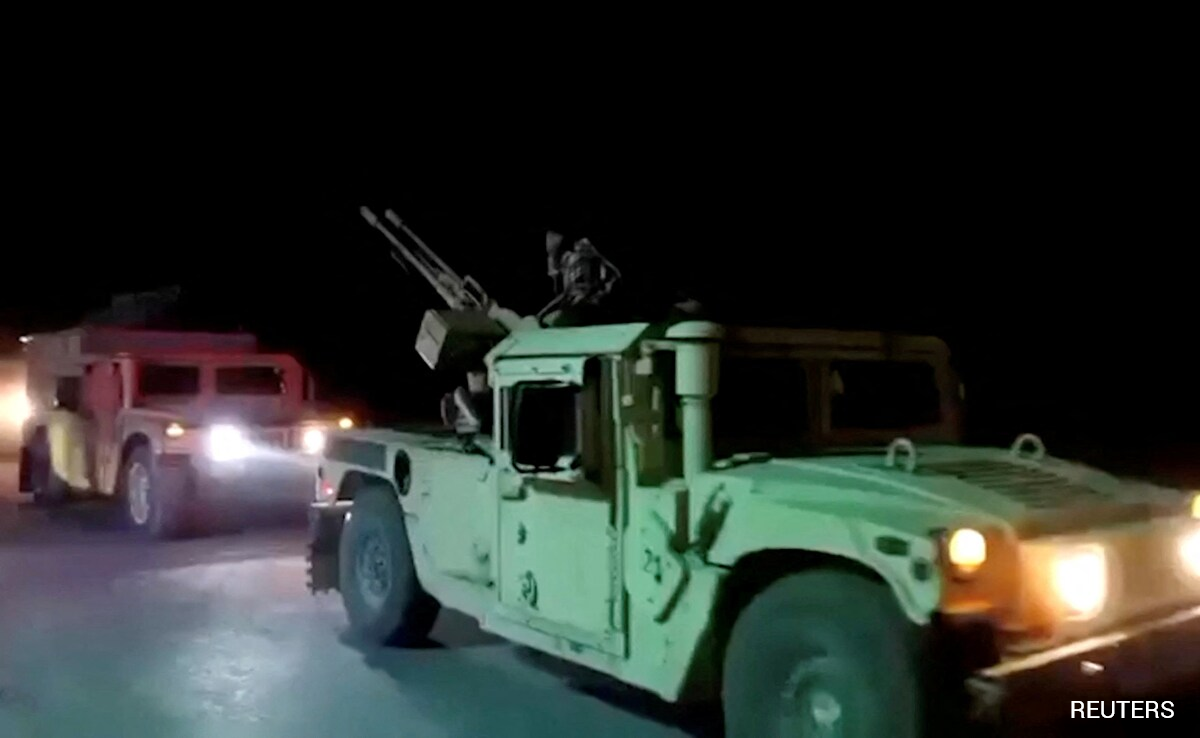
Afghanistan, however, sits at 121st rank out of 145. The Afghan forces, or Taliban, depend a lot on military hardware and equipment left behind by American forces. There is little to no modernisation.
Pakistan's military enjoys good recruitment and retention, boosted by equipment from its main defence partner, China. Islamabad has been investing in its military nuclear programmes and modernising its navy and air force.
The capability of the Afghan Taliban's armed forces is declining, with a fall in their ability to use foreign equipment that they seized after returning to power in 2021. A lack of international recognition for the Afghan Taliban administration hurts its military modernisation plans.
Active Personnel
Pakistan has 6.6 lakh active personnel in its defence forces; 5.6 lakh are in the army, 70,000 are in the air force, and 30,000 in the navy.
The Afghan military is much smaller, with only 1.72 lakh active personnel, though it is looking to take this number to two lakh.
Pakistan has over 6,000 armoured fighting vehicles (AFVs), and over 4,600 pieces of artillery.
The Afghan forces too use AFVs, including Soviet-era main battle tanks, armoured personnel carriers and autonomous underwater vehicles, but their exact number is unknown. The precise number of artillery they have, which is of at least three different types, is similarly not known.
Pakistan's Air Force has 465 combat aircraft, and more than 260 helicopters that include multi-role, attack and transport choppers.
Afghanistan has no fighter jets and no real air force to speak of, though it keeps at least six aircraft - some of them dating back, again, to the Soviet era - and 23 helicopters, although it is not possible to assess how many are in flying condition.
This means Pakistan can dominate the skies over Afghanistan easily, unless the Afghans get help from outside with modern anti-aircraft weapons. For example, the US gave the shoulder-fired Stinger anti-aircraft missile to the Taliban, which forced the then Soviet Union to change its entire helicopter assault strategy.
The biggest difference is that Pakistan is a nuclear-armed country and has 170 warheads, while Afghanistan does not have a nuclear arsenal.
Where the Afghan forces would score high would be in guerilla warfare, having experienced it for decades against both the US and the then Soviet Union. The Afghan forces also enjoy strong terrain advantage where they can hide, run and ambush.
Pakistan may face a huge problem if it decides to go all out in a campaign in Afghanistan. Such a prolonged war would trigger Afghanistan's irregular warfare expertise and give a lot of trouble to Pakistan's forces.
Pakistan would have the upperhand in a short, conventional war. But if history is any indicator, Afghanistan can bleed Pakistan in a prolonged guerrilla warfare condition.

