One of the biggest mysteries in the history of this planet is how some birds made it alive out of the mass extinction that wiped out the dinosaurs 66 million years ago. Now, tiny feathers encased in fossilised poop may help scientists find the answer.
The specimen found in Montana, United States, belonged to a bird that had once been eaten by a Tyrannosaurus rex or another predator, before the asteroid strike that started the mass extinction, as per a new study published in the journal Current Biology.
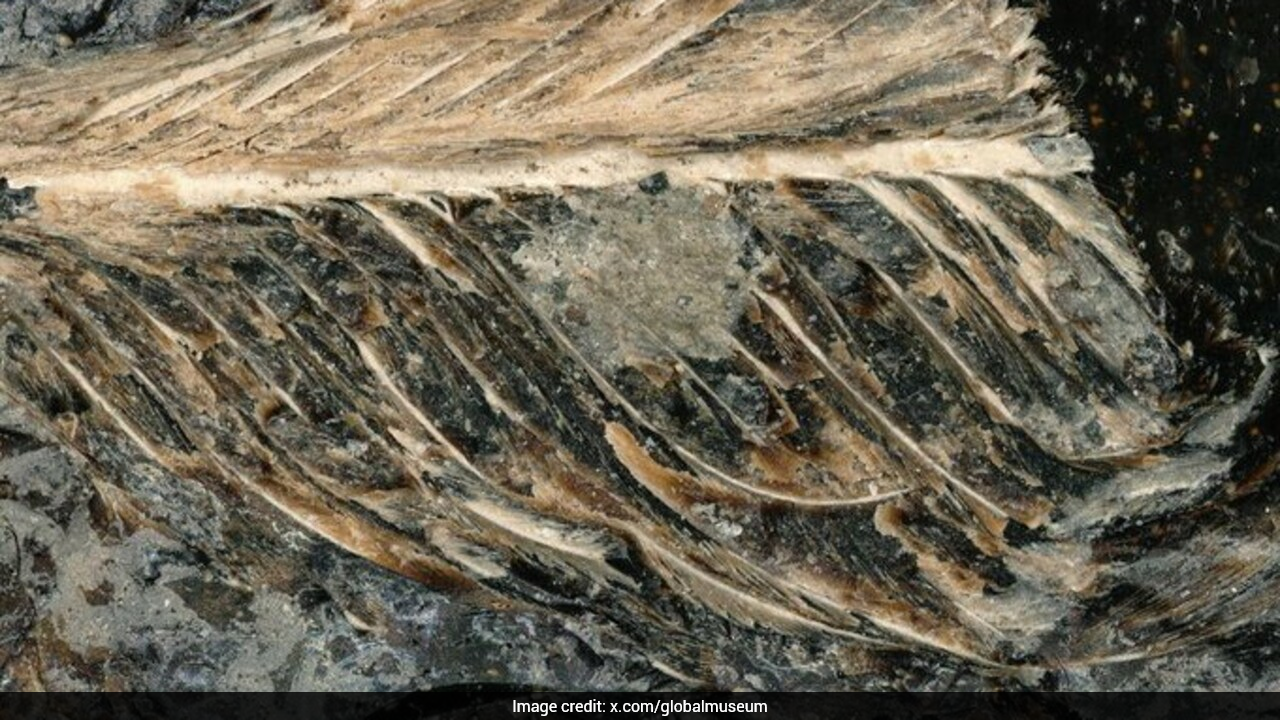
The remains include the best-preserved feather ever extracted from deposits dating back to the Mesozoic era, or the age of the dinosaurs.
The bones found with the feathers inside the coprolite, or fossilised faeces, belonged to a small, flightless diving bird similar to modern loons that did not survive the mass extinction, as per the research.
The creature was part of a group known as Hesperornithiformes, which is now extinct.
A Mystery For The Ages
Birds have descended from dinosaurs. The mystery is why all the descendants came from just one group of dinosaur-era birds called Neornithes, a close relative of Hesperornithiformes.
Previously, scientists had stated that Neornithes species survived since they lived near water. However, Hesperornithiformes also lived by water, and they died out.
The feathers were discovered in 2016 by David DeMar Jr., a palaeontologist with the University of Washington in Seattle.
When researchers imaged the fossilised faeces in a micro-CT scanner, they found that the specimen contained multiple leg bones and feathers.
Two minuscule, diamond-shaped scales from a fish called gar, which still exists today, were found in the remains and probably were part of the bird's last meal.
What The Fossil Indicates
Jingmai O'Connor, Chicago's Field Museum's associate curator of fossil reptiles told CNN that some of the feathers looked very similar to those found in modern-day birds.
There was a central spine with a square cross section that would have helped make the feather lightweight yet stiff.
Other feathers, however, were smaller and fuzzier and would not have been good at insulation. A similar pattern was found in birds from the Cretaceous called enantiornithines.
These primitive feathers may have proved deadly for the hesperornithiforms once global temperatures dropped significantly after the asteroid strike.
O'Connor believes one of the main reasons the Neornithes branch of the bird family survived the asteroid strike and its aftermath is due to differences in their feathers.
To confirm the theory, scientists need a similar fossil from the Neornithes fossil from just before the asteroid strike, O'Connor said.
The discovery suggests that other fossilised droppings in museums or still waiting to be found may contain similarly delicate remains that could help scientists answer more questions surrounding the extinction of dinosaurs.
Track Latest News Live on NDTV.com and get news updates from India and around the world


