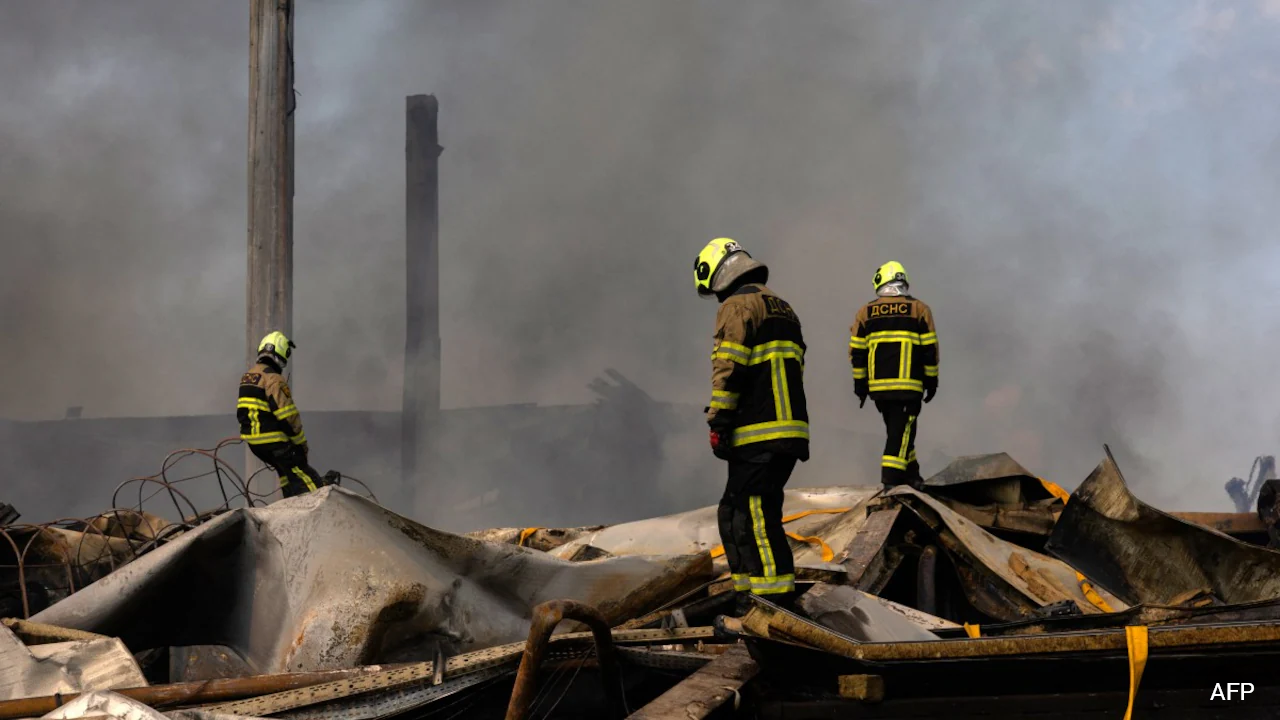
The war in Ukraine, now in its fifth year, has seen little change on the frontlines in recent months. But away from the trenches, the conflict has reshaped drone warfare, and it is civilians on both sides who are increasingly bearing the cost.
Drones have brought the fighting into ordinary homes in both countries. As each side finds gaps in the other's air defences, more strikes are hitting essential infrastructure, and more civilians are being killed every week.
On Monday, a Ukrainian drone strike, one of the deadliest of the war so far, killed 13 people in Russia, including a child, according to Russian authorities. Moscow responded with strikes of its own, killing five people in Ukraine's northeastern Kharkiv region.
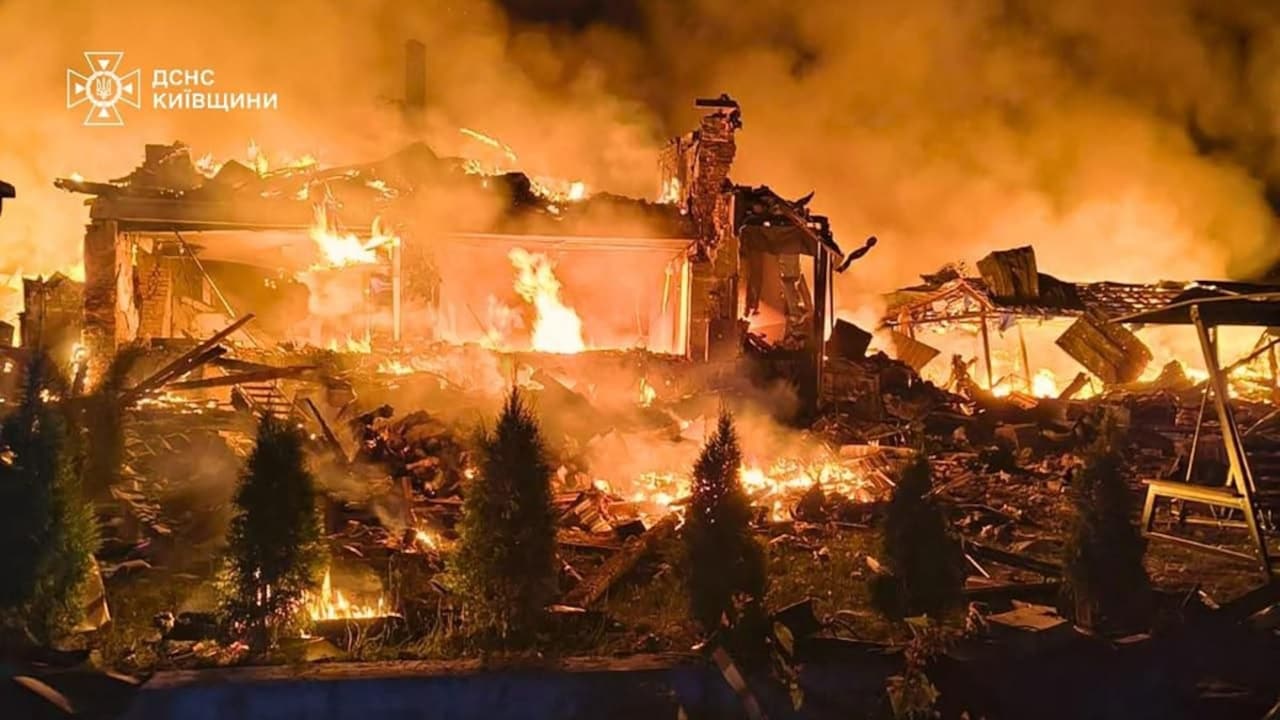
This handout photograph taken and released by Ukrainian State Emergency Service on August 8, 2026 shows a burning building following Russian ballistic missile strikes in Kyiv region.
Photo Credit: AFP
"We definitely see an increased number of (attack) events, an increased number of casualties as well. There has been an escalation also with regard to the variety of targets that are hit," Olha Polishchuk, Eastern Europe research manager at the conflict monitor ACLED, told CNN.
Ukraine Widens Its Strikes On Russian Oil And Retail
Ukraine has long been able to hit targets deep inside Russia, but its drone technology has advanced quickly over the past year. What began as occasional long-range strikes on oil refineries has become a regular campaign against refineries, oil tankers, power substations and wider energy infrastructure. Kyiv has also stepped up aerial attacks aimed at disrupting Russian military supply lines in the occupied east.
Beyond energy targets, Ukraine has widened its campaign to Wildberries, Russia's equivalent of Amazon. At least 23 Wildberries warehouses have been hit since mid-July, night after night, destroying billions of dollars' worth of stock. Nine of the company's workers have been killed.
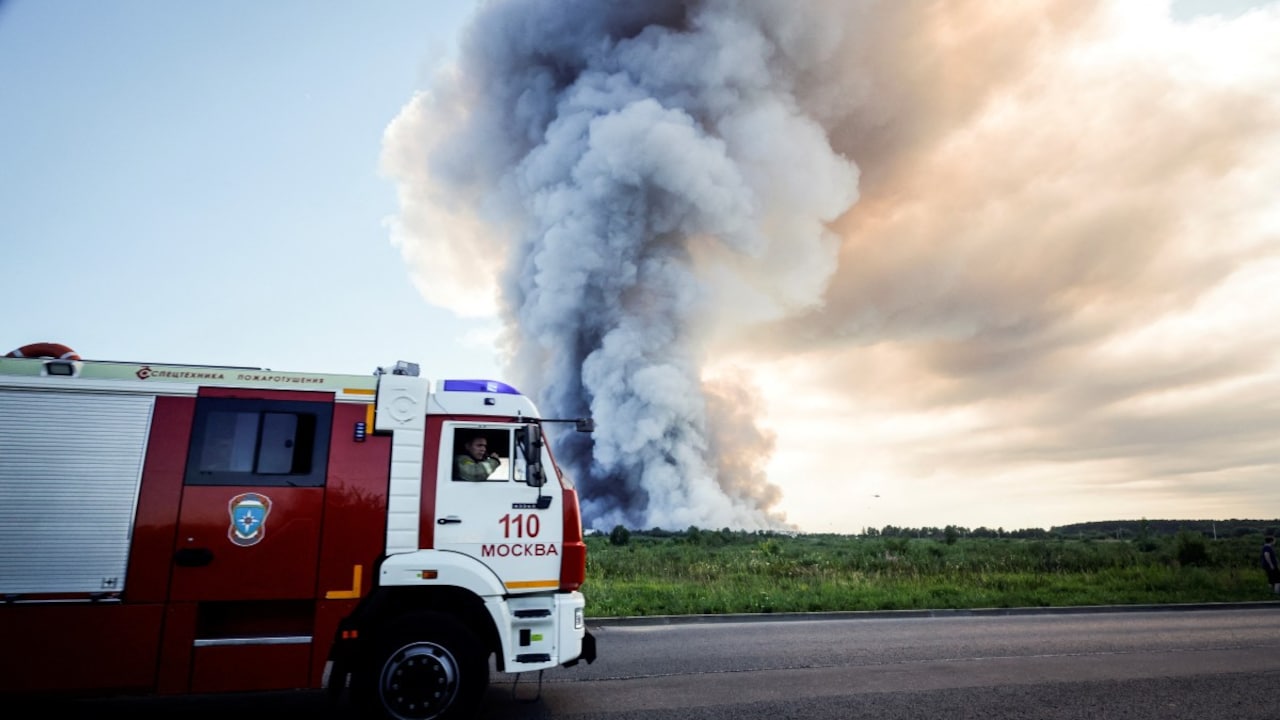
Firefighters drive past the smoke of a fire at the Russian e-commerce firm Wildberries' logistics complexes in the town of Elektrostal outside Moscow on July 18, 2026. A Ukrainian drone attack on two logistics centres in Russia killed eight people and injured 24, officials said on July 18, 2026.
Photo Credit: AFP
Kyiv argues that Wildberries, which is owned by Russia's richest woman and accounts for around 10 per cent of all Russian retail sales, is a legitimate target because it supplies goods to Russian soldiers.
Russia Strikes Back At Ukrainian Warehouses
The rise in air strikes is not one-sided.
"We've seen all of those strikes that Ukraine conducts also mirrored in Ukraine. So, after the attacks on Wildberries, for example, now a lot of warehouses in Ukraine belonging to the Rozetka electronic store have been targeted," Polishchuk told CNN.
Also Read: 'Rape, Genital Mutilation': How Russia Uses Sexual Torture As War Weapon
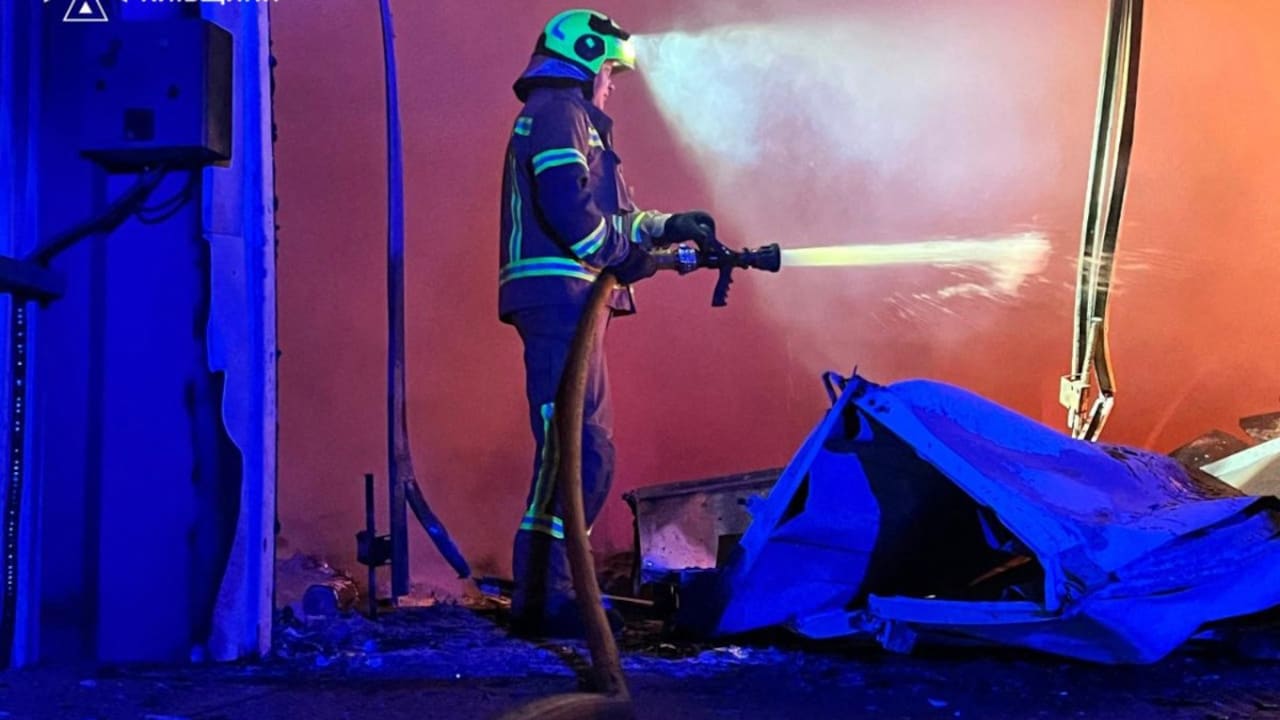
This handout photograph taken and released by Ukrainian State Emergency Service on August 5, 2026 shows rescuers putting out a fire in a warehouse premises damaged following massive Russian ballistic missile and drones strikes in the Ukrainian capital of Kyiv, amid the Russian invasion in Ukraine.
Photo Credit: AFP
Civilian Deaths Reach A New High
This escalation has driven civilian casualties to record levels. In June, the United Nations recorded the highest number of civilians killed and injured in Ukraine in a single month since 2022. At least 1,396 civilians were killed and 7,978 wounded across Ukraine in the first half of this year, a rise of 37 per cent compared with the same period in 2025. Most of these casualties occurred in areas under Ukrainian government control, the UN said, though some were also recorded in Russian-occupied territory.
Russia's foreign ministry says at least 797 Russian civilians have died so far this year. Even so, Russia's nightly assaults on Ukraine far outnumber the attacks it faces at home. Last month, Moscow launched an average of 172 strikes a day on Ukraine, compared with an average of 28 launched by Kyiv.
For months, Russia has also increased the number of drones and missiles fired in each wave of attacks, a tactic intended to overwhelm Ukraine's air defences.
The Drone That Hunted A Vegetable Seller
Alongside these large-scale assaults, smaller drones have also been used to target civilians in towns near the front line. Residents have described feeling like victims of a "drone safari" carried out by Russian troops. Russia denies deliberately targeting civilians, but a video that surfaced this month appeared to show a Russian drone targeting a vegetable seller in what was described as one such incident.
The trader, a 52-year-old man named Yuri, was cleaning garlic when he heard buzzing overhead. Within seconds, a Russian first-person view drone appeared from behind the market. It did not explode straight away. Instead, it followed him, almost like a predator stalking its prey.
🔴 EXCLUSIVE: An interview with the human safari survivor.
— Zarina Zabrisky 🇺🇸🇺🇦 (@ZarinaZabrisky) August 4, 2026
Yuri, 52, was sorting out garlic at his farmers market stand when a Russian drone started to chase him. It pursued Yuri around in circles and then struck him.
Yuri and his doctor spoke to me at a hospital in Kherson🧵 pic.twitter.com/f2CCZiM34M
As Yuri ran between umbrellas, circled his vegetable cart and waved his arms in desperation, the drone appeared to track his every move. It chased him around his truck before exploding beside him, sending shrapnel across his body.
Footage of the attack, shared by Ukrainian President Volodymyr Zelensky, quickly spread online.
Missiles Ukraine Struggles To Stop
In July, Russia fired 139 ballistic missiles at Ukraine, the highest monthly total this year, according to analysis by the Center for Strategic and International Studies. Ballistic missiles are especially difficult to intercept because of their speed and altitude, and doing so requires the US-made Patriot system, which is costly and in short supply.
Earlier this week, at least 17 people were killed in Kyiv and the surrounding region after Russia fired more than two dozen ballistic and anti-ship missiles, none of which were intercepted.
Zelensky has repeatedly appealed to allies for more Patriot interceptors. However, the conflict involving Iran has complicated matters by reducing stockpiles of American-made weapons. Ukrainian hopes rose last month when US President Donald Trump said, at the NATO summit, that Ukraine would be allowed to manufacture Patriot interceptors on its own soil. He later walked that pledge back.
Is A Diplomatic Solution Still Possible?
After more than four years of war, a diplomatic breakthrough looks increasingly distant. Hopes had risen when Donald Trump began his second term as US president, having claimed for weeks on the campaign trail that he could bring the war to a swift end.
Since then, there have been several high-profile meetings, including talks with Zelensky at the White House, discussions on the sidelines of the NATO summit and at Pope Francis's funeral, and a high-stakes meeting with Russian President Vladimir Putin in Alaska.
Trump has claimed a deal was close, and that both sides were willing to agree, though nothing has been finalised. With the conflict involving Iran also demanding his attention, the war between Russia and Ukraine continues to reach further into civilian life, reshaping daily reality for millions of people on both sides.
Track Latest News Live on NDTV.com and get news updates from India and around the world


