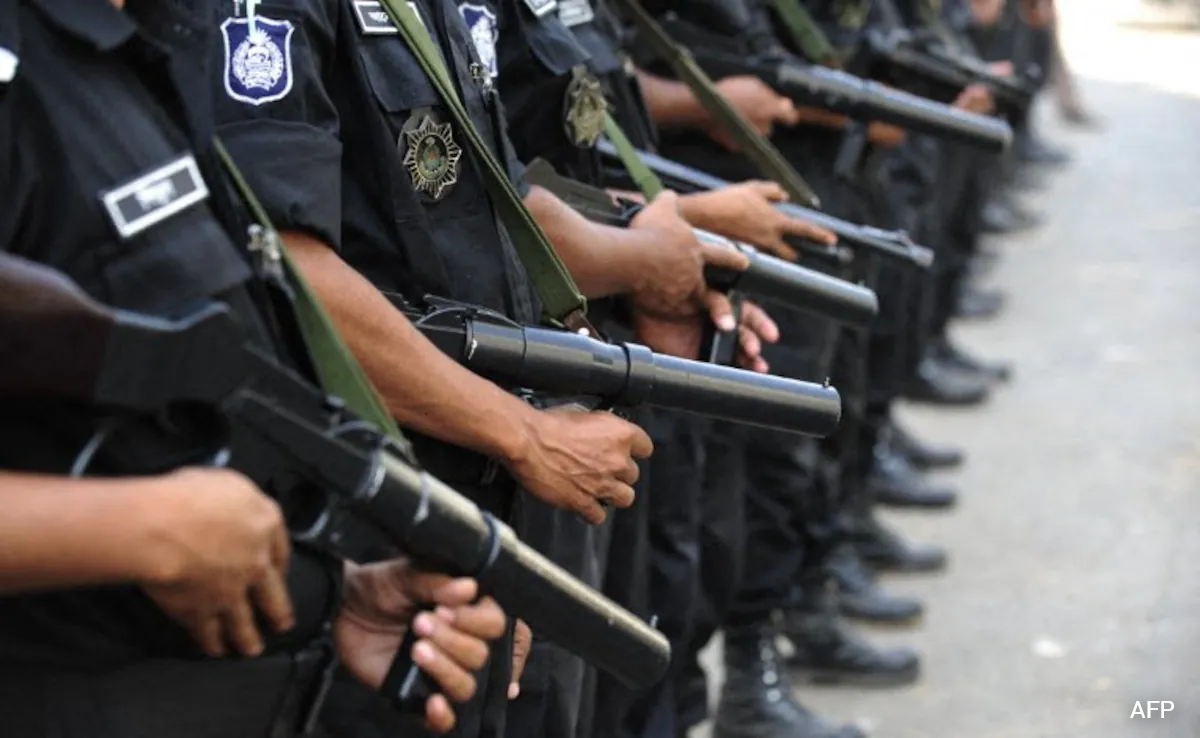
With Bangladesh's general elections scheduled for February 12, the Rapid Action Battalion (RAB) is once again under international scrutiny. The elite paramilitary force, long accused of human rights abuses, came under sanctions from the US Treasury in December 2021. The sanctions, issued under the Global Magnitsky Human Rights Accountability Act, targeted RAB as an organisation and seven current and former officers. They also discouraged financial transactions with the sanctioned parties
Advocacy groups and analysts stated that after the sanctions were introduced, reports of extrajudicial killings and enforced disappearances dropped significantly, suggesting that international pressure may have curtailed some abuses.
Origins And Early Controversy
The Rapid Action Battalion is an elite unit of the Bangladesh police, founded in 2004 under the Bangladesh Nationalist Party (BNP) government led by the late Khaleda Zia. It also includes officers seconded from the army, navy, and air force.
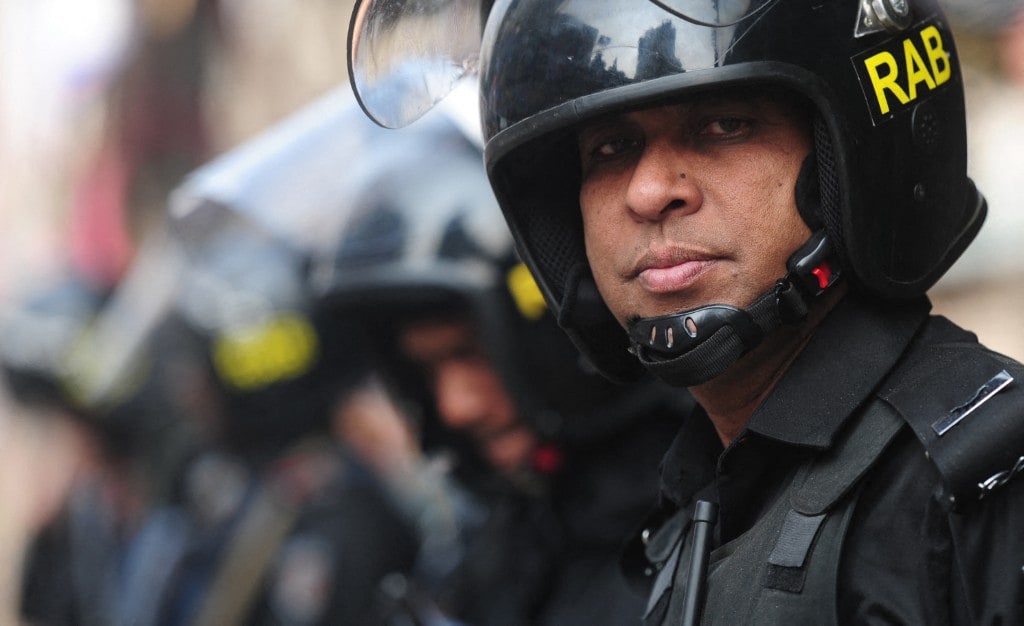
Bangladeshi elite force Rapid Action battalion (RAB) members stand guard in front of the Bangladesh Nationalist Party office in 2013
Photo Credit: AFP
In its early days, Khaleda Zia praised the force for conducting a courageous and non-partisan campaign for curbing terrorism. Though its tactics were highly questionable, RAB initially earned popularity, aided by public distrust of the criminal justice system.
The opposition Bangladesh Awami League (BAL), however, was critical from the outset. In 2005, it alleged that the RAB had blatantly disregarded constitutional provisions, human rights laws, as well as court law.
Read | Noor Hossain: The Iconic Bangladeshi Activist Who Took Down A Dictator
In its 2008 election manifesto, the BAL promised to end extrajudicial killings, an implicit reference to the RAB's operations. When the party came to power in 2009, discussions emerged in diplomatic circles about whether the force should be disbanded.
By 2014, allegations had mounted to the extent that Khaleda Zia herself called for the RAB's disbandment, though by then extrajudicial killings had become synonymous with the unit.
International Scrutiny
Within a few years of its founding, international human rights organisations reported that RAB was involved in unlawful killings and enforced disappearances. Human Rights Watch and Amnesty International published detailed allegations in 2006 and 2009, highlighting the impunity enjoyed by the force.
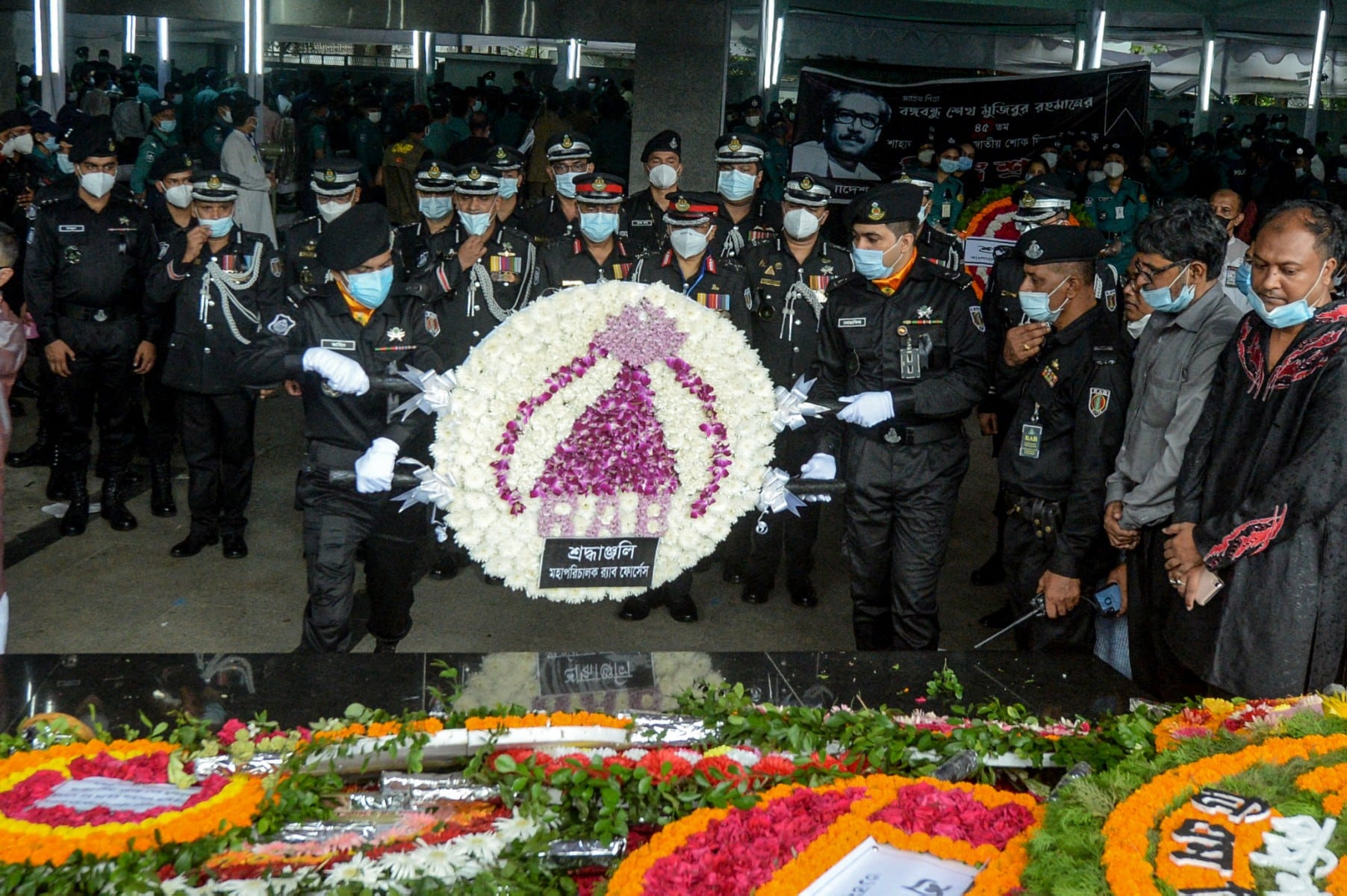
Rapid Action Battalion officials place a floral wreath near a mural dedicated to Bangladesh's first President and Father of the Nation, Sheikh Mujibur Rahman, during the National Mourning Day in Dhaka on August 15, 2020.
Photo Credit: AFP
The issue gained further attention in 2010 during a UK court case, when leaked diplomatic cables revealed the involvement of the United States and United Kingdom in training RAB officers. Calls for independent investigations began in 2011, and in 2017, a UN body condemned the government for ongoing extrajudicial killings.
Restructuring And Rebranding
Following widespread protests and civil unrest in 2024, independent UN reports recommended structural reform of Bangladesh's security forces. These reports suggested disbanding RAB and reintegrating personnel not implicated in serious violations back into their original units.
Read | Bangladesh's 'Bloodied' Elections: The Widespread Killings During 2014 Polls
As of February 3, 2026, the Bangladesh government announced that the RAB would be renamed the Special Intervention Force (SIF). The move, a combination of restructuring and rebranding, comes despite long-standing calls from the UN and human rights organisations for the force's complete abolition.
Track Latest News Live on NDTV.com and get news updates from India and around the world


