Pakistan's government presented its annual budget on Friday, including plans to boost tax collection and defence spending, as citizens expressed weariness with surging inflation sparked by the Middle East crisis that Islamabad is mediating to end.
Finance Minister Muhammad Aurangzeb unveiled planned spending of 18.77 trillion rupees ($67 billion), proposing an increase in defence spending by 16 per cent while development spending remained flat.
His government targeted an increase in tax revenues by 18 per cent as it seeks to meet fiscal targets agreed with the International Monetary Fund (IMF).
The measures could deepen frustration in a country where many households are already struggling with rising living costs.
"The rising inflation caused by the conflict in the region has made our survival very difficult. I don't expect this budget to bring anything positive," Moin ud Din Khan, a social organiser at a Karachi NGO, told AFP.
Petrol prices in Pakistan have soared more than 40 per cent since US-Iran hostilities began in late February, exacerbated by competing blockades around the Strait of Hormuz maritime oil trade route.
Pakistan's average inflation spiked due to the impacts of the Middle East war, the official annual economic survey released before the budget showed, leaping to a rate of 10 per cent in the three months after the conflict began up from 5.5 per cent in the July-February period.
Pakistan has been mediating between Iran and the United States in a bid to end their conflict.
The war came as Islamabad was trying to consolidate a fragile economic recovery after narrowly avoiding sovereign debt default in 2023 through multi-billion dollar IMF bailout programmes that required tough austerity measures.
The economic survey showed GDP growth in the year ending June projected at 3.7 per cent, below the target of 4.2 per cent.
The finance minister said growth was expected at four per cent in the coming financial year with 8.2 per cent inflation.
'Reduce Expenditure'
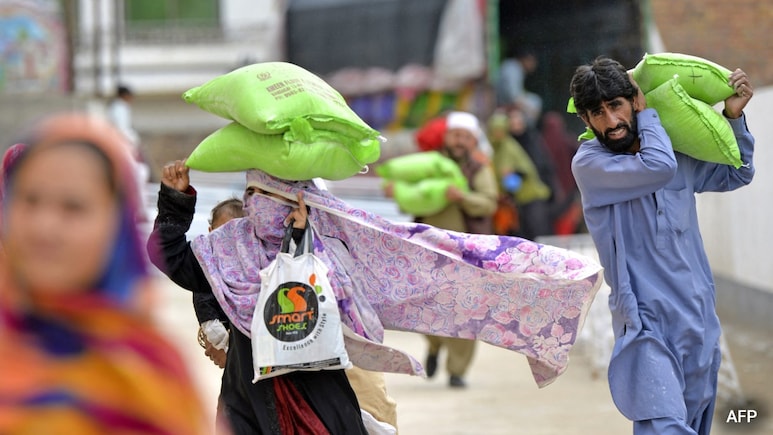
At markets selling staples like rice, wheat and spices in the city of Rawalpindi this week, shopkeepers complained of poor business as customers said rising costs were leading them to pull back on spending.
"People's purchasing power has disappeared... now markets are deserted," 46-year-old shopkeeper Khursheed Ahmed told AFP.
Others warned a new government scheme aimed at bringing small businesses into the tax net was being introduced at the worst possible time.
"Rather than imposing more taxes on the poor and small shopkeepers, the government should reduce its own expenditure," said 53-year-old Rashid Mahmood Khan, a wholesale trader.
The IMF has urged Islamabad to broaden its tax base and increase revenue collection as part of its current three-year $7 billion lending package, measures that successive governments have struggled to implement in a country where the majority of workers are employed informally.
Outside the parliament in Islamabad on Friday, dozens of government employees staged protests against the budget, chanting anti-government slogans as they demanded salary increases and higher pensions to offset inflation.
Inside, lawmakers from jailed former prime minister Imran Khan's opposition party thumped on their desks and threw paper at the finance minister, causing him to pause several times as he outlined the budget, which must now pass through both chambers of Pakistan's legislature.
(Except for the headline, this story has not been edited by NDTV staff and is published from a syndicated feed.)
Track Latest News Live on NDTV.com and get news updates from India and around the world


