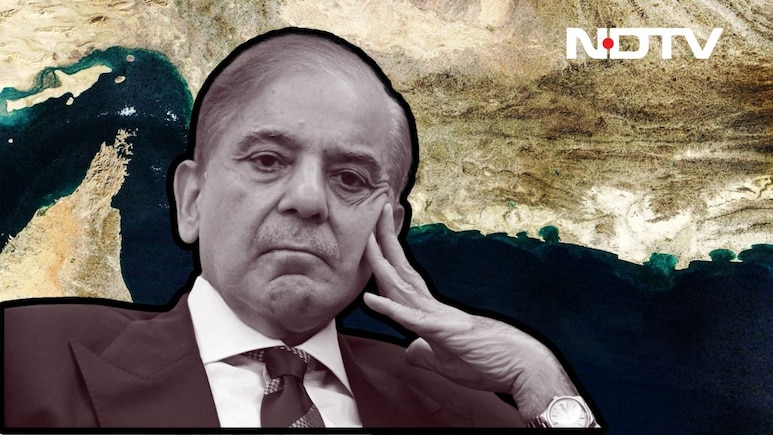
Pakistan has cancelled its military parade and ceremonial events that were scheduled for March 23, the country's Republic Day. Pakistani Prime Minister Shehbaz Sharif's office announced on Tuesday.
The decision has been taken in the backdrop of a crisis that has been triggered due to disruptions in oil supply because of the ongoing war between the US-Israel and Iran.
"In light of the ongoing Gulf oil crisis and the austerity measures announced by the government, it has been decided that the Pakistan Day parade scheduled for March 23 and all associated ceremonies will not be held," the statement read.
The statement mentioned that instead of an elaborate celebration, there will be a simple flag-hoisting ceremony.
"All ministries, divisions and departments are directed to observe the occasion with simplicity and dignity, so that despite limited ceremonies, the importance of the day and its true message remain preserved," the statement added.
In March, Sharif announced sweeping austerity measures to combat a severe fuel crisis and economic instability triggered by the US-Israel-Iran war. These emergency steps aim to drastically reduce government expenditure and conserve energy as global oil prices surge.
Since the war began more than two weeks ago, Iran has attacked several ships in the Gulf, in effect closing the strait, a conduit for a fifth of the world's crude oil and liquefied natural gas, and driving up global energy prices.
Pakistan relies heavily on imported crude and refined fuels from Gulf producers, most of which come through the Strait of Hormuz.
Pakistan has raised the price of kerosene and Light Diesel Oil (LDO), local media reported on Monday.
Meanwhile, a report has highlighted that the sharp increase in fuel prices in Pakistan is turning painful during Ramadan, when household budgets are already under strain because the rise in the prices of basic necessities disproportionately affects middle-class families.
"The timing of the increase has, therefore, intensified public anger. Ramadan is traditionally a period when governments are expected to provide relief through targeted support for essential goods. Instead, households are confronting a cost shock that is quickly eroding purchasing power just as families begin planning for Eid expenses," the Dawn reported.
The day carries deep historical weight, commemorating the 1940 Lahore Resolution, the moment the All-India Muslim League officially called for an independent Muslim homeland, a demand that would ultimately culminate in the 1947 Partition of India.
The date holds a second layer of significance as well, as it was on March 23, 1956, nearly a decade after the nation came into existence, that Pakistan transitioned into a republic upon ratifying its inaugural constitution.
Track Latest News Live on NDTV.com and get news updates from India and around the world


