- Maduro and his wife were at their home within the Fuerte Tiuna military installation when they were captured
- The couple faces US charges of participating in a narco-terrorism conspiracy
- Satellite images show the situation before and after the US strikes at Fuerte Tiuna
It was dark and it was deadly, said US president Donald Trump when the US forces, in a brazen operation into the South American country, captured Venezuelan president Nicolas Maduro and his wife from a military base in Caracas.
Maduro and his wife, Cilia Flores, were at their home within the Fuerte Tiuna military installation, the largest in the country, when they were captured. The two were then taken to the Iwo Jima, one of the Navy ships in the armada surrounding Venezuela, before being flown to the US air base.
The couple faces US charges of participating in a narco-terrorism conspiracy.
The dramatic action capped an intensive Trump administration pressure campaign on Venezuela's autocratic leader and months of secret planning, resulting in the most assertive American action to achieve regime change since the 2003 invasion of Iraq.
Trump said the US operation took place in darkness, although he did not detail how that had happened. He said the US turned off "almost all of the lights in Caracas," the capital of Venezuela. At the news conference, he said the city's lights "were largely turned off due to a certain expertise that we have."
"This thing was so organized," he said. "And they go into a dark space with machine guns facing them all over the place."
Satellite images below show before and after the US strikes at Fuerte Tiuna.
Fuerte Tiuna before US strikes
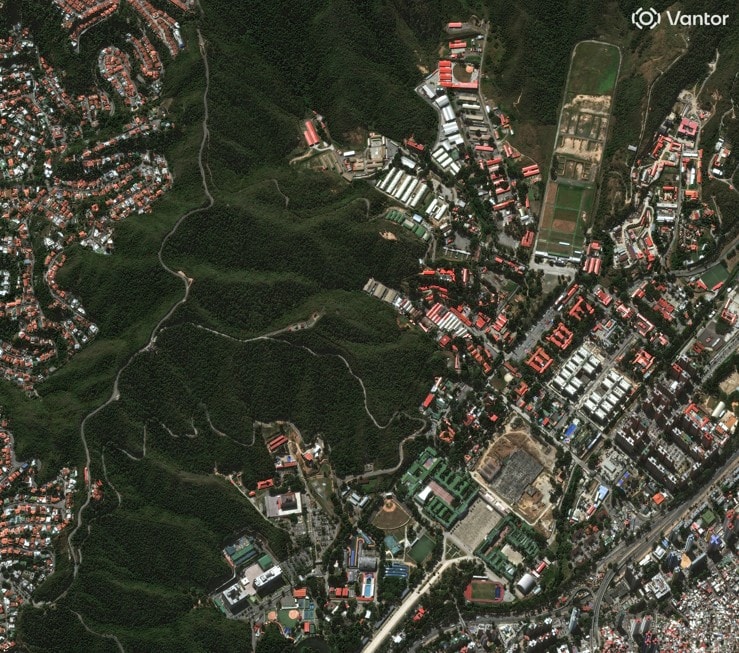
This handout satellite image by Vantor taken on December 22, 2025, shows an overview of Fuerte Tiuna
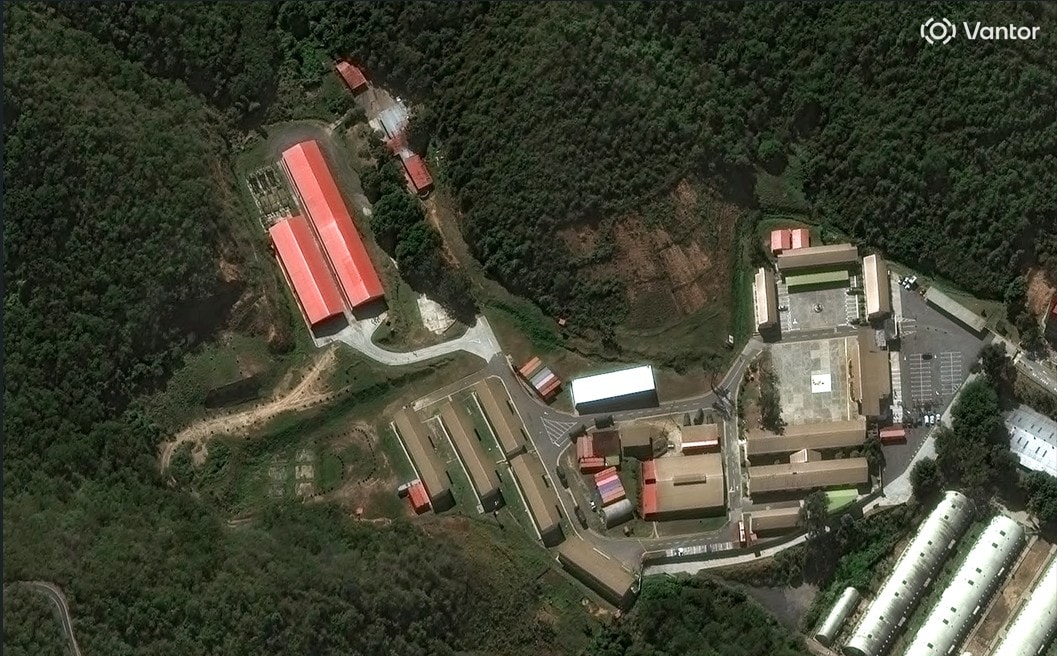
This handout satellite image by Vantor taken on December 22, 2025, shows an overview of Fuerte Tiuna
Fuerte Tiuna after US strikes
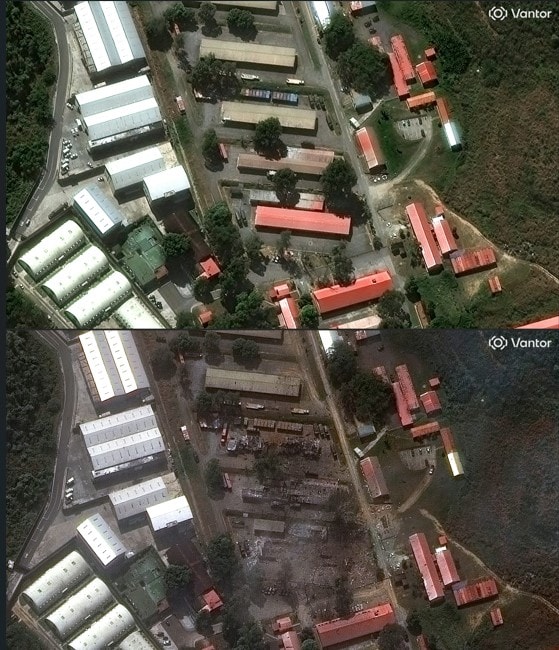
This combination of pictures created on January 3, 2026, shows a handout satellite image by Vantor taken on December 22, 2025, showing an overview of Fuerte Tiuna, and a handout satellite image by Vantor taken on January 3, 2026, showing an overview of Fuerte Tiuna after a US military operation

This handout satellite image by Vantor taken on January 3, 2026, shows an overview of Fuerte Tiuna after a US military operation that led to the capture of Venezuelan president Nicolas Maduro

This handout satellite image by Vantor taken on January 3, 2026, shows an overview of Fuerte Tiuna after a US military operation that led to the capture of Venezuelan president Nicolas Maduro
At least seven explosions were heard in Caracas. The attack, which Defense Secretary Pete Hegseth described as part of "massive joint military and law enforcement raid," lasted less than 30 minutes.
Trump later posted on Truth Social a photo of the Venezuelan leader, wearing a gray sweatsuit, protective headphones and blindfold. The caption said: "Nicolas Maduro on board the USS Iwo Jima."
The top US military officer, General Dan Caine, said 150 aircraft took part in the operation, supporting troops who choppered in to seize Maduro with the help of months of intelligence into his daily habits -- down to "what he ate" and what pets he kept.
Maduro and his wife "gave up" without a struggle and there was "no loss of US life," he said.
Maduro, 63, has led Venezuela with an iron fist for more than a decade through a series of elections widely thought to have been rigged. He came to power after the death of his charismatic mentor, former president Hugo Chavez.
Countries such as China, Russia, and Iran, which have longstanding ties with Maduro's government, were quick to condemn the operation, but their alarm was also shared by Washington's allies including France and the EU.
Venezuela's ally China on Sunday called for Maduro to be "immediately released".
Delcy Rodriguez, who is next in the presidential line of succession, served as Maduro's vice president since 2018, overseeing much of Venezuela's oil-dependent economy as well as its feared intelligence service. On Saturday, Venezuela's high court ordered her to assume the role of interim president.
In a major snub, Trump said opposition leader Maria Corina Machado, who was awarded last year's Nobel Peace Prize, didn't have the support to run the country.


