Nepal Flash Floods LIVE Updates: The death count from the catastrophic Himalayan glacial floods has crossed 1,000, with nearly 4,500 people still unaccounted for as rescue efforts continue across Nepal.
Teams are racing to reach around 100 hydropower workers believed to be trapped inside tunnels buried under mud and debris, though hopes of finding survivors are fading after only bodies have been recovered so far. Excavation work has also been hampered by water seeping into rescue shafts.
As relief operations intensify, India's fifth aid flight has left for Nepal with an 11-member rescue team, specialised equipment and 5.5 tonnes of medical supplies.'
The August 26 disaster began with a chain of events high in the Himalayas. A glacial collapse sent large amounts of rock, ice and meltwater into valleys below, triggering powerful floods downstream.
Scientists studying satellite imagery said the collapse appears to have involved the failure of bedrock beneath a glacier in the Himalayan region. The rockfall was powerful enough to register as a magnitude 5.2 seismic event.
The resulting surge of water and debris entered rivers that flow through valleys in Tibet and Nepal, causing them to rise rapidly. Floodwaters swept away homes, buildings, roads and bridges and carried mud and rocks downstream.
Nepal Flash Floods Updates: Follow Rasuwa Rescue Operations, Relief Efforts, Missing Persons And Weather Updates:
Rain May Hamper Relief Efforts In Nepal Flood-Hit Areas Today
According to Nepal's Department of Hydrology and Meteorology, moderate rainfall is likely this afternoon in Rasuwa, Nuwakot, Dhading and surrounding areas affected by the Bhote Koshi flood. The rain could hamper ongoing relief and rescue operations today.
Waiting for Wings: Hours Pass at Dunche Helipad
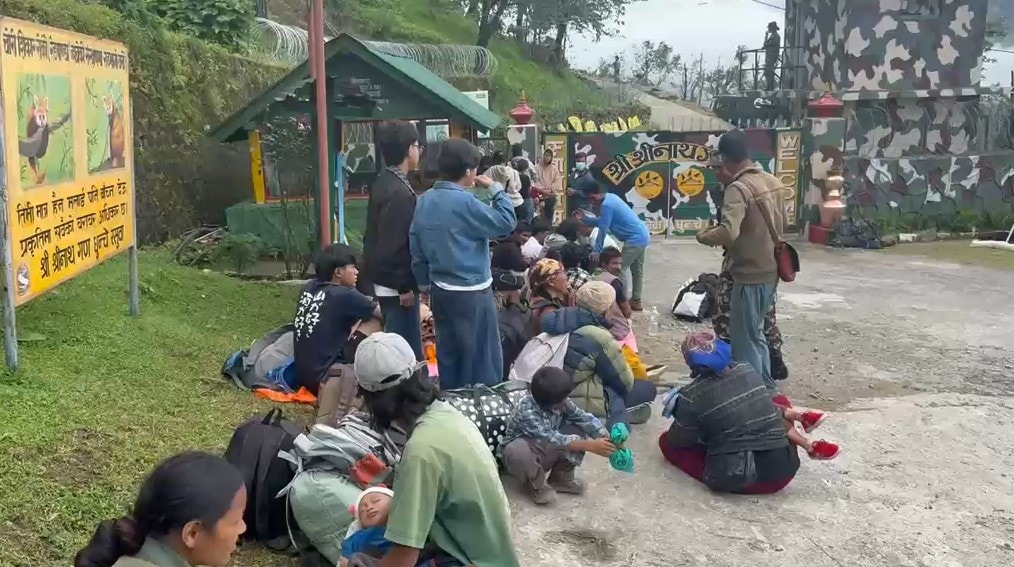
The line at Dunche Helipad seems to stretch a little farther with every passing hour. Travellers, trekkers and locals wait patiently, eyes fixed on the sky, hoping the next helicopter will be theirs. As the queue grows longer, so does the anticipation. In the mountains, time moves differently. Every distant whir of rotor blades brings a fresh wave of hope that the long wait for Kathmandu for flood victims may finally be coming to an end.
Video: NDTV's Aerial Report From Worst-Hit Areas In Flooded Nepal
#TheBreakfastShow with @ParmeshwarBawa | NDTV's Aerial Report From The Worst-Hit Areas In Flooded Nepal#NepalFloods @VishnuNDTV pic.twitter.com/FQyVUISnZb
— NDTV (@ndtv) September 2, 2026
Why Nepal Wants Tourists To Visit Despite Devastating Floods
Nepal urged international travellers not to abandon the Himalayas, declaring the country open for tourism as it continues to assess the human and economic toll from catastrophic floods that killed hundreds and left thousands missing.
"Our mountain trails and trekking routes are still waiting for you," Tourism Minister Khadak Raj Paudel said in a video message on Facebook, using the hashtag #NepalCalling. "Your coming to Nepal this time does not mean only a holiday. It's a big support to the country fighting this catastrophic tragedy of flash floods."
The plea comes as harrowing images of destroyed villages, roads and bridges - and reports of deaths following last week's floods - threaten to deter tourists even from parts of Nepal largely untouched by the disaster.
Deadly Nepal Floods Expose Threats To Hydropower In Roof Of The World
The devastating deluge that swept through the mountain valleys on the border between Nepal and Tibet in China is a potent reminder of a growing green-energy risk in one of the world's most hazard-prone areas.
Hydropower dams high in the Himalayas seem to be a ready solution for an energy-starved region. Governments see mountain rivers as an answer to rising electricity demand, fossil-fuel dependence and economic underdevelopment. But a changing climate is bringing with it unstable glaciers and unpredictable rain, creating new risks for existing projects and raising the potential cost of those that are still on the drawing board.
Week After Deadly Floods, Funerals In Nepal For Missing
Nepali families were holding symbolic funeral ceremonies to "liberate the souls" of loved ones missing since deadly flash floods swept away their villages and homes in the Himalayan region a week ago.
Emergency teams have recovered more than 1,000 bodies, and nearly 4,500 people are missing after the gigantic wave of freezing water, rocks and debris triggered by a high-altitude glacial collapse roared down the China-Nepal border on August 26.
After days of searching shelters and mortuaries, relatives of some of the missing lost hope and began conducting last rites.
"We had to do this to set his soul free, so that he is at peace and happy wherever he is," said Dolma Newar Tamang, flanked by her sobbing son, at a funeral for her husband.
India Steps Up Nepal Relief Mission, Dispatches 5th Shipment Of Aid
The fifth Indian aircraft has departed for Nepal.
— Dr. S. Jaishankar (@DrSJaishankar) September 2, 2026
It is carrying an 11-member rescue team with specialised equipment, and 5.5 tonnes of essential medicines.
🇮🇳 🤝🇳🇵 pic.twitter.com/g7f4FqgPk8
Indian Envoy Meets Principal Who Saved 1600 Children From Nepal Floods
Met Rajendra Dawadi, Principal, Tribhuvan Trishuli Secondary School, Bidur, Nuwakot. His timely action saved lives of more than 1600 school children just before the school was swept away in #Rasuwa flash flood. This school was set up in 1950s; Designed by Indian engineer,… pic.twitter.com/XoVkKRvR8x
— Naveen Srivastava, Ambassador of India in Nepal (@navsri6619) September 1, 2026


