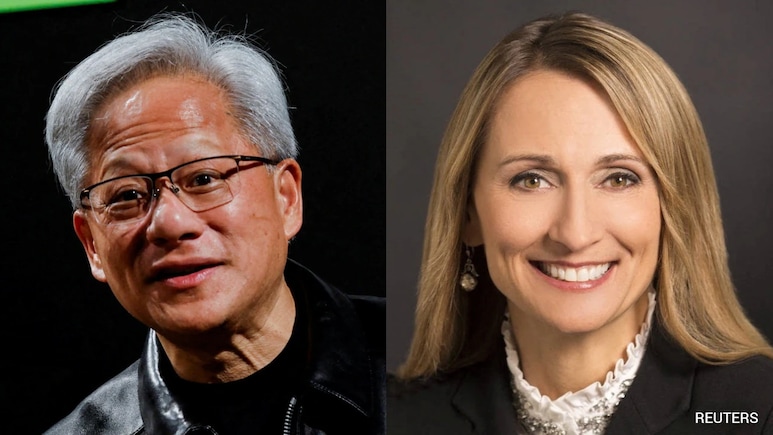
Nvidia CEO Jensen Huang has resigned following the disclosure of three extramarital affairs, one of which is linked to a suspected Chinese spy, leading to a crisis for the chipmaker and causing shockwaves throughout the AI industry he helped finance. For now, Nvidia has named its Chief Financial Officer (CFO), Colette Kress, as interim CEO as it searches for a permanent successor, considering both internal and external candidates.
Nvidia controls an estimated 90 per cent of the market for advanced artificial intelligence (AI) chips and is one of the world's most valuable companies. Huang's exit caps a tumultuous week for the company and could have far-reaching consequences for American chip export policy and the broader AI ecosystem, given the ex-CEO's push to preserve access to the Chinese market as well as his close ties with US President Donald Trump.
The crisis also threatened to implicate some Trump administration members, including Commerce Secretary Howard Lutnick, who is facing growing questions over the administration's oversight of chip sales to China, particularly as both he and Huang pushed for relaxing those sales despite scrutiny from long-time China hawks in both parties.
What's Next For Nvidia?
With Kress's appointment as interim boss, Nvidia's shares have recovered some ground after plummeting more than 13 per cent when US markets opened shortly after news of Huang's resignation. But the leadership shake-up affected the markets, with Nvidia's shares falling more than 14 per cent at one point on Thursday before recovering some of that ground.
Shares closed down 4.3 per cent and gained 1 per cent back in after-hours trade. Retail investors heavily purchased Nvidia shares on Thursday as the price dropped, indicating that the AI trade remains vibrant.
The major US stock indexes also closed lower.
"Investors seem to be moving past the scandal and putting their money elsewhere, shifting to other tech stocks," according to Al Jazeera journalist Kristen Saloomey.
Stephanie Balaouras, group research director for Forrester, told PBS Huang's resignation from Nvidia isn't just a test for the company but the AI boom as a whole.
"If Nvidia stabilizes quickly under new leadership, the AI infrastructure boom will have demonstrated resilience," she said. "If its stock, financing relationships, or ecosystem commitments remain under sustained pressure, that would add evidence to the fragile side of the AI bubble ledger."
Meanwhile, US lawmakers are looking into the potential national security implications of Huang's reported relationships. Huang has also agreed to testify before US congressional committees over his reported ties with a woman suspected of having links to Chinese intelligence, as Republican lawmakers step up their investigation into potential national security implications surrounding the chipmaking giant.
Who Could Be Nvidia's New Boss
Huang's departure threatens to disrupt an AI ecosystem that he helped shape by pouring Nvidia's swelling cash pile back into cloud providers, suppliers and labs. The surge in AI computing demand drove a sevenfold increase in Nvidia's shares through early October, pushing its market value at one point to nearly $6 trillion.
The departure has also ignited speculation over who will ultimately lead the company, long associated with the leather-jacket-wearing Huang, who co-founded Nvidia more than three decades ago.
It is not yet clear if Kress will remain Nvidia's permanent leader. She has been appointed as interim CEO while the chipmaker searches for a permanent replacement and considers both internal and external candidates.
President Trump has suggested former Apple chief executive Tim Cook as Huang's successor.
However, as Nvidia navigates this difficult moment, the company is considering several names for the top post, Reuters news agency reports.
Kress and long-time Nvidia engineer Ian Buck, company veterans known for their relations with Wall Street and technology chops, respectively, had emerged as the leading internal candidates among investors and analysts even before Huang's departure. Buck, the vice president of hyperscale and high-performance computing, joined Nvidia in 2004 and helped develop technology that transformed the company from a video game chipmaker into a leading force in AI hardware.
Rene Haas, Arm CEO, is also a frontrunner for the top job. He reportedly spent seven formative years at Nvidia, rising to vice president and general manager.
Harvey Jones, Nvidia's first-ever board chair, who was appointed to the position following Huang's resignation, is also being considered for the job. Jones reportedly served on Nvidia's board since 1993, before the chipmaker went public. He also sits on the company's audit and nominating and corporate governance committees, according to an Al Jazeera report.
Lisa Su, who leads one of Nvidia's top rivals, AMD, is also a contender. If she replaced Huang, the move would represent a major disruption for AMD and a shift felt across the industry. Su and Huang were both born in Taiwan, and they have claimed each other as a distant relative.
But she is known for a vastly different, less flashy style from Huang, who often drew crowds during his forays to Asia. Her quieter approach has won her allies in the key China market, where she has scored meetings with China's commerce minister and Vice Premier He Lifeng. As US export controls led to a cratering of Nvidia's market share in China, AMD under Su still found avenues into the country, including with central processing units (CPUs) and consumer graphics processing units (GPUs). These helped it attain a 4 per cent share of China's AI chip market.
Sanjay Mehrotra, chief executive of memory chip maker Micron, who has over four decades of experience and has worked closely with Nvidia, which uses Micron products, is another contender. Mehrotra has led the largest US memory chipmaker since 2017 and helped drive its transformation into a key supplier for AI systems. Before joining Micron, Mehrotra co-founded flash-memory pioneer SanDisk in 1988 and remained with the company until its 2016 sale. He served as chief executive from 2011, helping build SanDisk into a Fortune 500 semiconductor company.
The name of Matt Murphy, chief executive of custom chipmaker Marvell Technology, is also being considered. He has emerged as a prominent figure in the AI infrastructure boom, working closely with Nvidia while helping cloud giants develop custom chips intended to reduce reliance on Nvidia processors.
Johny Srouji, who oversees engineering of all hardware at the only company worth more than Nvidia -- Apple, is also a contender. His remit includes microchips, cellular modems, displays, cameras and batteries inside its devices, and he reports to CEO John Ternus, who succeeded Tim Cook in September.
And finally, Tim Cook. He succeeded in the difficult task of leading Apple after co-founder Steve Jobs died in 2011, so picking up the reins from a legend is on his resume. Over a 15-year stint as CEO, he took the company to a massive $4.5 trillion market capitalisation from $350 billion. Apple today is the only company worth more than Nvidia.
Track Latest News Live on NDTV.com and get news updates from India and around the world


