- India rejected Pakistan's claim over Jammu and Kashmir at the UN Security Council debate
- Ambassador Parvathaneni called Pakistan a global epicentre of terror and cited terror attacks
- Parvathaneni criticised Pakistan's political turmoil and military's constitutional coup
India has once again thrashed Pakistan's "unwarranted reference" to Jammu and Kashmir and its claim over the union territory at the United Nations Security Council Open Debate on "Leadership for Peace". India's Permanent Representative to the UN, Ambassador Harish Parvathaneni, reiterated that the Union Territories of Jammu and Kashmir and Ladakh are "an integral and inalienable part of India", emphasising "they were, are, and will always remain so."
Referring to the statement made by the representative of Pakistan during the debate, Parvathaneni called out Islamabad's "obsessive focus on harming India and its people."
Further explaining why India has put an end to the Indus Waters Treaty, he labelled Pakistan as the "global epicentre of terror."
"India had entered into the Indus Waters Treaty, 65 years ago, in good faith, in a spirit of good will and friendship. Throughout these six and a half decades, Pakistan has violated the spirit of the Treaty by inflicting three wars and thousands of terror attacks on India," Parvathaneni said.
In the last four decades, tens of thousands of Indian lives have been lost in "Pakistan sponsored terror attacks", Parvathaneni said, citing the most recent attack in Jammu and Kashmir's Pahalgam earlier this year in April, in which 26 civilians, including a foreign national were killed.
"It is in this backdrop that India has finally announced that the Treaty will be held in abeyance until Pakistan, which is a global epicentre of terror, credibly and irrevocably ends its support for cross-border and all other forms of terrorism," India noted.
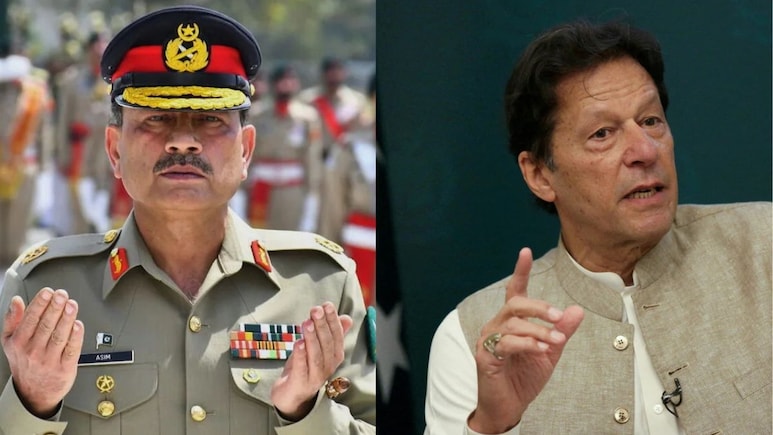
Parvathaneni also criticised Pakistan's democracy and political situation at the UN Security Council, referencing the jailing of a former Prime Minister, Imran Khan, banning the ruling party, Pakistan Tehreek-e-Insaf (PTI), and engineering a "constitutional coup" through the 27th amendment to grant lifetime immunity to its Chief of Defence Forces, Asim Munir.
"Pakistan, of course, has a unique way of respecting the will of its people - by jailing a Prime Minister, by banning the ruling political party and by letting its armed forces engineer a constitutional coup through the 27th amendment and giving lifetime immunity to its Chief of Defence Forces," Parvathaneni said.
"Let me be clear - India will counter Pakistan-sponsored terrorism in all its forms and manifestations with all its might," he added.
#IndiaAtUN
— India at UN, NY (@IndiaUNNewYork) December 15, 2025
PR @AmbHarishP delivered 🇮🇳's statement at the Open Debate on ‘Leadership for Peace' in the @UN Security Council.
Please watch.
Full statement here- https://t.co/8GWDDqz4JW @MEAIndia @IndianDiplomacy pic.twitter.com/PpWG2Q1kaU
The sharp response came after Pakistan's representative, Asim Iftikhar Ahmad reiterated claims of "unresolved dispute" in Jammu and Kashmir while criticising the suspension of the Indus Waters Treaty.
"Pakistan seeks peace and stability in South Asia, but peace cannot be unilateral pursuit," Ahmad said referencing to Jammu and Kashmir.
"J&K remains one of the oldest unresolved disputes on the council's agenda. It requires a just settlement in accordance with the UN Charter, relevant Security Council resolutions, and the will of the Kashmiri people something India continues to violate and deny," he said.
Pakistan called India's unilateral suspension of the Indus Waters Treaty "blatant breach of international obligations."
Track Latest News Live on NDTV.com and get news updates from India and around the world


