Regime Change, Uranium Stockpile, And The US Dilemma To Invade Iran
US Defence Secretary Pete Hegseth has declined that US troops were already on the ground in Iran.
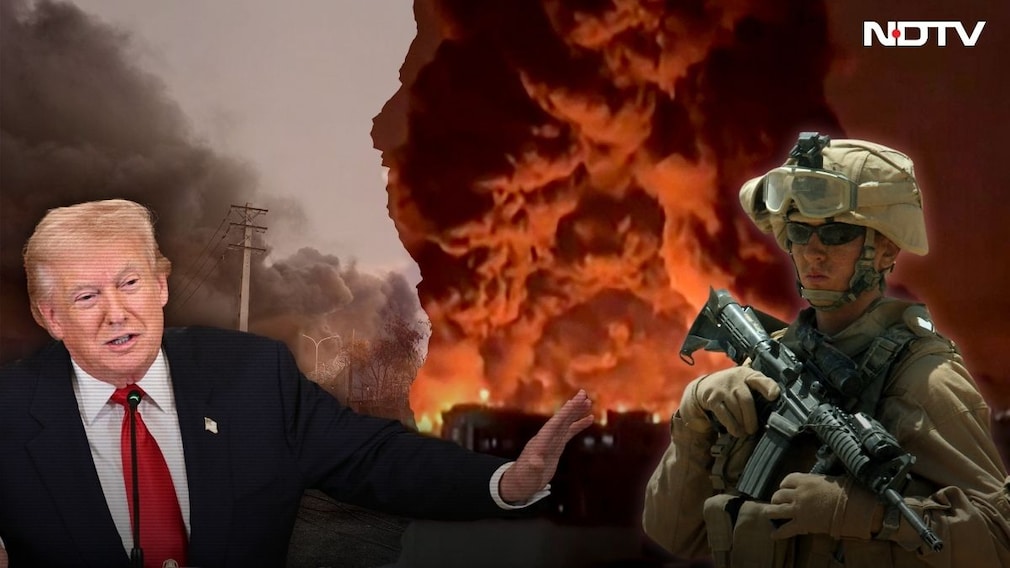
The Iran war rages through its second week as Washington maintains a suspense over a ground campaign in the Islamic nation to achieve its goals. US President Donald Trump is reportedly on the side of having American soldiers on Iranian soil, and top officials haven't denied a possibility. But with no clear answers and vague commentary, there remains no clarity if and when that could happen. But as it goes for Washington, a ground invasion can never be ruled out.
What's Trump's Plan?
Trump, being Trump, hasn't let down his war narrative. He has no definitive timeline if the US forces would invade the Gulf nation. But that's not something the president has ruled out. "Like every president says, 'There will be no boots on the ground.' I don't say it. I say, 'probably don't need them' (or) 'if they were necessary'," he told the New York Post.
A report also suggests that he has privately expressed serious interest in deploying US ground forces in Iran. Trump discussed the idea with Republican officials outside White House, NBC reported citing sources.
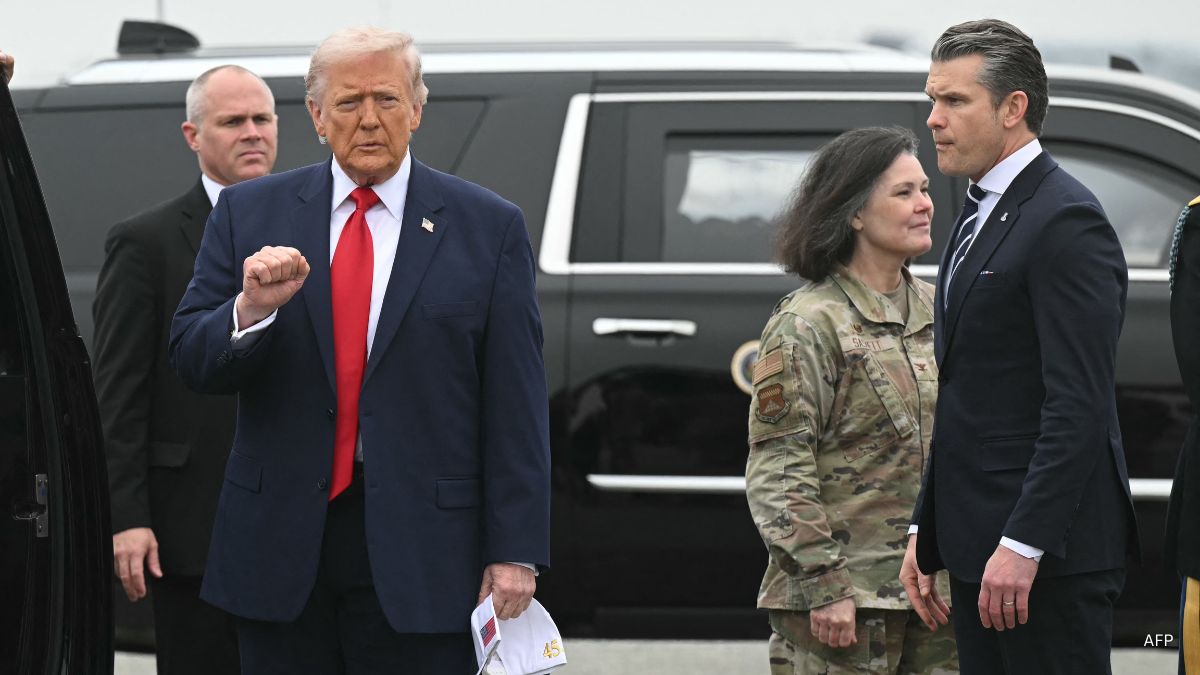
President Trump and Pentagon chief Pete Hegseth at Dover Air Force Base
Asked again if he would do it, he declined to answer what he called an "inappropriate question." He indicated it could be possible if there is, however, a "good reason." "If we ever did that, they would have to be so decimated so that US troops wouldn't get hurt," the president said on board the Air Force One.
Read: Israel Aims To Weaken Iran Regime For Internal Change As War Enters Day 9
The Pentagon has not ruled out sending American troops to Iran. Last week, US Defence Secretary Pete Hegseth denied US troops were already on the ground in Iran. But he indicated the US would send them, if needed. "We are not going to go into the exercise of what we will or will not do. We'll go as far as we need to go," Hegseth told reporters last week.
"I think it's been one of those fallacies for a long time that this department or presidents or others should tell the American people and our enemies by the way that, 'Here's exactly what we'll do, here's exactly how long we'll go,'" the Pentagon chief said.
Regime Change Without Ground Forces?
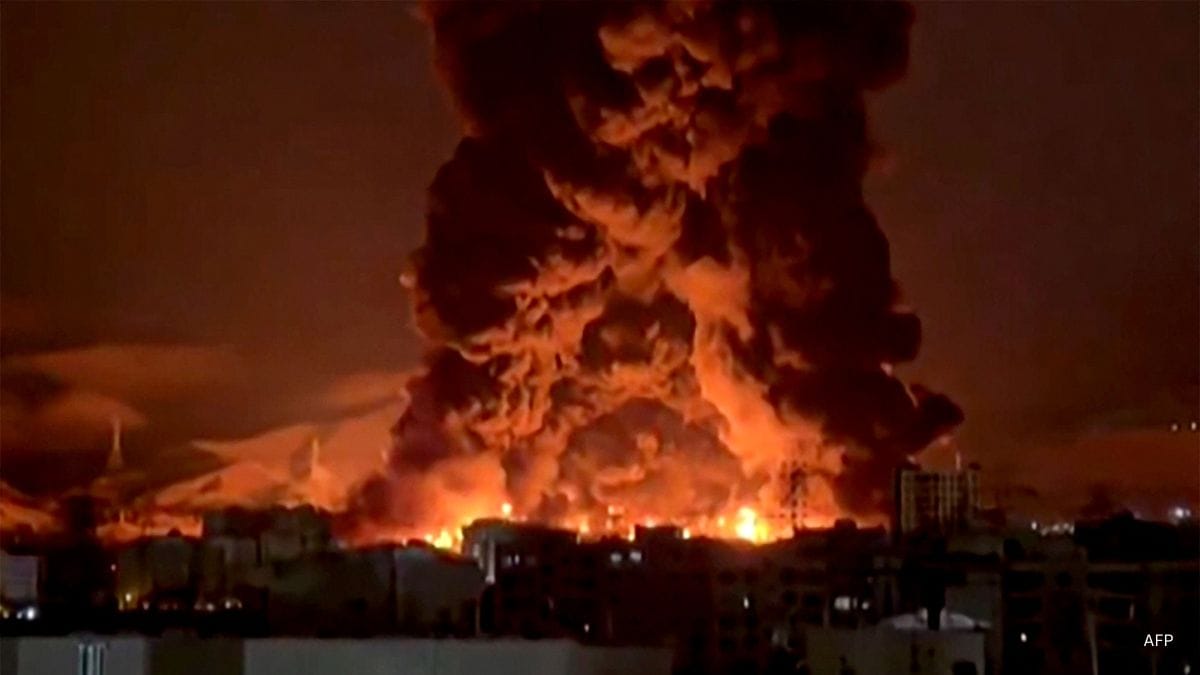
Fire erupts at an oil depot in Iran's capital Tehran
There could be two possibilities for any forced regime change: either US forces invade Iran, topple the regime, and establish a shadow government, or the Iranian people take things into their own hands. The second appears difficult, with Iran's Guards suppressing protests that had erupted after the killing of the Supreme Leader Ali Khamenei two weeks ago. While the US and its allies have repeatedly favoured free and fair elections in Iran, they have maintained that it isn't possible as long as Iran's regime remains strong.
That leaves with only one option if the US wants the regime changed as its immediate goal: send the forces in.
Read: Iraq, Iran, And United States-Led Regime Change
Nothing New In Invading Countries
The last time the US invaded another country was just 64 days ago. The US's Venezuela operation was a reminder of its capabilities. On January 3, a little after midnight, airstrikes began over the capital Caracas, and the famed, almost mythical Delta Force operators swooped into the secured compound of the then president Nicolas Maduro, and captured him and his wife, Cilia Flores. His vice president, Delcy Rodriguez, quickly took charge, with the Trump administration preparing to grab control of the country's oil exports.
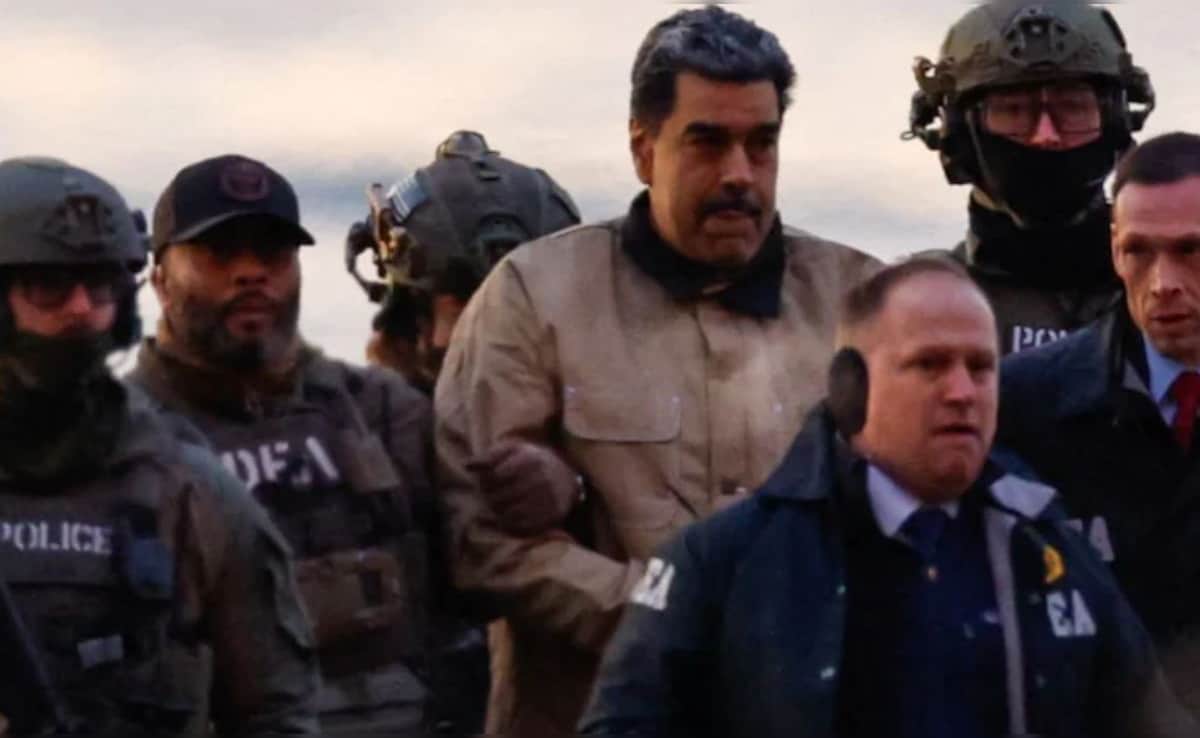
Similarly, be it in Afghanistan or Iraq, the US has always sent out a message about what it believes in: achieving its goal swiftly and through might when and where it could and asserting full control physically and through narratives.
Iran, however, may not be as easy as Venezuela. Despite Trump claiming the US has wiped out whatever weaponry that Iran had, Tehran's attacks on its Gulf neighbours tell a different story. With its fireworks over Gulf skies, Tehran declares proudly that it is still capable of fighting the combined military might of Israel and the US.
Read: Khamenei Falls, World Reels: Iran's War Sucks In NATO, Arabs In 72 Hours
While Trump's threats turn stronger by the day, Tehran's snubs appear equally dramatic. An "unconditional surrender" is what Trump has demanded, while Iran's President Masoud Pezeshkian has dismissed it as a "wish they may take to their graves."
Why Ground Forces Could Be Necessary
Preventing Iran from developing a nuclear weapon is central to the US operation against Iran. And that may not be possible until the US seizes Tehran's uranium stockpile. Iran has about 450 kg of 60 per cent highly enriched uranium that Tehran can convert into weapons-grade levels within weeks, according to reports.
The US and Israeli airstrikes could raze the Iranian nuclear installations to the ground and weaken the Islamic regime's military, but the uranium stockpile stored deep underground would have to be seized manually if Washington wants to obliterate the Iranian nuclear programme. And to seize the uranium, it may become inevitable for the US to send boots on the ground in Iran. Only then can the US either transport it out of Iran or dilute it by sending nuclear experts.
-
Opinion | Bihar Assault, Hisar Marriage Ban: Who'll Stop The Guardians Of Indian 'Culture'?

Why exactly does the sight of a young couple seeking a bit of alone time somewhere tend to particularly provoke a certain kind of Indian men?
-
Opinion | The Trump-Xi Summit, And India's Many Worries Of Its Own
Washington and Beijing may have chosen coexistence over confrontation. For India, that could be both a relief and a warning.
-
Opinion | China Claims It Has Cut Troops At The Indian Border. But The Math Doesn't Add Up
The reduction likely has more to do with the deployment along the LAC than the total strength active in the region
-
Opinion | China Is No Longer Waiting For Trump To Set The Rules. And He Knows It
America's old diplomatic tricks with China won't work any longer. Because China has changed, and so has its ambitions.
-
Opinion | As UN Interviews Its Next Chief, The Interviewers Have Some Explaining To Do
On the panel sit governments whose wars, vetoes, and unpaid dues have helped make the organisation ineffective.
-
Opinion | Trump-Xi Meet: What China Can Give America, And What India Could Lose
If Trump can secure some of what he wants directly from Beijing, India's immediate value to Washington could change in particular areas.
-
A New 'Axis'? 87 Years After Pact Of Steel, A New European Far-Right Tie-Up
Nearly nine decades after Nazi Germany and Fascist Italy formalised their alliance, senior figures from Germany and Italy's far-right appeared together at a political rally on Sunday.
-
Opinion | 'Blackmail' Diplomacy: Why India Can't Be A Pawn In US' War On Russia
The new sanctions bill is both blackmail and hypocritical: blackmail because it seeks to change India's principled stand, and hypocritical because the US has provided exemptions to others, and itself.
-
Blog | Katrina Kaif, And The Very Indian Problem Of Too Much 'Audacity'
The remarkable thing about many Indian trolls is not that they have opinions, but that they expect - get this, Katrina Kaif, no less - to care about them.