Iraq, Iran, And United States-Led Regime Change
Regime change is a key target for the US-Israel war on Iran and the first step killing Supreme Leader Ayatollah Ali Khamenei is complete, but Iran is vastly different kettle of fish.
'Boots on the ground' – if Donald Trump goes through with his U-turn on deployment of soldiers, it will signal that joint US-Israel strikes using vastly superior Tomahawk and Patriot missiles have failed to subdue a stubborn Iran. It will likely also significantly increase American casualties.
What it will also do is draw uneasy parallels to events in neighbouring Iraq 23 years ago.
Back in 2003, when George W Bush was POTUS, the United States marched into Saddam Hussein-controlled Iraq, backed by an assortment of troops from the United Kingdom and other nations, it had a 'noble' intention – to destroy WMDs, or Weapons of Mass Destruction.
And, of course, 'liberate' the people of Iraq, an oil-rich country.
"At this hour, American and coalition forces are in the early stages of military operations to disarm Iraq, to free its people and to defend the world from grave danger," Bush proclaimed on air, hours after a war that would kill over 200,000 Iraqi civilians and 4,500 US troops, began.
What happened in Iraq
In March 2003, days before the Iraq invasion was to begin, Bush said talks with Baghdad – over WMDs and links to terrorist group Al-Qaeda – had failed and a ground invasion would start.
The President said he did not foresee a diplomatic solution.
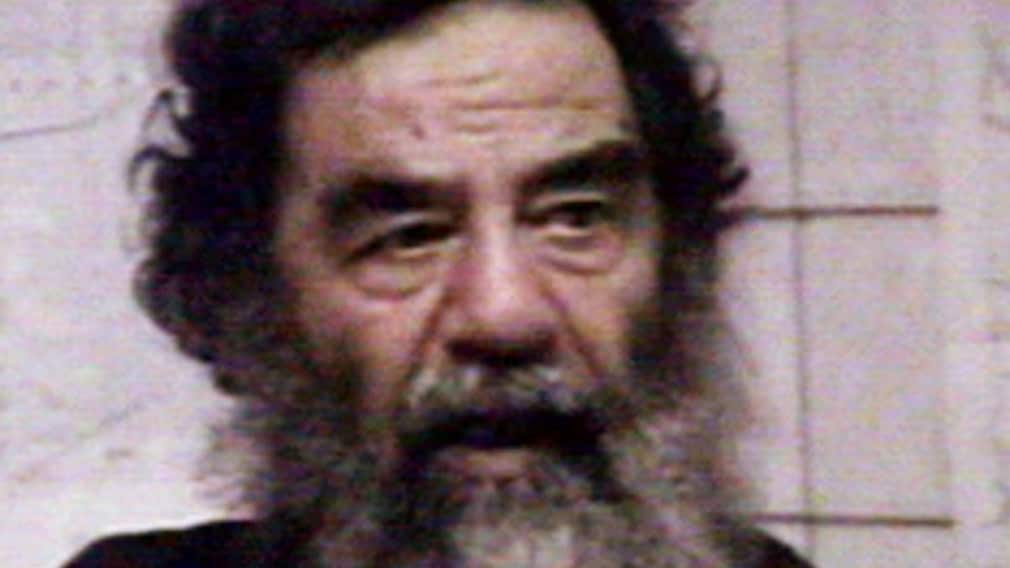
Baghdad fell within a few weeks; the destruction of Hussein's stature in the centre of the city became one of the defining images of the war. Hussein himself fled and was hunted down.
In December 2006 Saddam Hussein was killed; he was captured, convicted of crimes against humanity – specifically the murder of 148 Shi'ites in 1982 – and executed at an Iraqi Army base.
'Mission accomplished', Bush said. But it wasn't.
Twenty-three years later, Iraq remains deeply scarred, riven by economic devastation and political uncertainty. Since Hussein's death, for example, it has had five parliamentary elections and not once has a party secured over 100 seats in the 329-seat Council of Representatives.
Post-war and post withdrawal of US troops fighting broke out as regional armed groups, vigilantes, and regime stragglers took pot shots at each other and government offices.
The removal of Hussein emboldened the Sunni community that felt they had been marginalised under his rule. Old grudges were being settled, violently, culminating in the bombing of the Al-Askari mosque, a Shia place of worship, by the Al-Qaeda in June 2007.
Iraq's economy has not been the exemplar of US-led regime change either.
Sharp volatility has characterised post-2006 cycles with the country unable to diversify and evolve beyond oil. Data from the International Monetary Fund indicates the economy remains entirely dependent on oil, which accounts for over 93 per cent of Iraq's total revenue in FY24.
Crude accounted for nearly 92 per cent of all Iraqi exports and oil, as a sector, contributes roughly 45 per cent of its GDP. Take oil away and the Iraq economy will crumble.
By most standards, for regime change to be genuinely successful the invaded country has to transition, at least relatively peacefully, to a democratic governance structure.
That was never the case in Iraq. Elections that never yielded a stable government and persistent fighting between ethnic and religious communities kept the country perpetually off-kilter.
And after the US left in 2011 there were new challenges, including the rise of ISIS, the Islamic State of Iraq and Syria, a terrorist group that has since reshaped the global terror landscape.
Within four years cities had fallen, again, and the US military was involved, again, and it wasn't till 2019 that ISIS' hold on vast swathes of Iraq was loosened. It remains, though, a problem.
The Iran story
Regime change is a key target for the US-Israel war on Iran. The first step – killing Supreme Leader Ayatollah Ali Khamenei – is complete, but Iran is vastly different kettle of fish.
Like Iraq, the US has declared a weapons-led agenda as reasons for invasion. It was WMDs then and it is nuclear missiles now. It was 'failed diplomatic' initiatives that preceded both.
But unlike Iraq, the Iranian military is far better organised and armed, and has been, literally, built for this moment with an expansive network of armed proxy groups – the Hezbollah in Lebanon, the Hamas in Gaza, and the Houthis in Yemen – snapping at US-Israeli forces' heels.
And then there is the Revolutionary Guard Corps, an elite and heavily-armed unit that, by some accounts, is operating without oversight and on commands issued by Khamenei before he died.
Therefore, a far more intricately-layered leadership structure, a stronger military, and more resilient (and more diversified) economy despite sanctions by the US and other Western nations, are some of the reasons conquering Tehran won't be the same as invading Baghdad.
And it will require, as Trump has now said, boots on the ground.
-
Mayawati's Tough Love: Nephew Akash Anand Benched Again. What It Means For BSP

Akash Anand, the 31-year-old foreign-educated nephew of BSP boss Mayawati, finds himself out of favour, for at least the third time in three years, with the latest turn coming in Lucknow on September 3.
-
Blog | Why You Should Care Whether Schrodinger's Cat Is Dead Or Alive
Imagine going on a romantic Alpine getaway and returning with the equation that runs the modern world. The only snag: nobody can quite agree on what it says about reality.
-
Promote, Punish, Repeat: Decoding Mayawati's Akash Anand Puzzle
The development in the BSP is unprecedented. Never before has any Indian party elevated a family member and dumped him or her unceremoniously thrice within a span of three years.
-
Opinion | Nepal Needs $5 Billion To Rebuild. World's Climate Fund Doesn't Have Even 10% Of It
The fund caps support at USD 20 million per project; Nepal needs two hundred times that. And the board is not scheduled to sit until December.
-
Opinion | The Rise Of Indians In US Is Making Some Americans Very, Very Angry
A new report released yesterday shows how Indians are now among the biggest targets of racist attacks in America.
-
Opinion | China, Pak, A Stalled India Visit: How Signals From Bangladesh Are Getting Louder
A fighter jet deal with China, interest in Pakistan's military bloc, and a 'stalled' visit to India - all in a month. Bangladesh's drift is getting harder to ignore.
-
Opinion | Indus Treaty, Hague, And Pakistan's Endless Search For Leverage Over India
If the IWT survived all the trials in the past, it is because India's threshold of tolerance had been unusually high. But Pakistan must know that it can't arm-twist India through international pressure.
-
Opinion | Nepal's 'Climate Compensation' Pitch Is Valid, But Its Demand From India Isn't
Nepal's vulnerability gives it a claim on multilateral climate finance. It does not follow that India bears responsibility for this.
-
Opinion | India Wants A 6th-Generation Fighter. But A Lot Could Go Wrong
India might just be building too many fighter jets to focus on any one of them well. A recalculcation is needed.
-
Reporter's Diary | Worse Than War: An Aerial View Of Nepal's Trishuli River Valley Tragedy
In many ways, reporting on natural disasters is far more harrowing than covering modern war