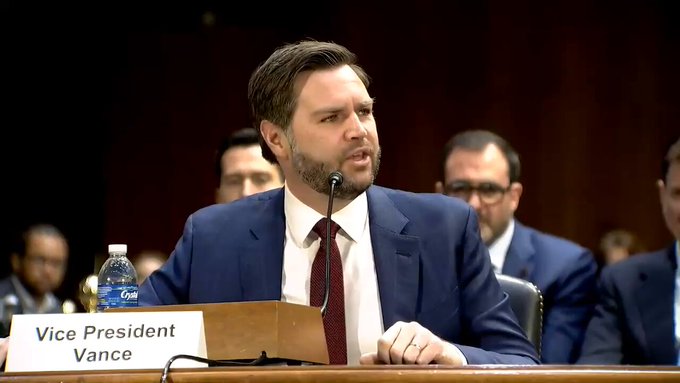
US Vice President JD Vance's trip to Islamabad for peace talks with Iran has been put on hold after Tehran failed to respond to the US "negotiating positions", according to a report by The New York Times. Vance was still in Washington on Tuesday to participate in meetings, the White House said.
"Additional policy meetings are taking place at the White House in which the vice president will participate," an official said in a brief statement sent to AFP. Vance was scheduled to depart on Tuesday morning.
Senior US officials are continuing consultations to determine the course of action ahead of the ceasefire deadline, with Vance expected to be part of those discussions.
Moreover, US special envoy to the Middle East Steve Witkoff and Jared Kushner, US President Donald Trump's son-in-law, are en route from Miami to Washington amid uncertainty around talks in Islamabad. Although a Department of Homeland Security plane was supposed to transport Witkoff and Kushner to Islamabad for a second round of talks, the plane appears to be on its way to Washington, according to flight data.
Earlier in the day, two regional officials said Washington and Tehran had signalled they would hold a second round of talks, with Vance leading the US team and Iranian parliament speaker Mohammad Bagher Ghalibaf as its top negotiator.
But Pakistan's information minister, Attaullah Tarar, said later Tuesday on X that Iran had not formally confirmed its participation. The ceasefire was set to expire Wednesday.
Iran Says "No Final Decision" Whether To Attend
Iranian Foreign Ministry spokesman Esmail Baghaei told Iran's state TV there has been "no final decision" on whether to attend because of "unacceptable actions" by the US, apparently referencing its recent blockade in the Strait of Hormuz.
Speaking to state media television IRIB, Baghaei said that it was because of "contradictory messages, inconsistent behaviour, and unacceptable actions" from the US.
"It is because we are faced with contradictory messages, inconsistent behaviour, and unacceptable actions from the American side," he said.
"These actions by the United States constitute maritime piracy and state terrorism, particularly in relation to the two Iranian vessels involved," Baghaei added.
Track Latest News Live on NDTV.com and get news updates from India and around the world


