With Missiles Carrying 1,000 kg Explosives, A New Tactical Phase For Iran
Iran dropped a bombshell on Sunday after a senior Revolutionary Guard commander vowed to only launch missiles with explosives of 1,000kg or more
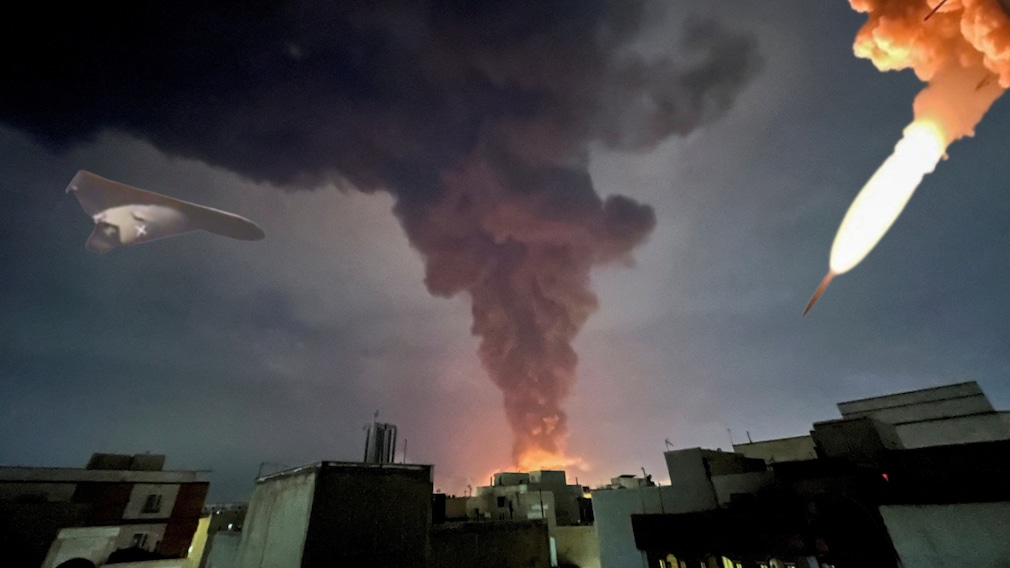
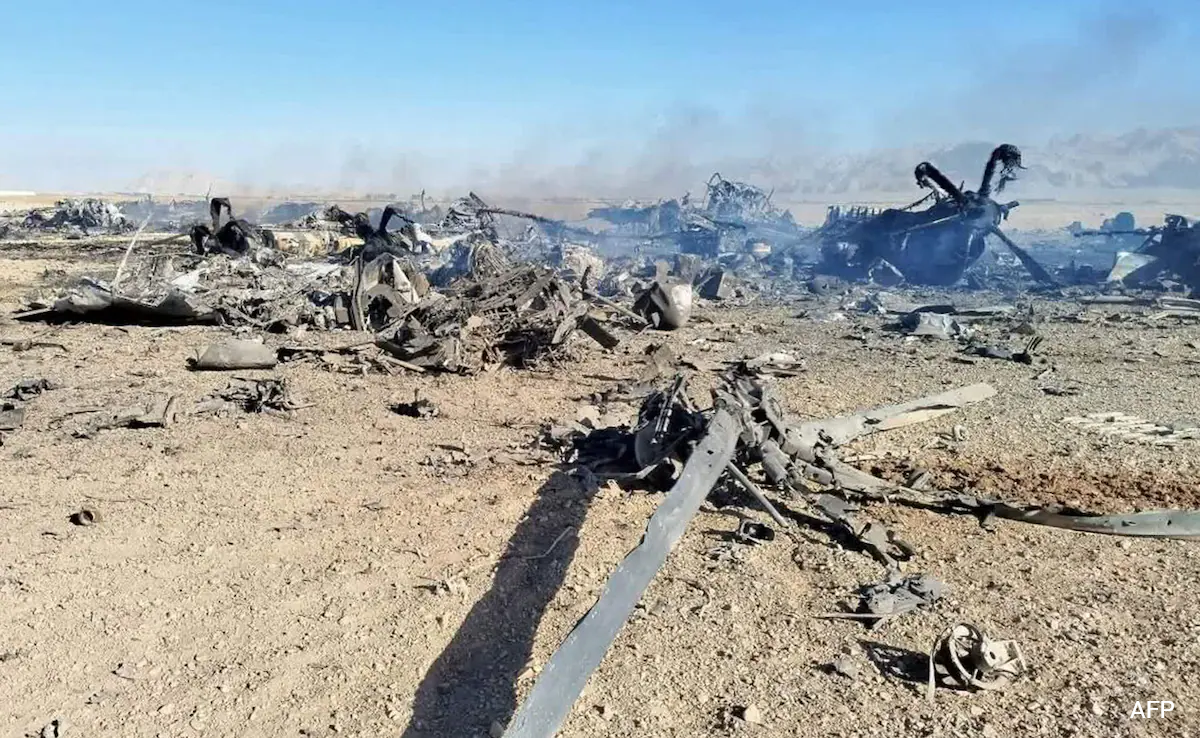
Iran dropped a bombshell Sunday after a senior Revolutionary Guard Corps commander said the regime would now only fire missiles with payloads of 1,000kg or more – a sharp escalation in the war with US and Israel forces since it more than doubles blast radius, range, and destructive power per missile.
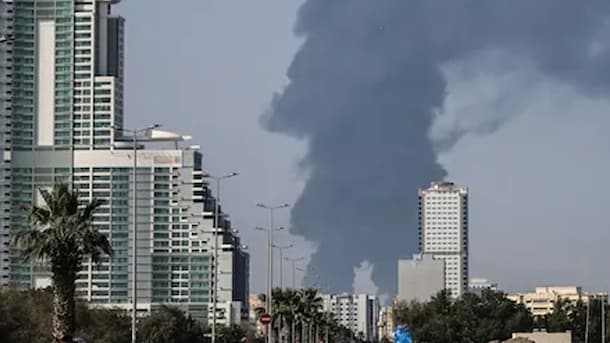
Lebanese broadcaster Al Mayadeen quoted Brigadier General Majid Mousavi as also saying attacks that have targeted American and Israeli military bases so far, as well as regional infrastructure like the airport in Dubai and the Ras Tanura oil refinery in Saudi Arabia – will now increase in intensity and scale.
Military observers said this likely signals a new tactical phase for Iran – shifting from trying to overwhelm enemy air defences, with wave after wave of the cheap-but-deadly Shahed drones, to focus on potential high-impact penetration strikes in which fewer, faster, and harder-to-intercept missiles cause the same damage, specifically against hardened targets like airbases and underground command centres.
Geopolitical analyst Shanaka Anselm Perera argued on X this new phase is Iran 'changing the economics of (the) war', i.e., switching to heavier payload missiles to rewrite intercept math.
Iran possesses the largest and most diverse missile arsenal in the Middle East, according to the Washington-based Center for Strategic and International Studies. This arsenal includes the Soumar, a ground-launched cruise missile – nuclear-capable – with a presumed maximum range of 3,000km, and the Sejjil, a medium-range ballistic missile with a 2,000km-range.
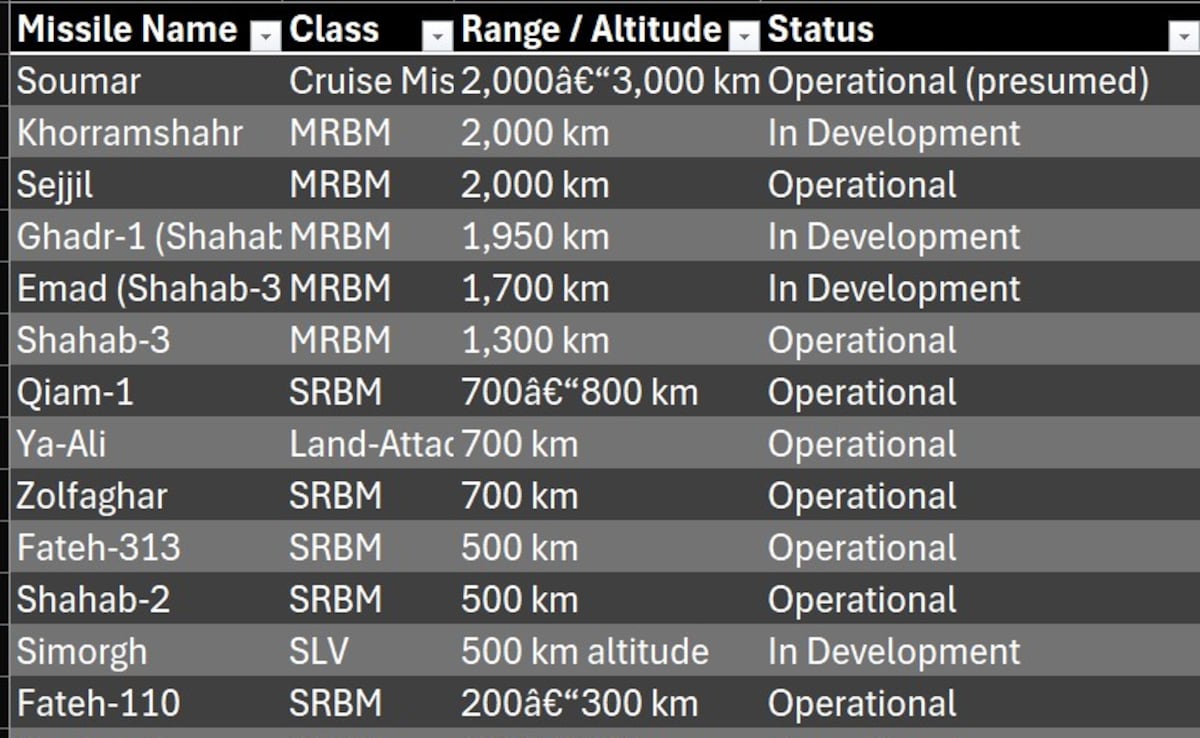
Iran's missile arsenal. Source: Missile Defense Project, Center for Strategic and International Studies
A third option is the Khorramshahr MRBM, likely derived from North Korea's Hwasong-10 and which is believed to have range of 2,000-3,000km. It can carry payloads up to 1,800kg.
A fourth is the Kheibar Shekan, though its payload is below that now vowed by Mousavi.
Iran's 'force them to run out of missiles' test
Iran's much-discussed earlier strategy was to draw US, Israeli air defences into a 'war of attrition', i.e., saturate them, and those of Gulf nations dragged into this war, by firing barrages of low-cost missiles and Shahed-131 and Shahed-136 drones.
In essence, the idea was to make interception a costly proposition; conventional military doctrine recommends firing two-three interceptors to block an incoming missile/drone threat. And it was; the US-made PATRIOT air defence system, for example, has been largely successful in neutralising Iranian attacks; UAE-operated battalions reported a 96 per cent interception rate.
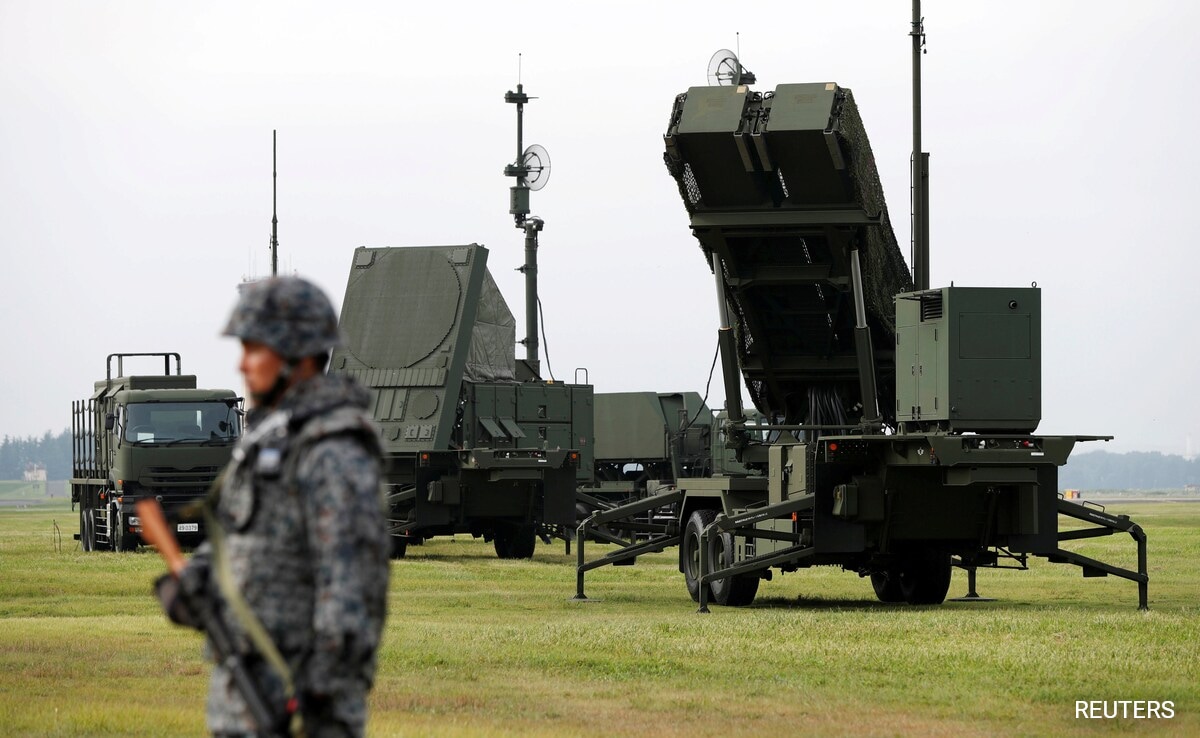
US-made PATRIOT air defence systems (File).
But a PATRIOT missile costs US$4 million and a THAAD interceptor around US$12 million, and an Israeli Arrow-3 missile approximately US$3 million. A Shahed drone caps out at US$50,000.
RECAP | Iran's Missile Math: $20,000 Drones Take On $4 Million US Patriots
Multuple analysts have pointed out the math just isn't in the US' favour, particularly since that does not mean Washington could stand down firing of interceptors; the real cost of missile interception is not monetary as much as it is potential loss, i.e., how much damage will be done if an enemy missile hits a target as opposed to how much money is spent on intercepting it.
That question almost always has only one answer – intercept every enemy missile possible.
Iran's 'heavy' missile shift
Iran has fired nearly three dozen rounds of projectiles, including the Shahed-136 'kamikaze' drones, since the war began February 28. The 33rd attack – spread over Sunday and Monday –included solid-fuelled Kheibar Shekan missiles with a 1,450km range and 550kg payloads. But Iran also fired the much heavier Khorramshahr missile.
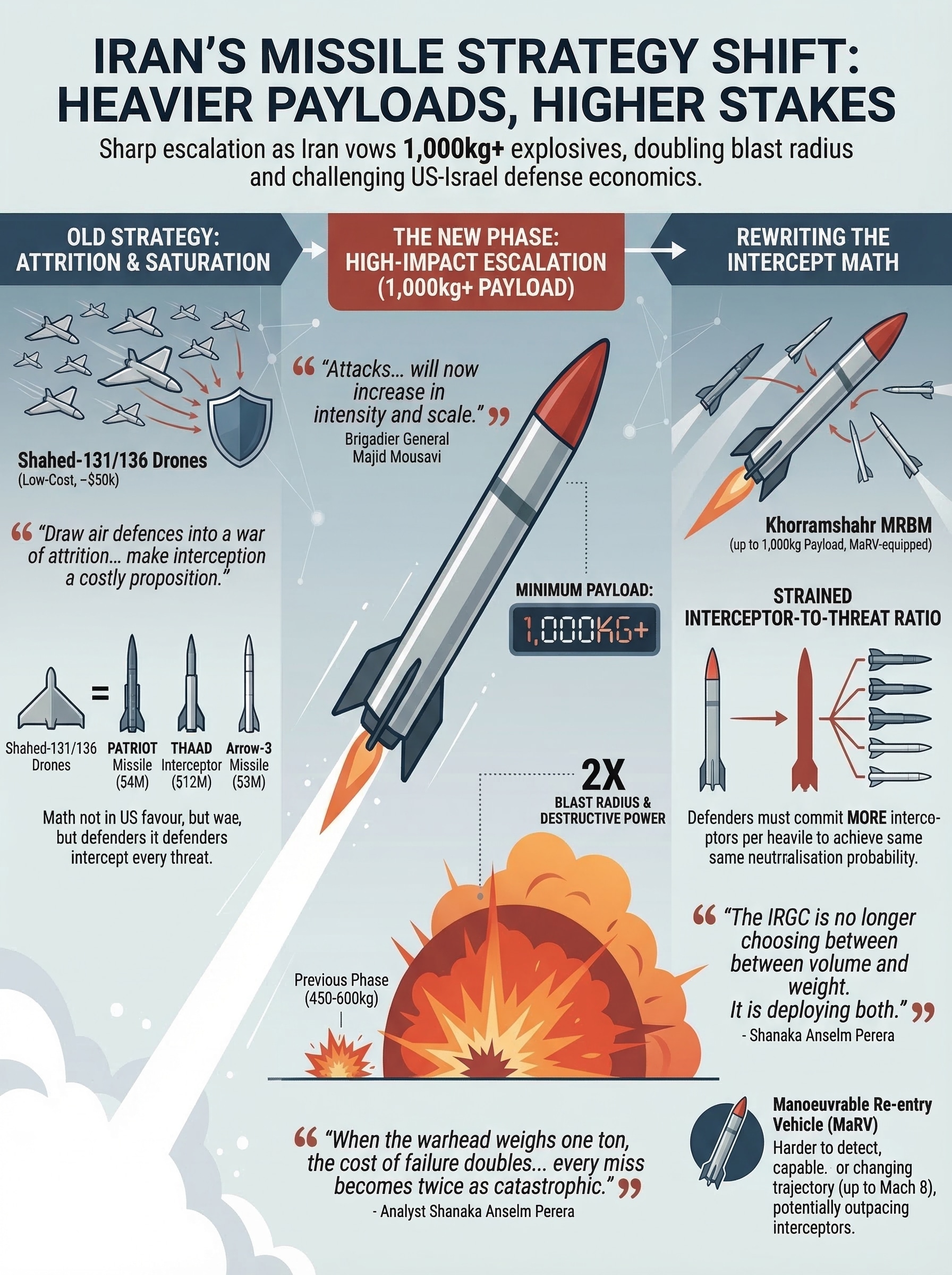
Apart from being larger, both also have manoeuvrable re-entry vehicles, i.e., they are capable of changing trajectory, at speeds up to Mach 8, Iran claims, which make them harder to intercept.
The Khorramshahr, for example, has a manoeuvrable re-entry vehicle, or MaRV, that the IRGC claims can outpace/outfox Israeli Arrow-3 exo-atmospheric interceptors.
This (read with Mousavi's warning about firing 1,000kg+ payloads only) indicates a key shift in the way the Tehran's decentralised battlefield command is managing this conflict.
In a post on X, the commander of the Aerospace Force of the !/R/G//C, Brigadier General Majid Mousavi, confirmed that every missile launched from now on will weigh no less than one ton.
— Al Mayadeen English (@MayadeenEnglish) March 10, 2026
Mousavi added that the intensity of missile salvos and the scale of attack waves will… pic.twitter.com/Ap78Vt9xpj
Using larger warheads now doesn't affect the interception math; US, Israeli, and Gulf nations' forces must still try and stop every Iranian missile or drone they can.
But "when the warhead weighs one ton, the cost of failure doubles because the destructive radius on impact doubles… every miss becomes twice as catastrophic", Perera explained.
"The defender must now commit more interceptors per incoming missile to achieve the same probability of neutralisation. The interceptor-to-threat ratio – already strained at 190 to 1 on the drone front (thanks to the Shahed) – now deteriorates on the ballistic missile front as well."
"The IRGC is no longer choosing between volume and weight. It is deploying both…" he warned, outlining also how the inclusion of heavier missiles changes the intercept math.
Previously reported interception rates, he argued, were based on Iran missiles carrying warheads between 450 and 600kg.
The question now, he said, is "whether the same architecture holds when every incoming warhead is twice the mass (and) destructive radius".
-
Blog | The Dantewada Massacre, And What India Needs To Do To Stay Maoist-Free

In 2010, I was Assistant Chief of the Air Staff controlling transport aircraft and helicopters, and on April 6 that year had to arrange An-32 aircraft to carry coffins of 75 CRPF jawans.
-
Opinion | How Iran Has Pierced The One 'Shield' That Protected America For 30 Years
In the past, US campaigns in Iraq, Afghanistan and Libya were conducted against relatively weak air defences. That has not turned out to be the case with Iran, puncturing the long-held myth of America's 'indomitable' air power.
-
Opinion | The Quiet 'Upheaval' Within US Military Over The Iran War
General Randy George's ouster carries echoes of a similar episode in 2003, in the run-up to the Iraq war. But much more is happening within the US military, courtesy Hegseth.
-
How Iran Sucker-Punched Trump Into 'Escalation Trap' 'Hellhole'
Trump is now under pressure, not just from allies but also within; the President's approval rating is the lowest it has ever been with mid-term elections in November.
-
Eagle Down: How US Carried Out Precision Search And Rescue Op In Hostile Iran
How the United States transformed a tactical failure into a narrative of national resolve.
-
Opinion | 450 Missile, 2,000 Drone Attacks Later, Why Is UAE Still Not Fighting Iran?
The UAE is Iran's second-largest trading partner and also home to roughly half a million Iranians. Why, then, has it absorbed more fire than any other Gulf state?
-
In Numbers: How Has India Kept Fuel Prices Low Even As Europe Sees 70% Spikes?
India imports 88% of its crude. Why then is it not seeing massive price hikes for fuel and LPG? Inside the unique strategy it's following...
-
Opinion | India Just Decided To Let Chinese Capital In Again. But There's A Catch
In March 2026, India eased regulations that had restricted Chinese capital in local companies, in a development that marks New Delhi's cautious approach towards capital flows from Beijing.
-
Trump's Iran 'Knocked Out' Claim Blown Up By US Intel On Missiles, Drones
Donald Trump claimed this week the war would end in two to three weeks as he threatened to send Iran back to the Dark Ages. But based on these reports the fighting is far from over, even if US President wants to push a contrary narrative.
-
Opinion | Rs 30 Petrol Hike To Currency Crisis, What Oil At $150 Can Really Do To The World
At $125 per barrel, petrol and diesel retail prices will need to rise by Rs 8-14 per litre. At $150 - which experts think is now likely - these figures could touch Rs 26-30 per litre.