Satellite Pics Show Extent Of Damage By Iran Drones At Saudi Aramco Refinery
Iran Supreme Leader Ayatollah Ali Khamenei was killed on Day 1 of the US-Israel attacks and his death has further complicated an already tense geopolitical situation.
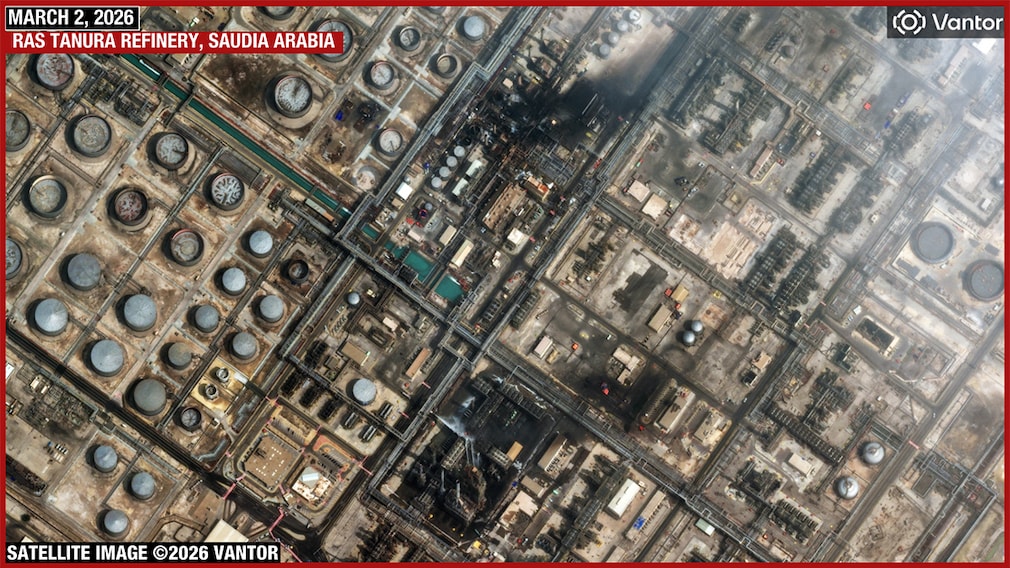
High-resolution satellite photographs accessed by NDTV Tuesday morning reveal the extent of damage at four key energy and transport facilities in the Middle East, including the Natanz nuclear reactors, as the war between joint US-Israel forces and Iran enters a fourth day.
Global nuclear watchdog IAEA had said Monday no nuclear sites in Iran had been targeted or hit.
However, agency chief Rafael Grossi's statement seemed to contradict evidence from the satellite images and submissions by Iran's ambassador to the IAEA; Reza Najafi wrote to Grossi this week to complain Natanz – where Iran reportedly enriches uranium – had been bombed.
"Again, they attacked Iran's peaceful (and) safeguarded nuclear facilities…" Najafi told reporters after the IAEA's governing board met. Asked which facility was hit, he said: "Natanz."
The attacks, he said, were "unlawful, criminal and brutal".
The Natanz facility lies 220km (135 miles) south of capital Tehran and is a mix of above- and below-ground laboratories that carry out the majority of Iran's uranium enrichment programme.
Iran's Natanz nuclear facility
A Vantor satellite image taken March 2 showed damage (marked by orange circles) to the facility, including the apparent destruction, or at least severe damage to, three buildings.
Debris and structural collapse, as well as scorched ground around targeted areas, can also be seen. Two of the three buildings seem to personnel entrances.
The third seems to be a vehicle access ramp leading to underground enrichment chambers.
Iran's Natanz facility. For high-res image, click here
Natanz was also targeted by the US in June last year; American B-2 stealth bombers dropped 'bunker busters' on three Iranian nuclear plants – Natanz, Fordow, and Isfahan.
RECAP | Op Midnight Hammer: How US Bombed Iran Nuclear Sites Without Detection
The June bombing hit the main above-ground building, i.e., the Pilot Fuel Enrichment Plant, leaving it "functionally destroyed" and also underground holding halls, Grossi said then.
A second nine days later, with 'bunker busters', likely decimated what was left, he said.
The safety of Iran's nuclear facilities has made headlines, particularly after US Vice President JD Vance and Special Envoy Steve Witkoff claimed Tehran's reluctance to submit its nuclear activities and ballistic missile programmes to regulatory oversight triggered the joint attacks.
READ | Top US Diplomat Reveals Exactly Why Iran Was Attacked. 'They Boasted...'
Tehran has repeatedly said its nuclear program is for peaceful, i.e., civilian purposes, and that it has no interest in a weapons agenda. But IAEA inspectors remain sceptical of these claims.
The Saudi oil refinery
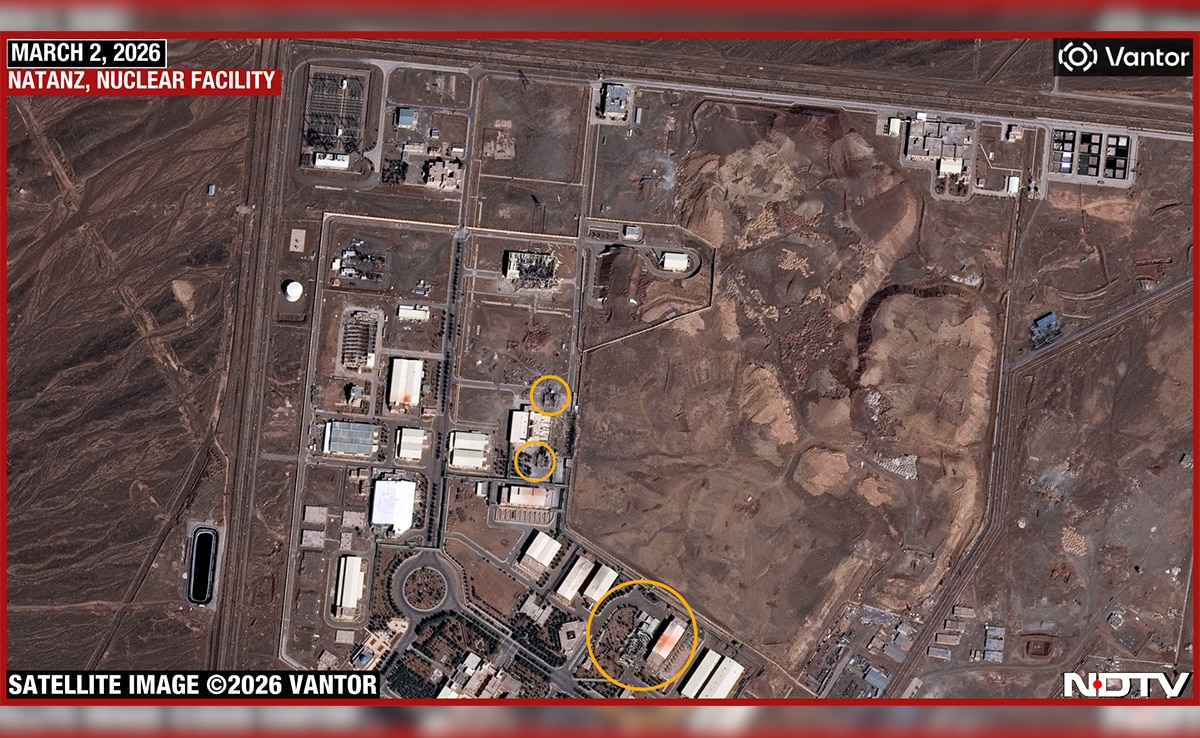
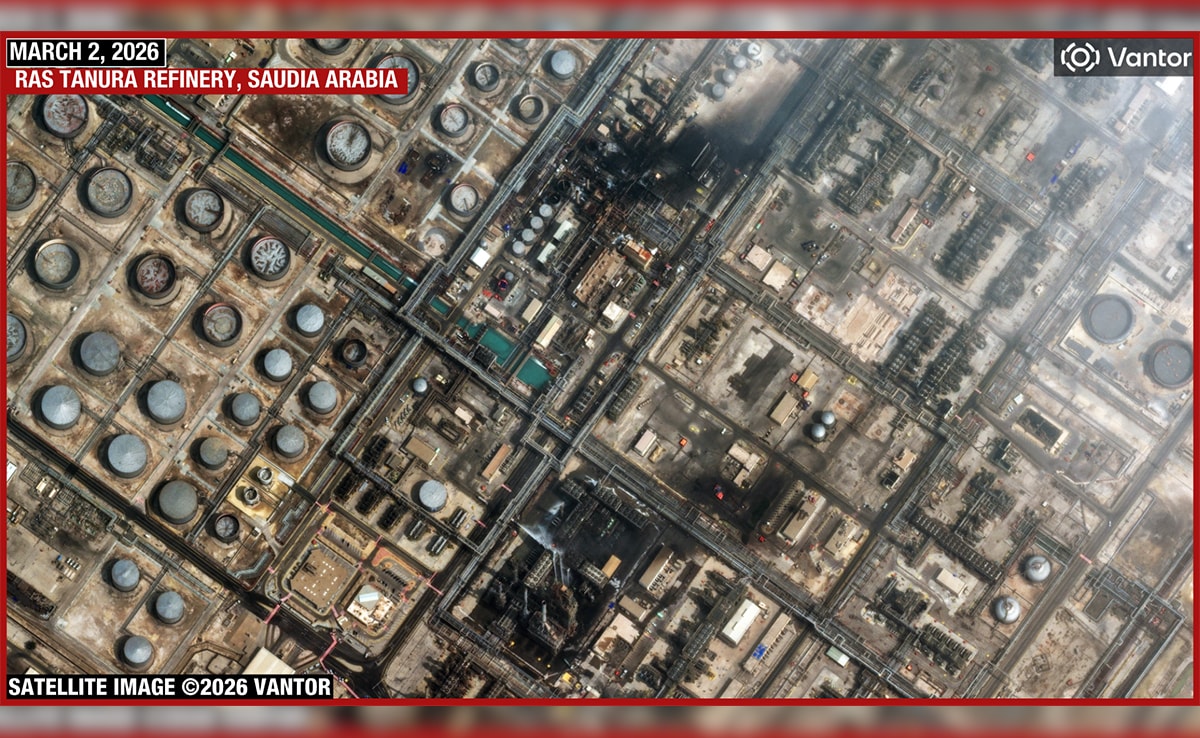
Meanwhlie, Vantor satellite images of Saudi Arabia's Ras Tanura refinery, taken after the March 2 attack by Iran's Shahed 'suicide' drones, showed multiple, large plumes of black smoke.
Saudi Arabia's Ras Tanura oil refinery. For high-res image, click here
The smoke was from the industrial complex and seemed to be concentrated in the central processing sections with visible burn scars, scorched infrastructure, and blackened zones around pipes, tanks, and processing units.
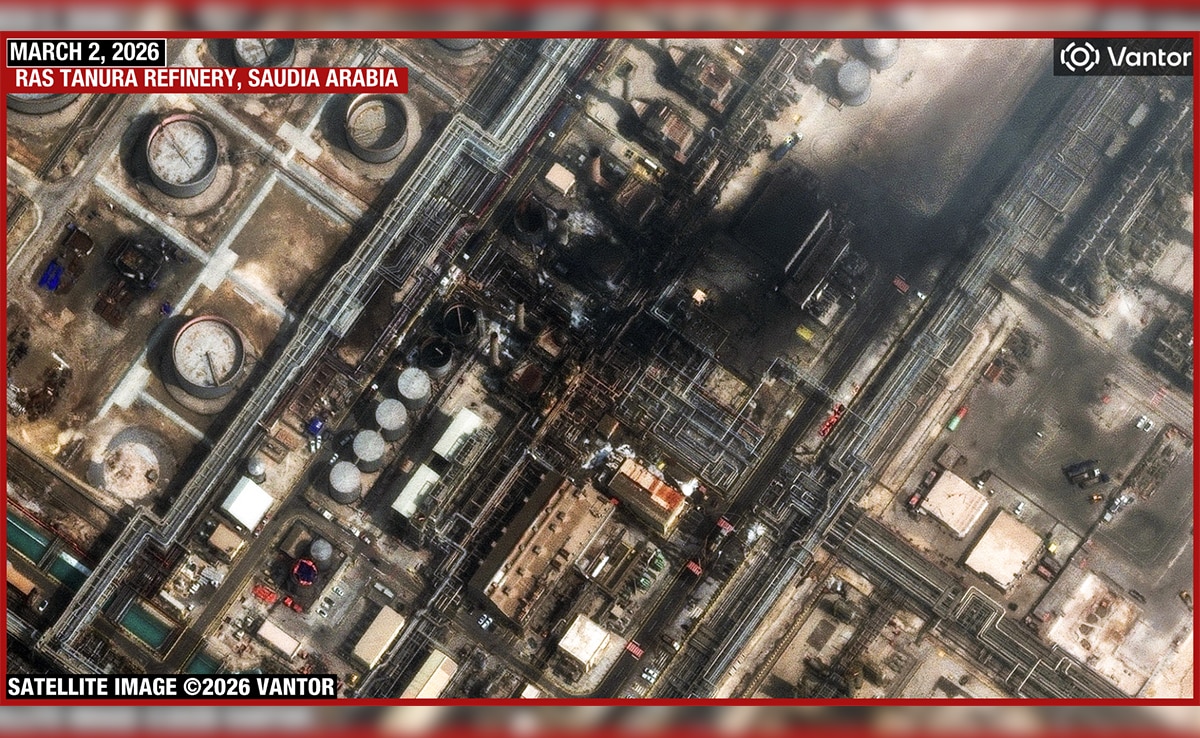
Saudi Arabia's Ras Tanura oil refinery. For high-res image, click here
Saudi officials shut down the plant – a critical export hub that produces over 550,000 barrels of crude oil per day – as a precautionary measure. As of noon March 3, the refinery is still shut.
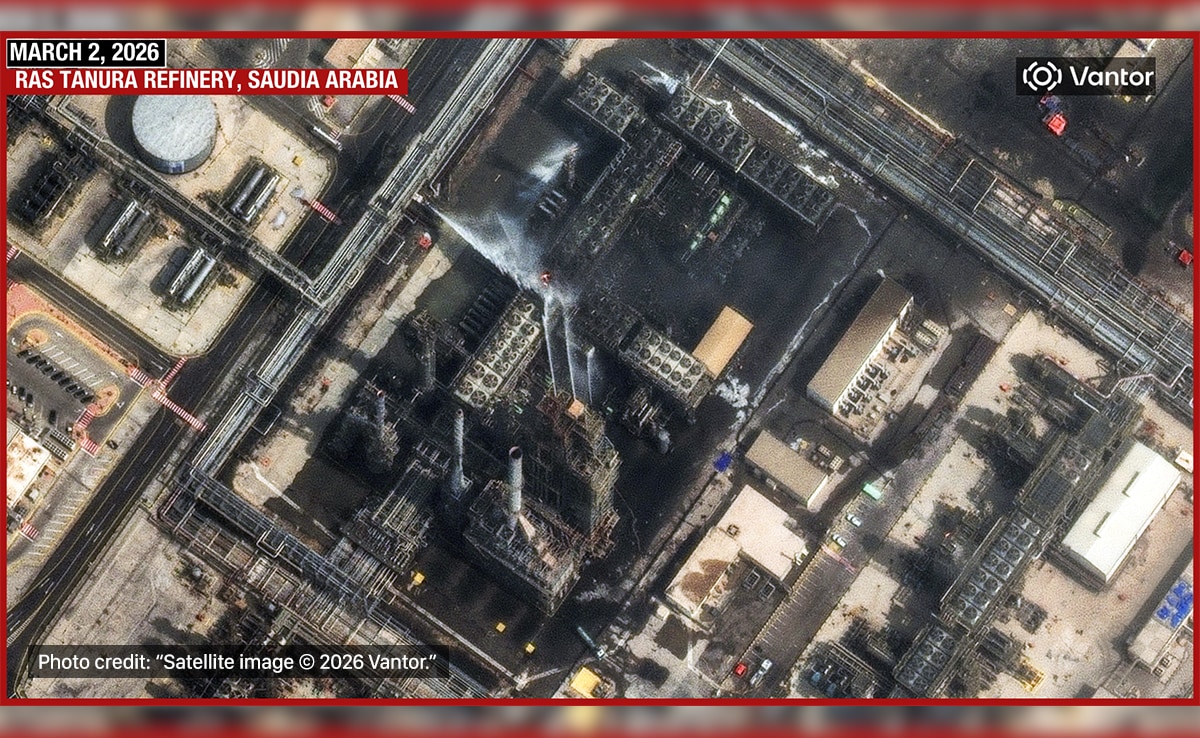
Saudi Arabia's Ras Tanura oil refinery. For high-res image, click here
Due to the drone hit and larger supply fears over the war (and Iran controlling the Strait of Hormuz, through which an average of 20 million bpd flows daily), crude prices have spiked globally.
While it is not formally shut, data from maritime analytics firms Windward and Kepler suggests it may as well be. On March 1, only three tankers - carrying 2.8 million barrels crossed - and by early March 2, just one small tanker and one small cargo ship moved through the main lanes.
READ | 700 Tankers Jam Strait Of Hormuz: Will India Be Forced To Ration Fuel?
Roughly 700 non‑Iranian tankers are now stacked: 334 crude carriers, 109 dirty product tankers and 263 clean product vessels. Another 26 tankers drift inside and hundreds more idle in the Gulf of Oman.
Ports in Iran, UAE
Tehran's response to the US-Israel attack has been to target American bases across the region, potentially dragging neighbouring nations into a larger war that could spiral to involve Europe.
Iran missile and drone attacks also targeted Dubai's Jebel Ali Port.
Vantor satellite images taken March 1 showed thick black smoke rising from multiple areas in the port complex, with most of it around container and storage yards and sections near the docks, with dark haze spreading across other areas and obscuring some infrastructure.
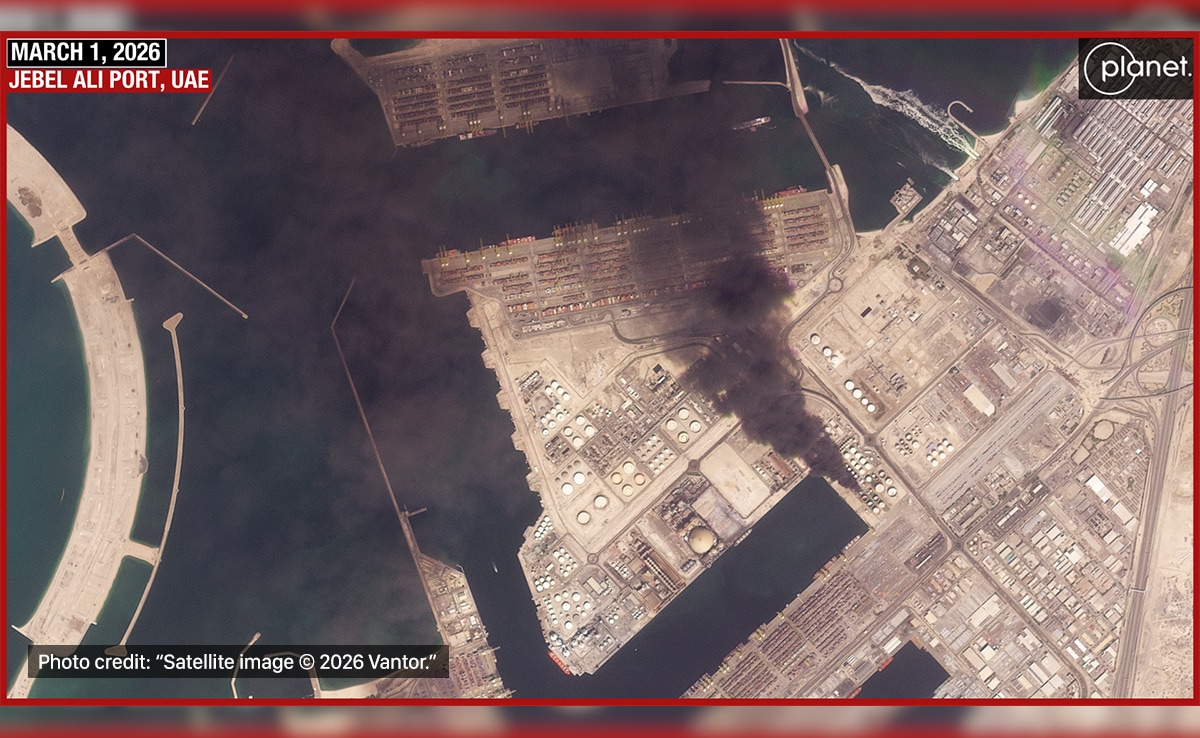
Dubai's Jebel Ali Port. For high-res image, click here
Operations were briefly suspended at the world's ninth busiest shipping hub, which is part of a 'maritime silk road' linking China and India to Africa, and is located 35km southwest of Dubai.
Visuals of Iran's Bandar Abbas Port, also taken March 2, also show plumes of black smoke across large sections, particularly shrouding the central naval and commercial docks.
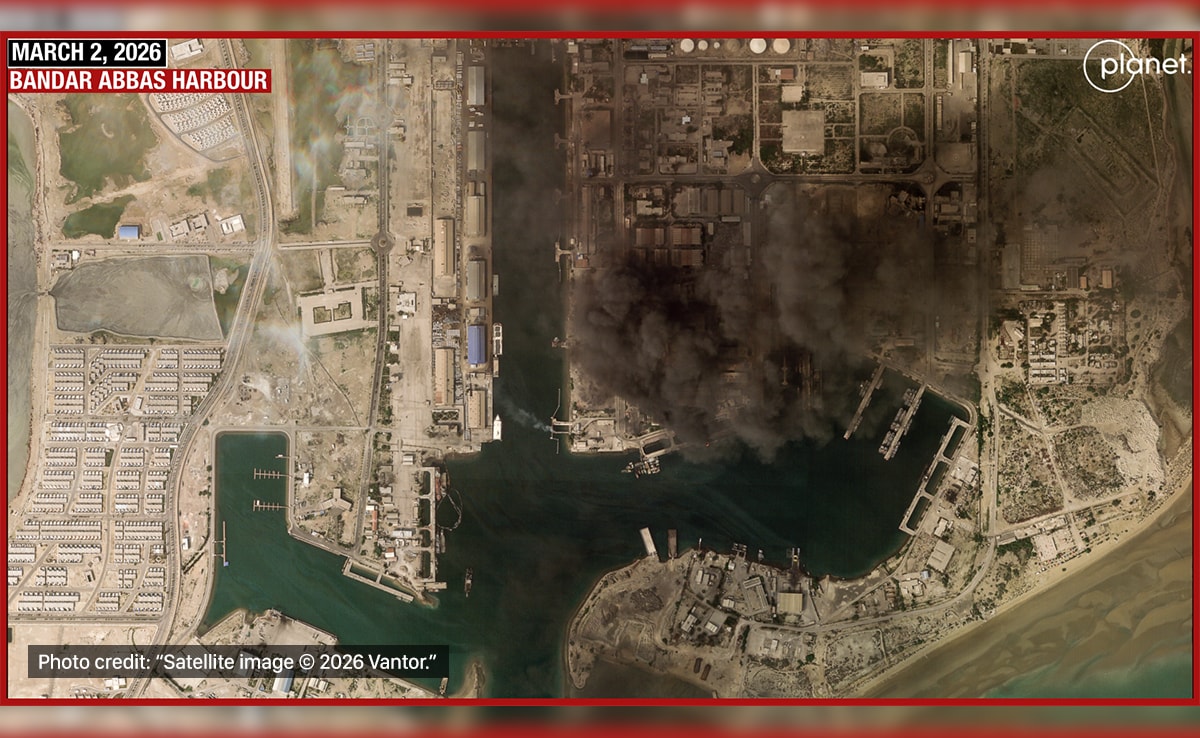
Iran's Bandar Abbas Harbour. For high-res image, click here
Fires are still burning in least one berthed vessel.
On Tuesday new strikes were reported across the region, including an Israeli bombardment on Lebanon and a drone attack on the US embassy in Saudi Arabia's capital Riyadh.
Loud explosions also rocked Iran's capital and drones targeted an Omani port, hitting a fuel tank, state media said, adding that the damage was contained "without any human casualties".
With input from agencies
NDTV is now available on WhatsApp channels. Click on the link to get all the latest updates from NDTV on your chat.
-
"Not Mature": Mayawati Pushes Nephew Akash Anand To The Margins Again. What It Means For BSP

Akash Anand, the 31-year-old foreign-educated nephew of BSP boss Mayawati, finds himself out of favour, for at least the third time in three years, with the latest turn coming in Lucknow on September 3.
-
Opinion | Indus Treaty, Hague, And Pakistan's Endless Search For Leverage Over India
If the IWT survived all the trials in the past, it is because India's threshold of tolerance had been unusually high. But Pakistan must know that it can't arm-twist India through international pressure.
-
Opinion | Nepal's 'Climate Compensation' Pitch Is Valid, But Its Demand From India Isn't
Nepal's vulnerability gives it a claim on multilateral climate finance. It does not follow that India bears responsibility for this.
-
Opinion | India Wants A 6th-Generation Fighter. But A Lot Could Go Wrong
India might just be building too many fighter jets to focus on any one of them well. A recalculcation is needed.
-
Reporter's Diary | Worse Than War: An Aerial View Of Nepal's Trishuli River Valley Tragedy
In many ways, reporting on natural disasters is far more harrowing than covering modern war
-
Opinion | China's Quiet Power Grab Is Hiding In Plain Sight
China's greatest advantage may be neither its military nor its markets, but a world too distracted to see what it is building.
-
Opinion | The Indian Investor Has A New Problem: An SIP That Does Nothing
You keep doing everything right. So why aren't your stocks paying off, even as your investments rise?
-
The River Took It All: Aerial Visuals From Nepal Show Scale Of Catastrophe | NDTV Exclusive
Visuals from a helicopter showed narrow gorges now flattened and widened into valley-like spreads, with rocks, debris, mud, and bodies strewn across them.
-
Before The Nepal Flood, A Glacial Fall: Tracing The Trigger, And A 100-km Killer Surge
A glacier came off a ridge on the Nepal-China border and travelled 100 km down multiple rivers, the longest part of the run being in the Trishuli.