
India is firm: The Indus Waters Treaty's suspension remains in force and the Hague-based Permanent Court Of Arbitration "has no jurisdiction on India's sovereign decisions" after it urged New Delhi to uphold the water-sharing treaty with Pakistan.
The Court of Arbitration, the world's oldest permanent forum for international dispute, further said that India had no justification for ending or suspending the agreement and that the treaty between the two subcontinent arch-rivals remained fully in force.
-

-
 World-Class Chefs, Food And Music: The Fun Side Of NDTV World Summit 2026
-
 AI, Consciousness And Dharma: Why Ancient Indian Wisdom Matters Now
-
 NDTV World Summit: What To Expect From PM Modi's Keynote Address
-
 NDTV World Summit 2026: What To Watch Out For | PM Modi, Jaishankar, AI And Global Power Shifts
-
 A World Between Orders: What To Expect At NDTV World Summit 2026
-
 Who Is Rajiv Mehta? Lilavati Hospital Trustee To Speak At NDTV World Summit 2026
-
 Alain Ebobisse, Africa50 CEO, To Attend NDTV World Summit 2026. All About Him
-
 Kriti Sanon At NDTV World Summit: A Look At Her Career And Business Ventures
-
 Ex-CIA Director To Decode 'War In Times Of AI' At NDTV World Summit
-
 Who Is Vikram Rai, CEO, South Asia GE Aerospace, Set To Attend The NDTV World Summit 2026
Executed in September 1960, the Indus Waters Treaty was designed to govern the sharing of the Indus River system between India and Pakistan.
NDTV Explainer: Past, Present, And Future Of Indus Waters Treaty
A day after the Pahalgam terror attack on April 22 last year that claimed 26 lives, India took a series of punitive measures against Pakistan, including suspending the water-sharing framework.
Reaffirming its long-standing principle that "blood and water cannot flow together," New Delhi has made it clear that treaty operations will remain suspended until Islamabad takes verifiable, irreversible action to dismantle cross-border terror networks operating from its soil.
Read: How India's Post-Pahalgam Indus Treaty Freeze Led To Pak's Water Panic
"This so called Court was constituted by the World Bank in patent breach of the terms of the Treaty and India categorically rejects its so-called award, just as it has firmly rejected all prior pronouncements by this illegally constituted body," the Ministry of External Affairs said in a statement.
The statement further underscores that India has never recognised the existence in law of this "illegally-constituted body", and has "consistently maintained that the very establishment of this alleged arbitral body constitutes a grave violation of the Indus Waters Treaty".
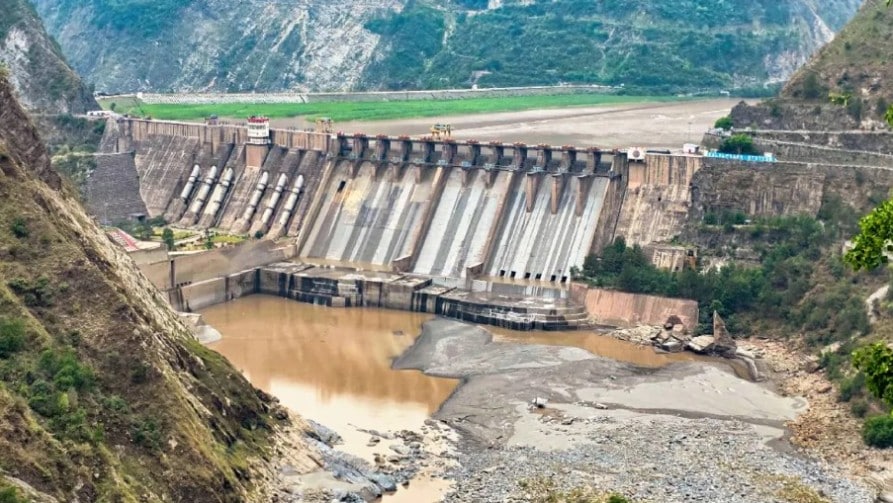
A day after the Pahalgam terror attack last year, India supended the Indus Waters Treaty
Pakistan had sought arbitration over disagreements concerning the design of India's Kishenganga and Ratle hydroelectric projects on the western rivers of the Indus system.
India has objected to the arbitration process from the start.
New Delhi argues that disputes of this nature are technical and should be examined by a Neutral Expert, as provided for under the treaty. Allowing a Court of Arbitration to simultaneously examine the same issues, India says, goes against the dispute-resolution mechanism laid down in the agreement.
India maintained that it has never appeared before this body and "has refused to take any cognisance of its earlier pronouncements".
"This so-called Court of Arbitration has no jurisdiction whatsoever to pronounce on India's sovereign decisions. Its pronouncements, now or in the future, will have no effect on India's actions in connection with the projects being undertaken by India," it said, asserting "India's decision to hold the Indus Waters Treaty in abeyance remains in force".
Track Latest News Live on NDTV.com and get news updates from India and around the world


