





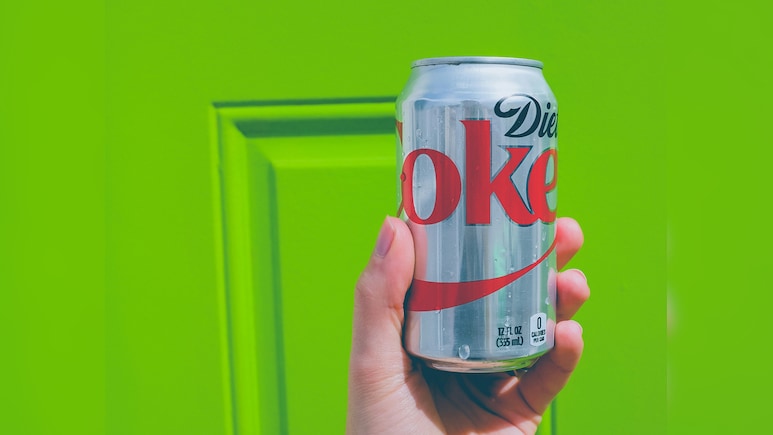
- Diet Coke helped cure a 63-year-old woman hospitalized with stomach pain and vomiting
- She had multiple conditions including diabetes, kidney disease, and GERD, and used semaglutide
- Doctors found a gastric bezoar, a stomach mass caused by undigested material, via endoscopy
Diet Coke has become an immensely popular drink across the globe due to its taste and zero-calorie profile. Now, Diet Coke has made headlines after a US woman hospitalised with pain and vomiting was cured by consuming Diet Coke. The woman, 63, was admitted to the emergency department of the Brigham and Women's Hospital in Boston, Massachusetts, with severe stomach pain, nausea, and vomiting last year.
The woman told the doctors that she tried treating the symptoms with two common over-the-counter medications for acid reflux, but the treatments didn't help. Going through her medical history, doctors found that she had Type 2 diabetes, Stage 2 chronic kidney disease, opioid use disorder, and gastroesophageal reflux disease (GERD), among other conditions.
Additionally, she had been taking semaglutide, a GLP-1 weight-loss drug, for the past year and had lost about 18 kg or approximately 19 per cent of her body weight.
In an interactive case report published in the New England Journal of Medicine, the medical team then used magnetic resonance cholangiopancreatography, a noninvasive scan to examine the bile ducts, gallbladder, pancreas and pancreatic ducts.
The scan revealed that the bile ducts were dilated and a mass was present in the stomach that appeared to trap air. Endoscopy revealed a large mass in the woman's stomach, known as a gastric bezoar, possibly caused by he fat loss drug. These masses are tightly packed blobs of partially digested or undigested materials.
Methods to remove a bezoar include surgically extracting it or using an endoscopic procedure to break it into small pieces so it passes through the stomach. However, in recent years, doctors have been starting treatments with a gentler approach that includes using a chemical to dissolve the bezoar. And the go-to chemical is, surprisingly, Coca-Cola.
"Existing evidence, largely from case series and anecdotal experiences, supports the administration of 3 litres [0.8 gallons] of cola, either orally or through a nasogastric tube, within a 12-hour window," doctors noted in a report of the case. "It is not well understood whether acidity, carbonation, or another mechanism accounts for dissolution of the bezoar."
Due to the woman's diabetes history, she was given diet cola. As she did not enjoy carbonated drinks, the usual prescription of three litres of soda was cut down to 1.5 litres. Within a day, the woman reported a sudden tugging sensation in the abdomen, followed by a prompt decrease in nausea and abdominal discomfort.
In the end, the woman made a full recovery from her symptoms and was back to a regular diet upon discharge from the hospital. She stopped using the semaglutide.
Track Latest News Live on NDTV.com and get news updates from India and around the world

