



Why Delhi's New EV Policy Aims At Two And Three Wheelers
The new policy proposes to stop the registration of new petrol-powered two-wheelers from April 2028 and restrict new registration of CNG-powered three-wheelers from the end of this year.
-
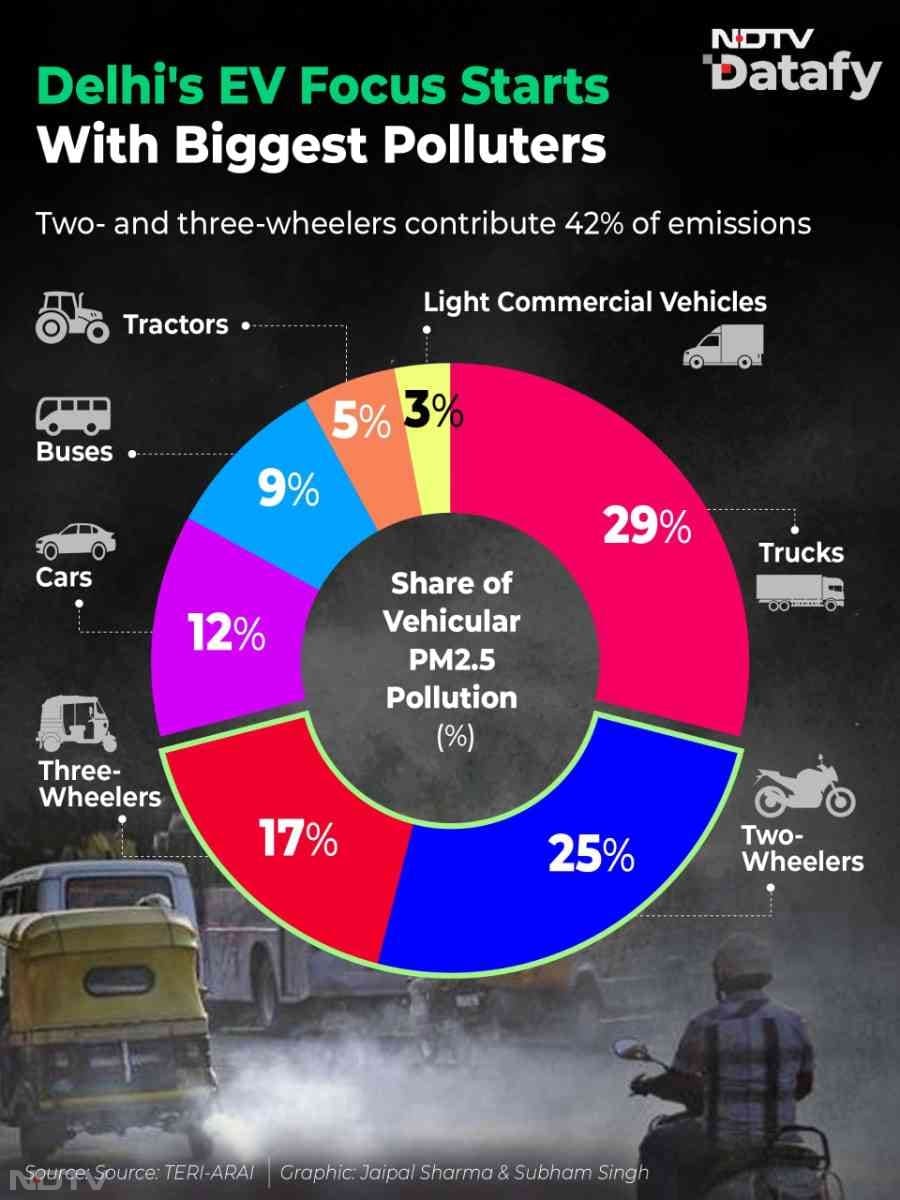 Why Delhi's New EV Policy Aims At Two And Three WheelersTwo-wheelers account for 25 per cent of vehicular PM2.5 pollution, while three-wheelers contribute another 17 per cent. Together, these two categories make up 42 per cent of pollution from the transport sector, making them the largest targets for any pollution-control strategy, according to a TERI-ARAI study on PM2.5 emissions from automobiles in Delhi-NCR.
 -
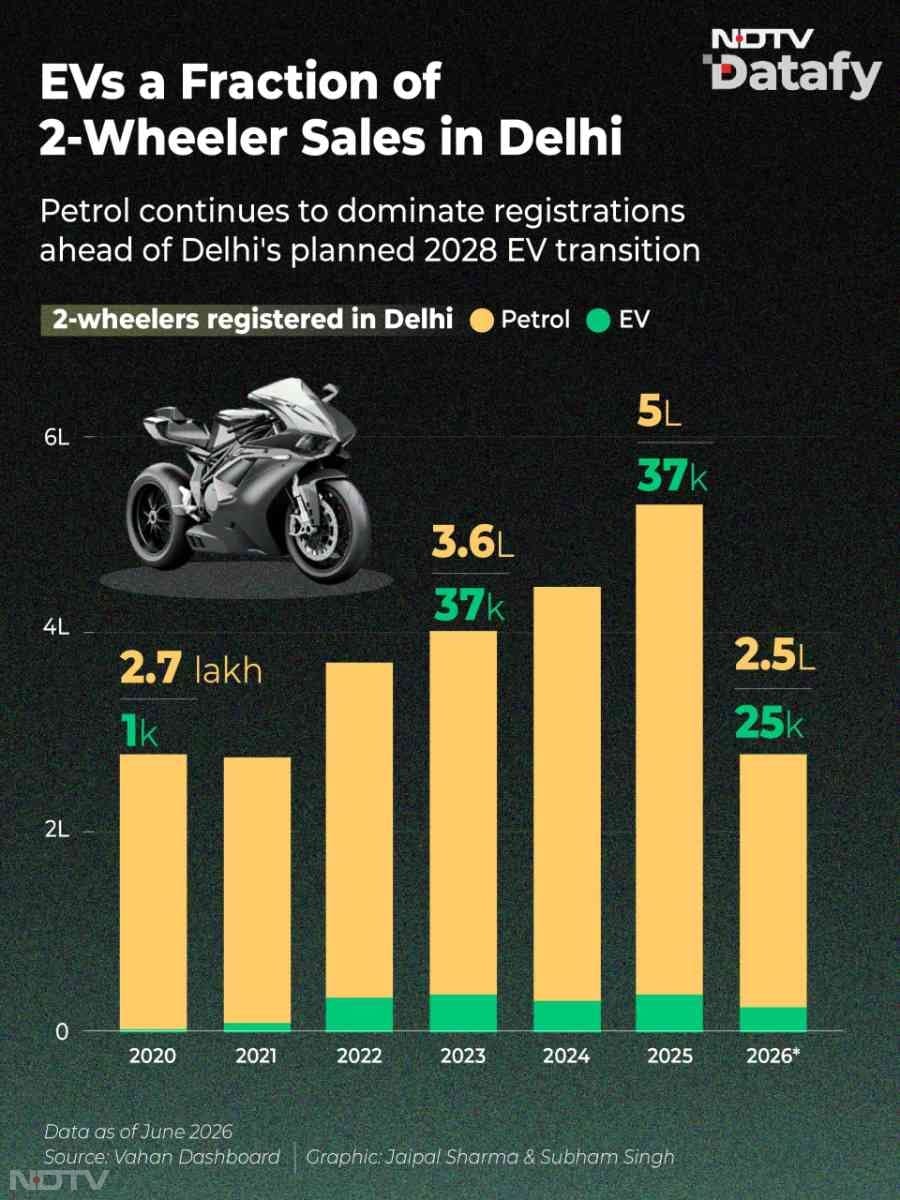 Why Delhi's New EV Policy Aims At Two And Three WheelersData from the Vahan dashboard shows that Delhi's two-wheeler market continues to be dominated by petrol vehicles. In 2025, more than 4.92 lakh petrol two-wheelers were registered in the capital, compared to around 37,000 electric two-wheelers. Even in 2026 till June, petrol vehicles account for the majority of new registrations, with over 2.54 lakh petrol two-wheelers registered so far against 25,424 EVs. Petrol-powered category consistently accounted for more than half of all new two-wheeler registrations between 2020 and 2026, highlighting why the segment remains a major focus of the policy.
 -
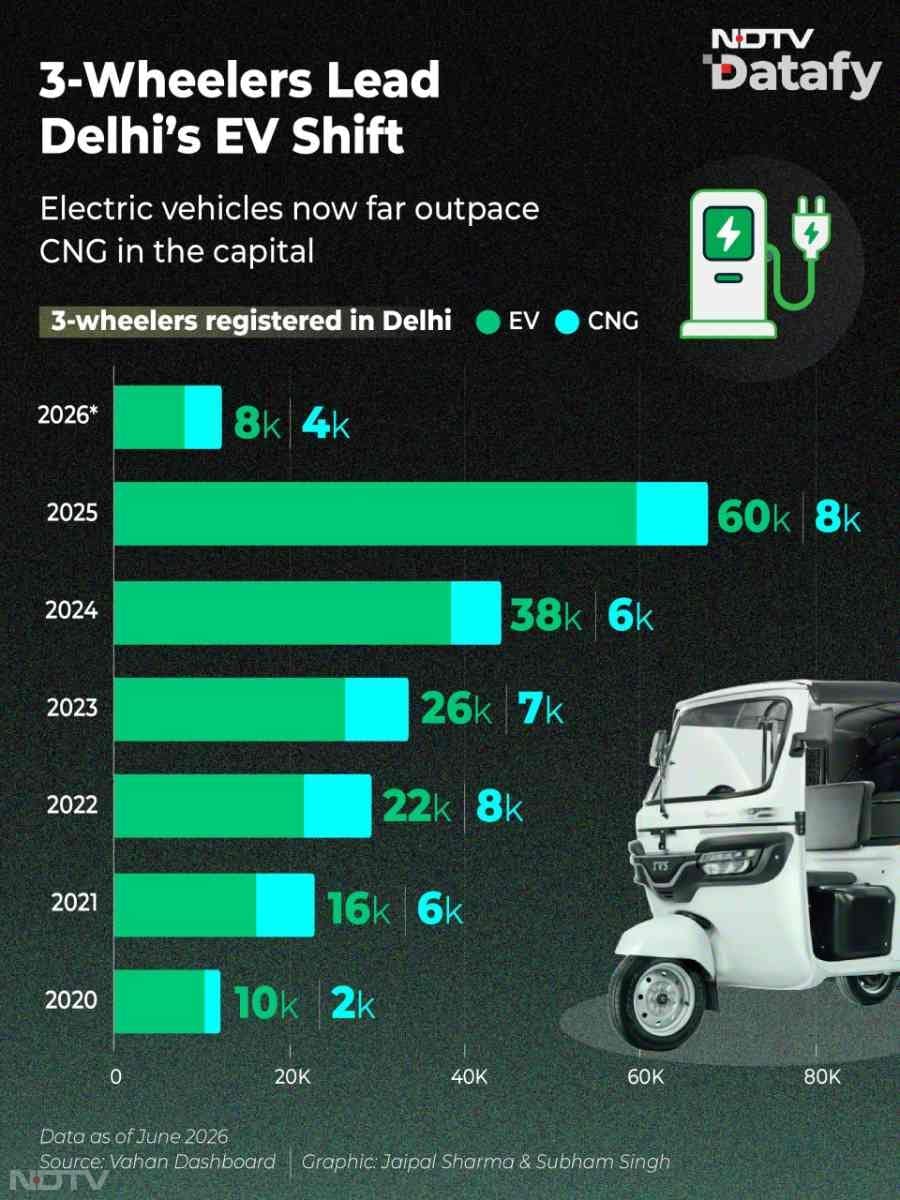 Why Delhi's New EV Policy Aims At Two And Three WheelersIn the three-wheeler segment, where the transition towards electric mobility is already underway. In 2025, Delhi registered 59,543 electric three-wheelers, compared to just 8,180 CNG three-wheelers. The trend was visible even earlier, with electric registrations surpassing CNG registrations every year since 2020. In 2026, electric three-wheeler registrations stand at 8,005, nearly double the 4,237 CNG vehicles registered during the same period.

