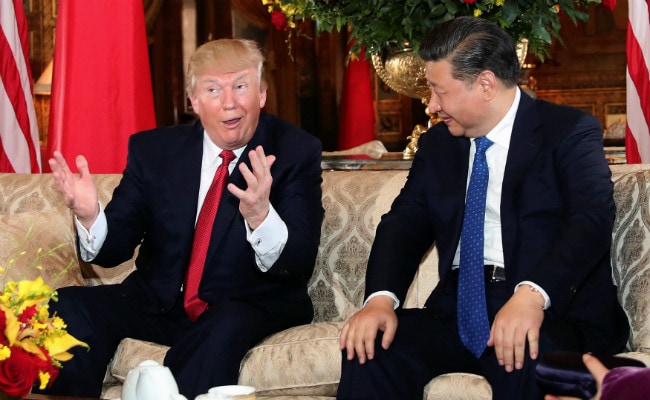
Opinion | Trump-Xi Talks: When One Is Playing Chess, And Other Is Flipping The Board
Xi seeks cumulative advantage. Trump? Short-term spectacle. This distinction will decide what comes of the talks between the two leaders this week.
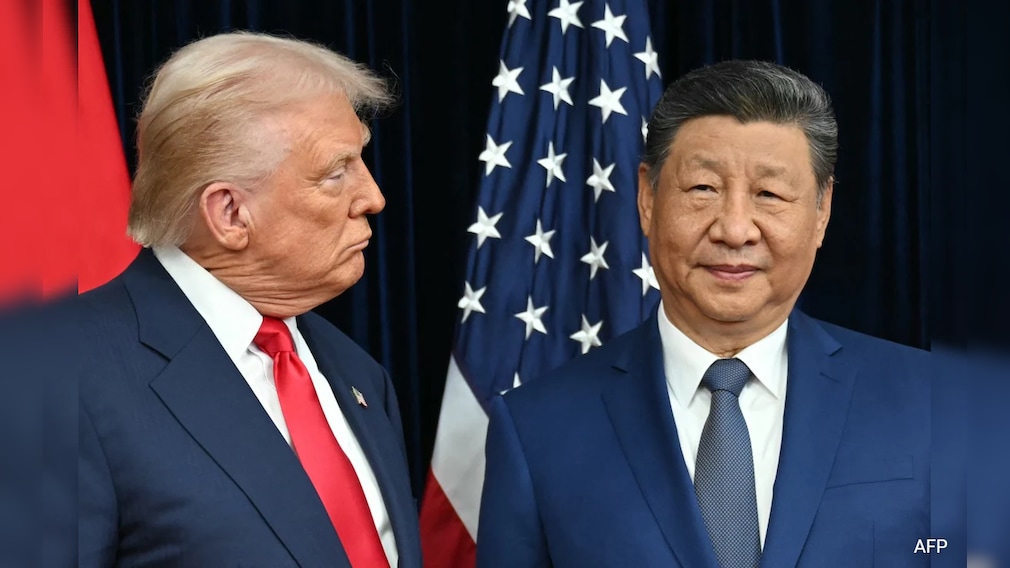
As Donald Trump prepares for talks with Xi Jinping between May 13 and May 15, the most important contrast may not be between the United States and China themselves, but between two fundamentally different styles of leadership, decision-making, and strategic time horizons.
Trump approaches geopolitics tactically, transactionally, and reactively. His diplomacy is summit-driven and media-centered, focused heavily on immediate optics and even the smallest media gain. He seeks visible outcomes quickly: tariffs, dramatic negotiations, public threats, and rapid declarations of success. Success is measured politically and immediately.
This style has strengths. Trump instinctively understands escalation psychology and recognises that unpredictability itself can become a negotiating tool. He also understands that traditional foreign policy bureaucracies often become rigid, slow, and detached from domestic political sentiment.
But tactical leadership also produces instability.
Under Trump, decision-making increasingly becomes personalised rather than institutionalised. Formal advisory structures weaken as influence shifts toward informal networks, personal loyalists, media narratives, business figures, and ad hoc channels of access. Policy often appears to emerge through instinct, conversation, and political impulse rather than through disciplined interagency processing.
This creates volatility not only for adversaries but for allies and even American institutions themselves. Signals shift rapidly. Positions harden and soften abruptly. Officials are empowered one week and marginalised the next. Policy direction becomes closely tied to Trump's own political instincts, personal idiosyncrasies, and reaction.
Rule Through Structure
Xi Jinping represents almost the opposite model.
His leadership style is highly centralised but deeply institutional in execution. Decision-making flows through party structures, internal committees, formal hierarchies, and disciplined bureaucratic chains. Xi governs through concentration rather than improvisation.
Xi's system, however, has weaknesses of its own, particularly excessive centralisation and growing turbulence within the PLA leadership. But his greatest strength is his command over the formal structure of the Chinese state. The party, bureaucracy, military, and industrial system ultimately move in the same strategic direction because authority flows institutionally downward from the centre.
Trump's system functions differently. His influence depends less on institutional control than on political dominance, personal loyalty, informal access, and individual relationships. Xi exercises authority through institutions he dominates. Trump exercises authority through the personalities he influences.
That distinction shapes how both powers process crises and pursue strategy.
Two Different Political Clocks
Trump's political instincts operate through compressed cycles: media cycles, polling cycles, market reactions, summit diplomacy, and immediate public narratives. He seeks decisive moments.
Xi's system operates through cumulative positioning over years and decades. Beijing's leadership is prepared to absorb short-term discomfort if it strengthens China's long-term strategic position. China's strategy revolves around gradual accumulation: industrial expansion, technological substitution, military modernisation, supply-chain leverage, and long-term regional positioning.
Xi seeks cumulative advantage.
That asymmetry becomes especially important in high-stakes negotiations, such as the coming May talks. Beijing increasingly understands that Trump values visible breakthroughs and dramatic summit outcomes, as the Marines Iran negotiations have shown. Xi does not face the same pressure. China's leadership can afford patience because its strategy is not built around singular diplomatic moments.
Modern great-power competition increasingly rewards endurance more than spectacle. Economic resilience, industrial depth, technological ecosystems, and institutional continuity now matter as much as military power itself.
In such an environment, leadership style becomes strategically consequential.
The Taiwan Question
This raises uncomfortable questions about Taiwan.
For decades, American deterrence in the Indo-Pacific has depended heavily on strategic predictability and alliance confidence. But Trump's highly personalised and erratic style introduces uncertainty into that equation. Allies, and increasingly the US foreign policy establishment, worry not simply about whether the United States remains powerful, but whether American commitments remain durable under a leader who often treats geopolitics as a sequence of negotiations rather than a sustained strategic architecture.
Beijing will inevitably test this.
Chinese leaders may increasingly believe that Trump's preference for dramatic deals and short-term political victories creates opportunities for transactional bargaining over issues that previous administrations treated as structurally non-negotiable. Even symbolic ambiguity over Taiwan can have enormous strategic consequences because deterrence ultimately rests on perceptions of consistency and endurance.
The danger is not necessarily that Trump would explicitly abandon Taiwan. It is that his leadership style itself creates uncertainty about where tactical flexibility ends and strategic concession begins.
That uncertainty alters calculations across Asia, including in India, where long-term strategic planning increasingly depends on assumptions about American continuity versus Chinese persistence.
The Competition Over Time
The deeper issue extends beyond any single summit or crisis.
A tactical system can generate energy, disruption, and unpredictability. But it also risks inconsistency and strategic exhaustion. A cumulative system may become rigid and internally brittle, but it often performs better in prolonged competition because institutions continue functioning even during political turbulence.
This is the deeper significance of the Trump-Xi contrast.
Xi's China may ultimately prove internally fragile. Trump's America increasingly appears externally impatient. One system fears rigidity. The other risks strategic distraction.
The coming talks, therefore, matter for reasons larger than tariffs, trade balances, or diplomatic symbolism. They will offer another glimpse into a much larger contest between two political time horizons: one operating through immediacy and disruption, the other through patience and accumulation.
In long strategic competitions, the side that best controls time often shapes the future long before any conflict is fought.
(The author is a Research Fellow in the Geostrategy Program at the Takshashila Institution)
Disclaimer: These are the personal opinions of the author
-
Why Doesn't Congress Boycott If Polls Are "Fixed"? Answer Lies Beyond Rahul Gandhi's "Distraction" Quip

The starkest demand for a boycott has come from outside the political Opposition, from the Cockroach Janta Party. But does a boycott help? Here's what research, examples, and expert analysis tell us.
-
'Sully' To Gimli, Sioux To Patna: When Pilots Got It Unbelievably Right
Captain Smit Machchhar fought off his co-pilot after being stabbed and opened the cockpit door, saving 174 people.
-
Opinion | Are Saudi Arabia And UAE Reuniting Again After 10 Years?
On Tuesday, the UAE's Vice President, Deputy Prime Minister and Chairman of the Presidential Court, Mansour bin Zayed, met Saudi Crown Prince Mohammed bin Salman.
-
Opinion | 'Lies, Damned Lies, Statistics': On The Controversy Around India's GDP Growth Figures
The debate is less about a single figure than about a decade-long erosion of trust in official statistics.
-
Opinion | Why India Cannot Keep 'Overestimating' Its Value To Washington
Some of India's value to Washington came from the tension between the US and China. That is changing now.
-
Opinion | India Has A 'Lobbying' Problem In Washington, And It Has Come Back To Haunt It
While the EU, Japan, the UK and South Korea secured quick deals, India's efforts were getting drained in prolonged negotiations and the wrong kind of lobbying.
-
India Is Getting Old Before Getting Rich, Will Turn 'Aged' In 16 Years: Moody's
Countries with the steepest fertility declines today will age the fastest in the coming decades. India's drop has been steep.
-
Opinion | Why Does Trump Want To Sell Arms To A US 'Adversary'? Inside His Strange Bargain
Trump's aides maintain that no such offer had been made. But the story points to a larger strategy
-
Opinion | The AI Boom Has Run Into A Big 'Debt' Trap Problem. Inside The 5% Danger Line
For most of the AI buildout's first two years, hyperscalers funded it the easy way: out of operating cash flow. That era is over.
-
Opinion | Iran To Saudi, Pakistan Is Now Fast Running Out Of Sides To Play
Pakistan's long history of playing all parties to its own benefit may have reached the end of its road.