Opinion | Pakistan First? Then Azerbaijan Should Stop Complaining About India
Baku would do well to do some soul-searching as to why pursuing close relations with Pakistan should necessarily translate into antagonism towards India.
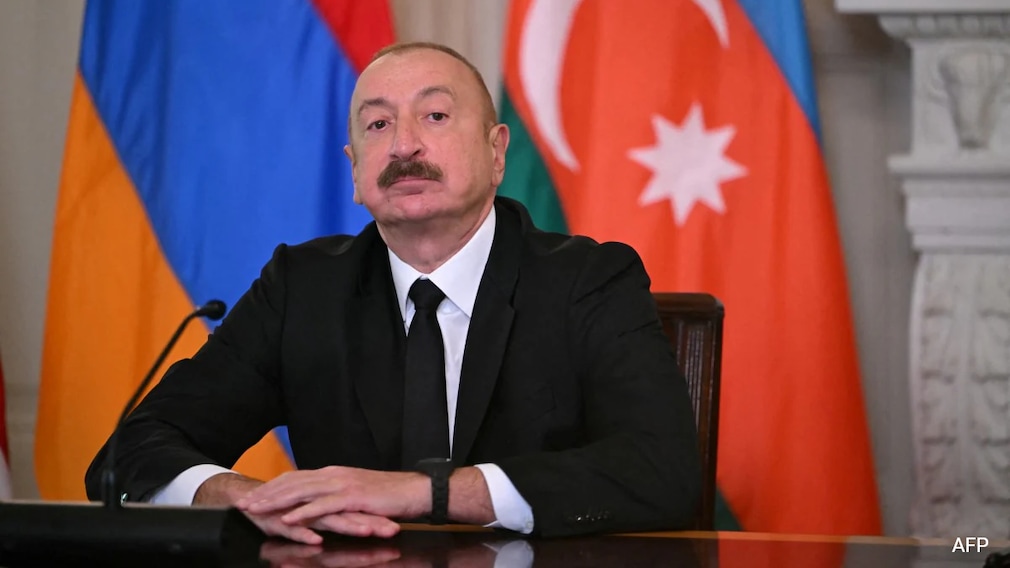
Azerbaijan has accused India of blocking its bid to join the Shanghai Cooperation Organization (SCO). Azeri and Turkish media report that President Ilham Aliyev has claimed that New Delhi is seeking “revenge” against Baku on global fora. Reports say he made the remarks during a meeting with his Pakistani counterpart on the sidelines of the SCO Summit on Monday. He also hailed Islamabad for its “victory over India” and reiterated support for the country.
A Myopic Policy
Azeri analysts and strategic thinkers say India is following a "myopic" policy that is shorn of strategic foresight, for short-term gains. But, has India indeed blocked Azerbaijan's entry into the Eurasian bloc? So far, there has been no response from the Ministry of External Affairs. However, such a move, if true, should not come as a surprise. In fact, Azeri analysts have suggested that another member of the SCO - Russia - may also have approved of it. For, Baku has managed to roil both Moscow and Iran - also a powerful SCO member - in recent times.
Also Read | The Story Of '3 Brothers' And Why Azerbaijan Is Cheering For Pakistan
The SCO summit at Tianjin this year has indeed thrown up some pivotal moments. Analysts in Azerbaijan, instead of engaging in the futile exercise of tarnishing India's image in the bloc, would be better off trying to understand why relations with India, with all its attendant dividends, remain complicated. The onus for the sorry state of bilateral relations between the two rests solely with Baku, after all.
Let us look into history to understand why.
How It All Started
When the Soviet Union disintegrated, almost all its successor states inherited good relations with India by virtue of their Soviet legacy. India recognised most of them as sovereign states almost around the same time as they emerged as independent nations. Yet, relations with Azerbaijan took a different trajectory, unlike those with its other South Caucasian neighbours, Armenia and Georgia.
For instance, diplomatic relations with Azerbaijan were established on February 28, 1992. Yet, the Indian diplomatic mission in Baku was opened only in March 1999. Azerbaijan took even more time to reciprocate and opened its diplomatic mission in Delhi only in 2004. Elevating ties to the ambassadorial level took even longer, in turn. Twenty years later, there have been no major high-profile bilateral visits between the two sides at the level of heads of state or government.
Also Read | After Op Sindoor, Pakistan's Turkey-Azerbaijan Links A Red Flag For India
On the other hand, Azerbaijan preferred deepening ties with Pakistan, facilitated by Turkey. This in no way should have precluded building good relations with India - but it did, and through Baku's own doing. Almost all countries with which India has good relations have ties with Islamabad; India does not view bilateral relations with others through the prism of relations with Pakistan.
Recommended

Crossing Red Lines
Azerbaijan's ties with Pakistan didn't encompass just trade and commerce, but also defence. Pakistan trains Azeri military personnel. The two countries have an agreement worth $1.6 billion, whereby Pakistan will export eight JF-17C Block-III warplanes to Azerbaijan. This is said to be Pakistan's largest order to supply defence equipment abroad. The countries participate in joint military exercises together with Turkey. During the 2020 Armenia-Azerbaijan war over the contested territory of Nagorno-Karabakh, Armenians allege that Pakistan sent recruits to fight for Azerbaijan.
Emboldened by its success against Armenia, Azerbaijan crossed the red line to publicly express support for Pakistan's position on Kashmir, which is a strictly bilateral issue between India and Pakistan. It became normal for joint declarations between the two countries to possess a clause on Kashmir, voicing support for Pakistan. Azerbaijan left nothing to doubt that it saw in Kashmir a parallel with Nagorno-Karabakh. It allows Kashmir Day events to take place in Baku, as well as events by the Pakistani embassy in Baku, condemning India's scrapping of Article 370. In the same spirit, Baku condemned India's Operation Sindoor following the brutal Pahalgam attacks. It expressed solidarity with Pakistan, and a letter from the Azerbaijan government was also delivered to Pakistan President Shehbaz Sharif, reiterating support and solidarity with Islamabad during this critical time. Its media uses the vilest of terms for India and its leadership. It regularly issues consternation, threats, and condemnations of India's defence ties with its neighbour and arch-rival, Armenia.
India Has Shown Maturity
It is ironic that Azerbaijan analysts and policy makers do not see the myopia inherent in these statements. India, after all, does not take a similar approach. It doesn't, for instance, condemn Baku for financing Pakistan's terror industry by purchasing arms from it. In spite of its close relations with Armenia, India has never proclaimed support for Armenia's claims to Nagorno-Karabakh, and has preferred to remain neutral.
Azerbaijan's anti-India stance or utterances make no difference on the ground but have caused unnecessary damage to bilateral relations with India, from which Azerbaijan benefited far more than India did.
According to available data, bilateral trade between India and Azerbaijan increased from a paltry USD 50 million in 2005 to USD 958 million in 2024. Moreover, this trade is well-tilted in Azerbaijan's favour, with India's exports to Azerbaijan at USD 224 million and imports at USD 734 million. Tourism from India, as well as earnings from Bollywood and other regional film industries, is another huge source of revenue for Azerbaijan. Last year, Indian tourists comprised 10% of the country's inbound tourism - more than 2 lakh. ONGC Videsh Ltd has invested more than USD 1.2 billion in acquiring stakes in the Azeri-Chirag-Gunashli (ACG) oil and gas fields and the Baku-Tbilisi-Ceyhan (BTC) oil pipeline.
Also Read | Why Many Indian Tourists Are Cancelling Trips To Turkey, Azerbaijan
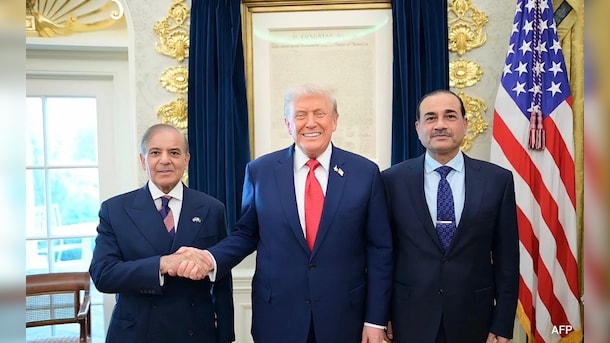
At Tianjin, President Aliyev met Shahbaz Sharif and congratulated him over what he said was Pakistan's "victory" in the latest military confrontation with India and said he would continue to "prioritise" relations with Pakistan.
Soul-Searching Necessary
Therefore, if India has blocked Azerbaijan's entry into the bloc - where decisions are made through consensus - it can hardly be faulted. No country would allow a sub-grouping of countries inimical to it in any block it is a member of. Baku would do well to do some soul-searching as to why pursuing close relations with Pakistan should necessarily translate into antagonism towards India. It only demonstrates that the country's foreign policy has still to mature. Till then, it may find that such antagonism comes at a price.
(The author is a journalist and political analyst)
Disclaimer: These are the personal opinions of the author
-
Opinion | As UN Interviews Its Next Chief, The Interviewers Have Some Explaining To Do

On the panel sit governments whose wars, vetoes, and unpaid dues have helped make the organisation ineffective.
-
Opinion | Trump-Xi Meet: What China Can Give America, And What India Could Lose
If Trump can secure some of what he wants directly from Beijing, India's immediate value to Washington could change in particular areas.
-
A New 'Axis'? 87 Years After Pact Of Steel, A New European Far-Right Tie-Up
Nearly nine decades after Nazi Germany and Fascist Italy formalised their alliance, senior figures from Germany and Italy's far-right appeared together at a political rally on Sunday.
-
Opinion | 'Blackmail' Diplomacy: Why India Can't Be A Pawn In US' War On Russia
The new sanctions bill is both blackmail and hypocritical: blackmail because it seeks to change India's principled stand, and hypocritical because the US has provided exemptions to others, and itself.
-
Blog | Katrina Kaif, And The Very Indian Problem Of Too Much 'Audacity'
The remarkable thing about many Indian trolls is not that they have opinions, but that they expect - get this, Katrina Kaif, no less - to care about them.
-
Mamata Banerjee Drew Her Party's Symbol By Hand. It's Now Tied To An Indira Gandhi Case
The Election Commission's method for settling such disputes became central in the seminal Congress split of 1969, when Indira Gandhi fought the old guard. The poll body weighed three tests then.
-
Bruised, Limping, Unbowed: Sia Says She Will Be Back On The Bike Soon
There was pain in Sia's steps, anger in her words, and something else - a quiet determination that the road would not be taken away from her.
-
Exclusive: 16 Months After Op Sindoor, Pak Still Fixing Runway India Broke At Sargodha
Sargodha's PAF Base Mushaf lies about 172 km northwest of Lahore and roughly 200 km west of the India-Pakistan border, near Amritsar.
-
Blog | I Lost My Entire Family In Kanishka Bombing. 41 Years Later, Canada Wants The Case Closed
We made the trek through tragedy to search for people in Cork, where I spent 25 days sifting through bodies and body parts in a makeshift morgue to identify our loved ones.
-
Opinion | Pak's Drone Deal With A US Firm Is No Windfall. But India Must Still Be Worried
American military aid to Pakistan has remained suspended since January 2018, during Trump's first term, but a commercial arms sale is separate from this arrangement.