After Op Sindoor, Pakistan's Turkey-Azerbaijan Links A Red Flag For India
The drones Pak fired at India on the night of May 8, 2025, included the Turkey-made Asisguard SONGAR and the Bayraktar TB2, an unmanned combat aerial vehicle.

During India and Pakistan's 100-hour-war in May 2025, Islamabad fired a barrage of drones and missiles at enemy military installations and civilian populations.
The biggest wave was late May 8 and early May 9; between 300 and 400 drones, and over a dozen missiles attacked 36 towns or cities from Srinagar in Jammu and Kashmir to Jaisalmer in Rajasthan, spanning nearly 1,300 km along the Line of Control and the international border.
A vast majority of these were shot down, and those that weren't were neutralised, i.e., electronically disabled, thanks to India's 'Iron Dome', - the Integrated counter-Unmanned Aerial System, or C-UAS.
From the debris of the shot-down projectiles, a new plotline emerged - a nexus between Pakistan and Turkey, and Azerbaijan, all of which share an increasingly robust economic and military relationship, not to mention their common Islamic heritage.
The 'Three Brothers'
Historically each has supported the other; after the Soviet Union fell Turkey and Pak were quick to recognise Azerbaijan, and Turkey and Pak have a growing symbiotic military relationship, one underscored by each side's reluctance to depend on either the West or China.
And oil-rich Azerbaijan has quietly become a leading source of aid and investment for Pak; in February 2025, for example, Baku committed $2 billion in infrastructure, energy, and mining.

The 'Three Brothers' - Turkey, Pakistan, and Azerbaijan. Photo Credit: Google Maps
Baku and Islamabad also struck weapons deals, and the latter was reportedly backed by the former and Ankara during the 2020 Nagorno-Karabakh war involving Azerbaijan and Armenia.
Incidentally, India has emerged as a supporter of Armenia.
In 2024 Delhi became Yerevan's largest defence supplier after a $2 billion deal that included sale of the indigenously developed Akash missile system that kept the Turkish-made Pak drones at bay.
NDTV Exclusive | Guardians Of The Sky - India's Integrated Air Defence Outfoxed Pak
There has also been economic cooperation - in banking, trade, and tourism, among other fields - which is critical given all three are on ancient trade corridors linking the 'far East' and Europe.
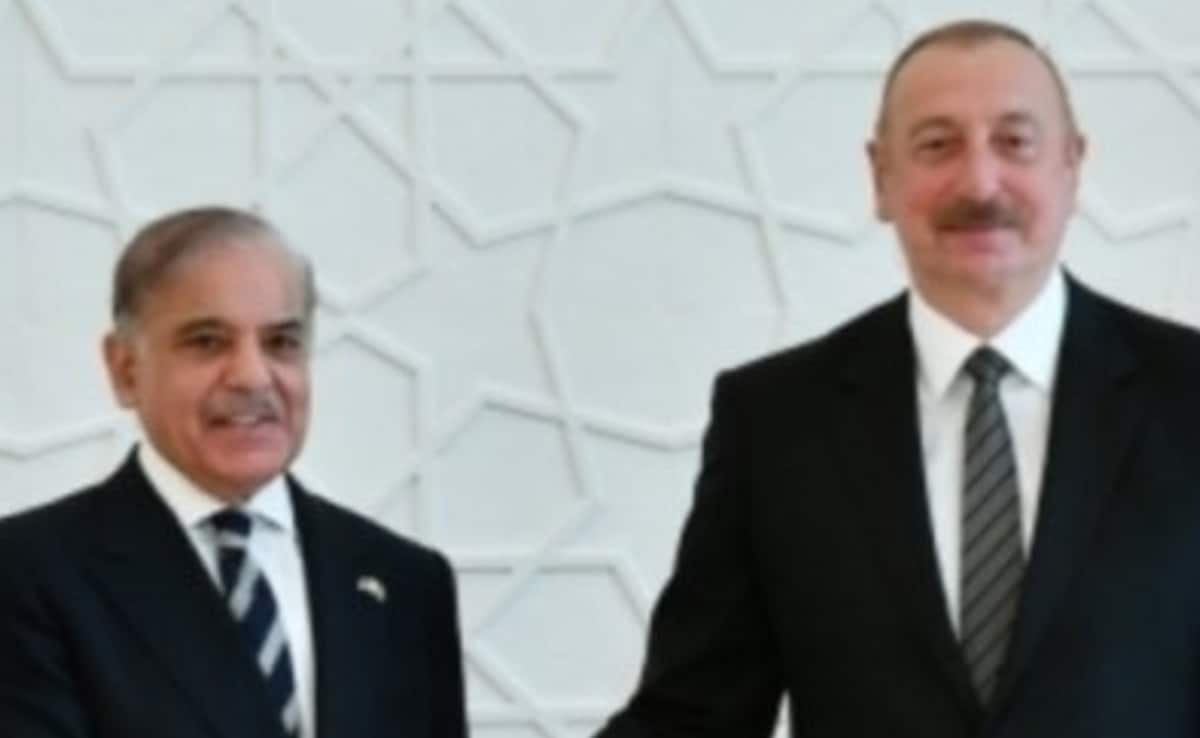
Pak PM Shehbaz Sharif and Azerbaijan President Ilham Aliyev (File).
The nexus also adds to a significant common diplomatic, or 'soft', power that can be used to project combined geopolitical influence eastward from Pak, across Central Asia, and even up to Europe, with analysts also pointing to Islamabad's 'power and influence among Muslims'.
These, then, are the 'three brothers' against whom, in effect, India fought the 100-hours war.
NDTV Opinion | Story Of '3 Brothers' And Why Azerbaijan Is Cheering For Pakistan
Arguably, Pak was the face, Turkey the weapons hand, and Azerbaijan aided by unleashing a flood of disinformation and propaganda seeking to discredit Delhi's military actions.
The Turkish Angle
Now, many of the Pak drones that attacked India last week were Turkish-made.
These included the Asisguard SONGAR, which can transmit live video and carry weapons, and the Bayraktar TB2, a medium-altitude, long-endurance UCAV, or unmanned combat aerial vehicle.
That foreign-made/foreign-purchased weapons were used wasn't a surprise; Pak also deployed Chinese-made JF-17 fighters and fired PL-15 air-to-air missiles sold by Beijing, just as India had French-made Rafales, Israeli drones, and Russian missiles in its expansive arsenal.
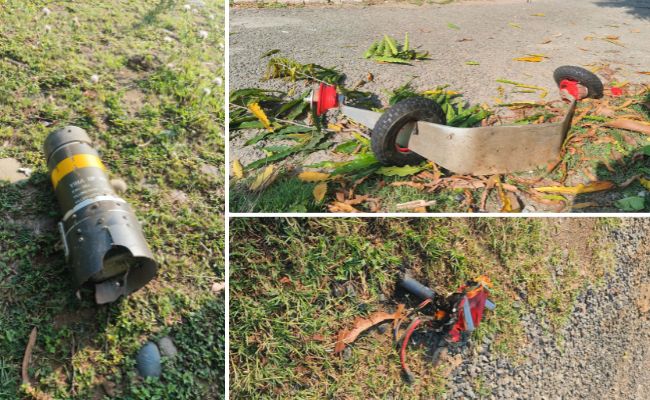
Debris of a Turkish-made Pakistani drone shot down over J&K.
But the Ankara link - a link reinforced by the docking of a warship and a possible arms shipment delivered by a C-130 military transport, days before Operation Sindoor - raised eyebrows.
Turkey insisted no arms had been supplied and the warship's visit was naval courtesy.
Clearly, though, weapons have been supplied.
Turkey-Pak Weapons Deals
Over the past several years Ankara and Islamabad have, discreetly, stepped up defence ties.
For example, the Pakistan Air Force now flies more than three-dozen United States-made F-16 fighter jets that have been upgraded by Turkish Aerospace Industries in a $75 million deal.
A Turkish company was given $20 million to develop electronic warfare training centres.
Another got an $80 million contract to design and build a fleet tanker - "capable of performing a variety of maritime operations, including provision of logistic support to other ships by transferring fuel", according to the Manohar Parrikar Institute - for the Pak Navy.
Upgraded submarines cost $350 million, electronic targeting equipment cost $50 million and there was a $1.5 billion deal for four Turkish warships with anti-submarine capabilities.
READ | Turkey's Role In Focus After Pak's Military Escalation Against India
There was also another $1.5 billion deal for 30 attack helicopters - upgraded versions of the Italian-made A-129 - but Islamabad walked back on that after getting China's Z-10MEs.
Turkey has sold weapons to Pakistan, and those were used, albeit to no real effect thanks to effective countermeasures, against India. Delhi hasn't yet, and is perhaps unlikely to, take this up with Ankara, but sources have said the India-Turkey relationship may be re-evaluated.
There has been civilian pushback against Turkey; tourists and Bollywood, perhaps two of Ankara's most lucrative imports from Delhi, have gone on a 'boycott Turkey' drive.
Azerbaijan has also come in for criticism from the Indian public.
This hasn't, so far at least, affected Turkey President Recep Tayyip Erdogan - whose stature as a 'global statesman' is on the rise after hosting the first, post-war, face-to-face Russia-Ukraine peace talks. Erdogan has reiterated support for his 'dear brother', Pak's Shehbaz Sharif.
Kıymetli @CMShehbaz kardeşim,
— Recep Tayyip Erdoğan (@RTErdogan) May 13, 2025
Dünya üzerinde pek az millete nasip olan Türkiye-Pakistan kardeşliği, hakiki dostluğun en güzel örneklerinden biridir.… https://t.co/NePsq2Lr3O
Erdogan, in fact, has visited Pak six times since becoming President in 2003.
The Trade 'Trade-Off'
So, if India's trade ties with the other two 'brothers' is to take a hit, how much are we talking?
Exports to Turkey stood at $5.2 billion between April 2024 and February 2025. This was $6.65 billion in 2023/24 and is only 1.5 per cent of India's total exports of $437 billion.
Explained | India's Trade Ties With Turkey, Azerbaijan Amid Pak Conflict
Exports to Azerbaijan were only $86.07 million between April 2024 and February 2025, against $89.67 million in 2023/24. This is only 0.02 per cent of India's total outbound shipments.
Combined, imports amount to less than 0.6 per cent.
There is, therefore, a trade surplus, even if it isn't sizeable.
'Three Brothers' vs India?
The 100-hours war emphasised two points.
The first - the Indian military is tactically astute, has a potent arsenal of short-, medium-, and long-range missiles and drones, backed by squadrons of effective, if outdated, fighter jets, all protected behind a reliable, layered aerial defence system capable of soft and hard kills.
READ | How Indian Defences Protected Nation, Shot Down Pak Missiles, Drones
This protection is provided by India's 'Iron Dome' - within which sit various radar arrays to locate, identify, and track potential airspace threats. Countermeasures are then deployed, from jamming signals to firing interceptors from the Akash or the Russian-made S-400.

Russian-made S-400 missile defence systems were used to counter Pak threats (File).
The second - the 'three brothers' nexus needs to be taken seriously, more so since there appears to be a gentle shift in Islamabad moving away from Washington (and maybe even Beijing) to Ankara.
And Delhi is doing that. In Europe, for example, there is military support to Armenia (to counter Azerbaijan) and engagement with Greece-supported Cyprus (to offset Turkey).
There is also the planned India-Middle East-Europe Economic Corridor, and the fact this does not include or pass through either Turkey or Azerbaijan isn't a coincidence.
India will likely continue to engage Turkey and Azerbaijan, because it doesn't make sense, at this stage, to cut oneself off from key powers in the Central Asian region, but Delhi will be watching the 'three brothers' closely, moving to counterbalance or support where needed.
With input from agencies
NDTV is now available on WhatsApp channels. Click on the link to get all the latest updates from NDTV on your chat.
-
The Coast Pays, Delhi Collects: What The Centre's Mineral Bill Takes From States

India's mineral wealth may lie with the states, but the power to tax it is increasingly travelling north.
-
Opinion | Nanded Attack: Sukhbir Badal And The Past That Still Haunts Him, 11 Years Later
Badal has now faced two serious physical attacks at Sikh religious places in less than two years. Is religious atonement enough for political forgiveness?
-
How Parents Walk Tightrope Of Sending Child To Daycare And Ensuring Safety
As dual-income households rise in India and nuclear families become the norm, daycare support is no more a want, but a need.
-
Opinion | Indian Parliament And The Perils Of Empty 'Swagger'
Indian MPs - on all sides - have found a dangerous new way to game the Parliament. And so far, they all are winning
-
Al-Assad Faces Death, But Sleeps Safely In Russia. What Syrians Think
A court in Damascus sentenced Syria's ousted president Bashar al-Assad and his brother, Maher al-Assad, in absentia for murder, torture and crimes against humanity committed before and during Syria's 14-year civil war that left about half a million people dead.
-
One Company, 40-Year Career: The N Chandrasekaran Story
N Chandrasekaran, a former chief executive of Tata Consulting Services (TCS), took over as chairman of Tata Sons in 2017 following a bitter boardroom battle that led to the ouster of Cyrus Mistry.
-
Opinion | The Great IIT Dream Is Cracking: Why Even Top Degree-Holders Are Unable To Find Jobs
Across several top IITs, roughly 30-40% of registered students had not found jobs by the final weeks of the 2024-25 cycle.
-
Opinion | Pakistan Might Just Have Signed Itself Into A Difficult Trap With Its 'Saudi' Deal
The Saudi-Pak-Turkey agreement gives Saudi Arabia a shield. But for Pakistan, it could quickly become a strategic nightmare
-
Opinion | Google Is Turning The Internet Into Its Own Prison, And Nobody Can Do Anything About It
The company that once sent us across the web now wants to keep us trapped inside its own walls.
-
Opinion | Three Adversaries Become 4: Why The Saudi-Turkey-Pak Deal Is A Headache For India
With Turkey already in Islamabad's corner and Saudi Arabia now signing up to a mutual-defence pact, Pakistan's bilateral rivalry with India may now become a much wider strategic equation.