What Tarique Rahman's Win Means For India
India's focus is on capability and intent, specifically on the new Bangladesh government cooperating on issues like border control and infiltration and maintaining the balance of power in the South Asia region.
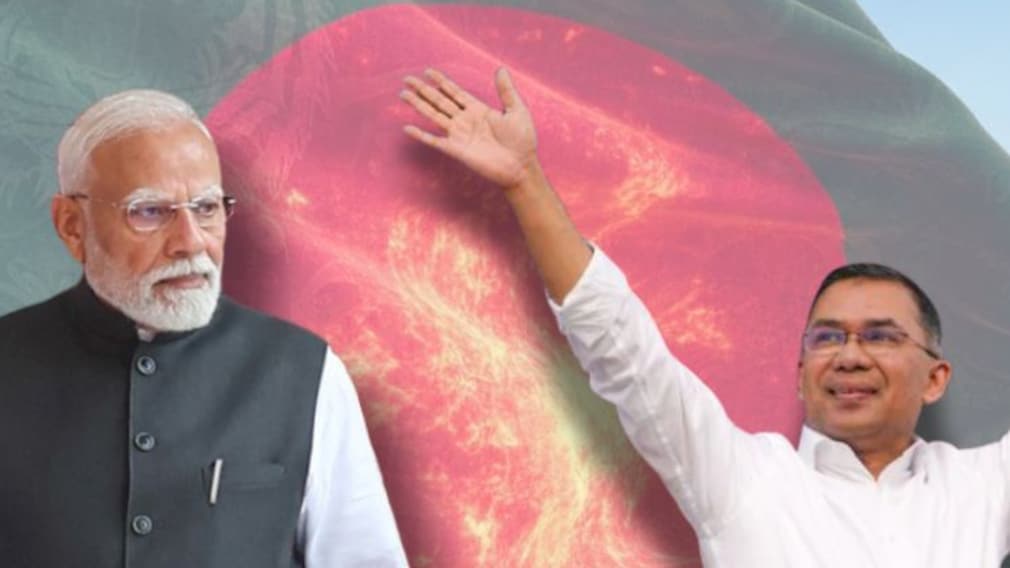
The Bangladesh general election - the first since violence in July 2024 ended then-Prime Minister Sheikh Hasina's long tenure and forced her to flee - is set to deliver a big win for the Tarique Rahman-led BNP and script a fairytale ending for the man whose critics call him the 'dark prince'.
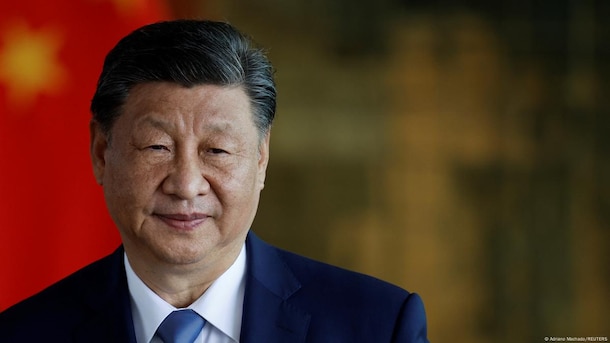
Rahman's return to power is a drama-packed story - political 'royalty' by any standard, the 60-year-old is the son of ex-President Ziaur Rahman and ex-Prime Minister Khaleda Zia. He left home in 2017 under a dark cloud after being arrested on corruption and money-laundering charges.
He went into exile for 17 years to return only after his mother died in December 2025.
And return he did; Rahman was given an ecstatic welcome by a massive crowd and he responded with echoes of American civil rights activist Martin Luther King's 'I have a dream' speech.
"... I have a plan for Bangladesh," he thundered, kickstarting the BNP's campaign.
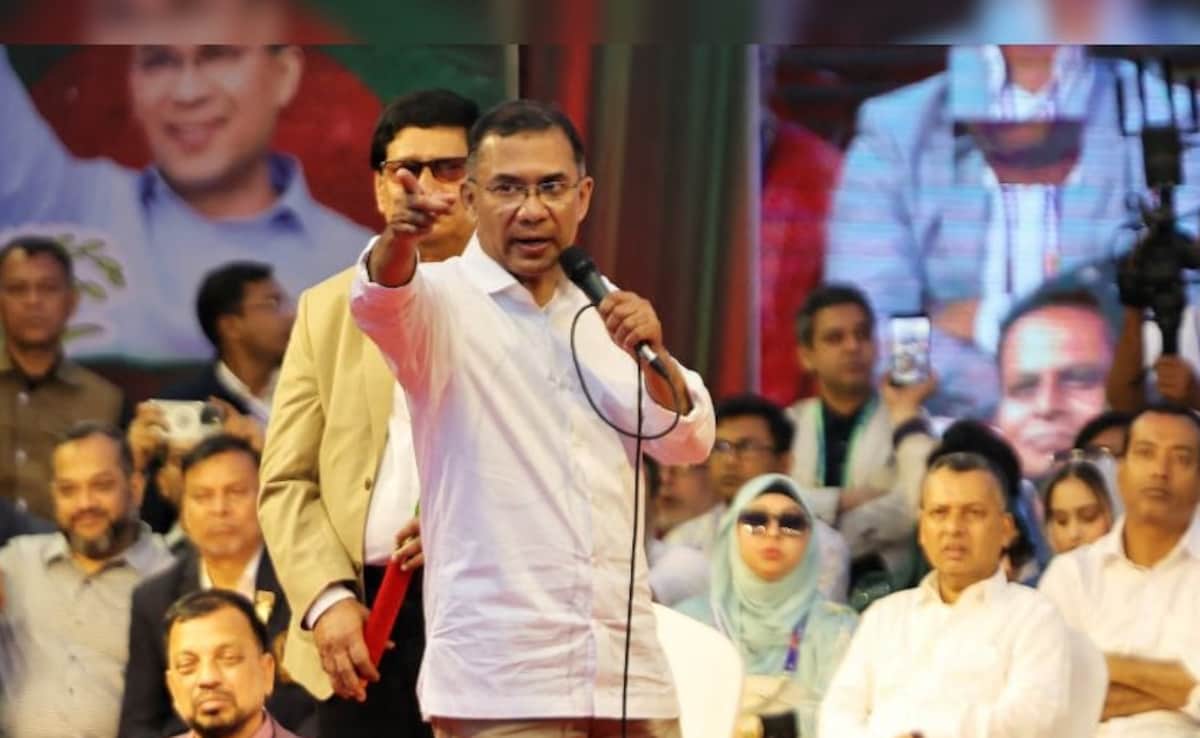
60-year-old Tarique Rahman is set to be Bangladesh's next Prime Minister (File).
And so now India, and the rest of South Asia, and the US, wait for that plan to unfold.
READ | Tarique Rahman-Led BNP Set For Big Win, Jamaat Concedes
India's first steps
Delhi seized the initiative Friday morning in welcoming Bangladesh's new leader before China or Pakistan, a move analysts said could be key in any tug-of-war with the latter over Dhaka.
Prime Minister Narendra Modi offered Rahman and his BNP his "warm congratulations" on a win that "shows the trust of the people of Bangladesh in your leadership". He also assured Rahman and his administration India will support a "democratic, progressive and inclusive Bangladesh".
I convey my warm congratulations to Mr. Tarique Rahman on leading BNP to a decisive victory in the Parliamentary elections in Bangladesh.
— Narendra Modi (@narendramodi) February 13, 2026
This victory shows the trust of the people of Bangladesh in your leadership.
India will continue to stand in support of a democratic,…
A relatively standard message to a newly-elected leader but the subtext was clear.
India would like to put the upheaval of the past 18 months, including uncertainty caused by Bangladesh flirting with China and Pakistan, and the killing of Hindu minorities, and establish a stable working relationship that ensures a decades-old ally remains by its side.
What India is watching
India has monitored this election closely because which way the new government swings could shift regional geopolitics in South Asia and beyond, and impact national security.
From Delhi's perspective there are three inter-connected issues, the biggest of which is a potential Pakistan-China-Bangladesh axis - a possibility if Rahman's incoming administration has a foreign policy that is less kindly disposed to Delhi than that led by Hasina.
A Pak-China-Bangladesh nexus could weaken Delhi's hold on South Asia.
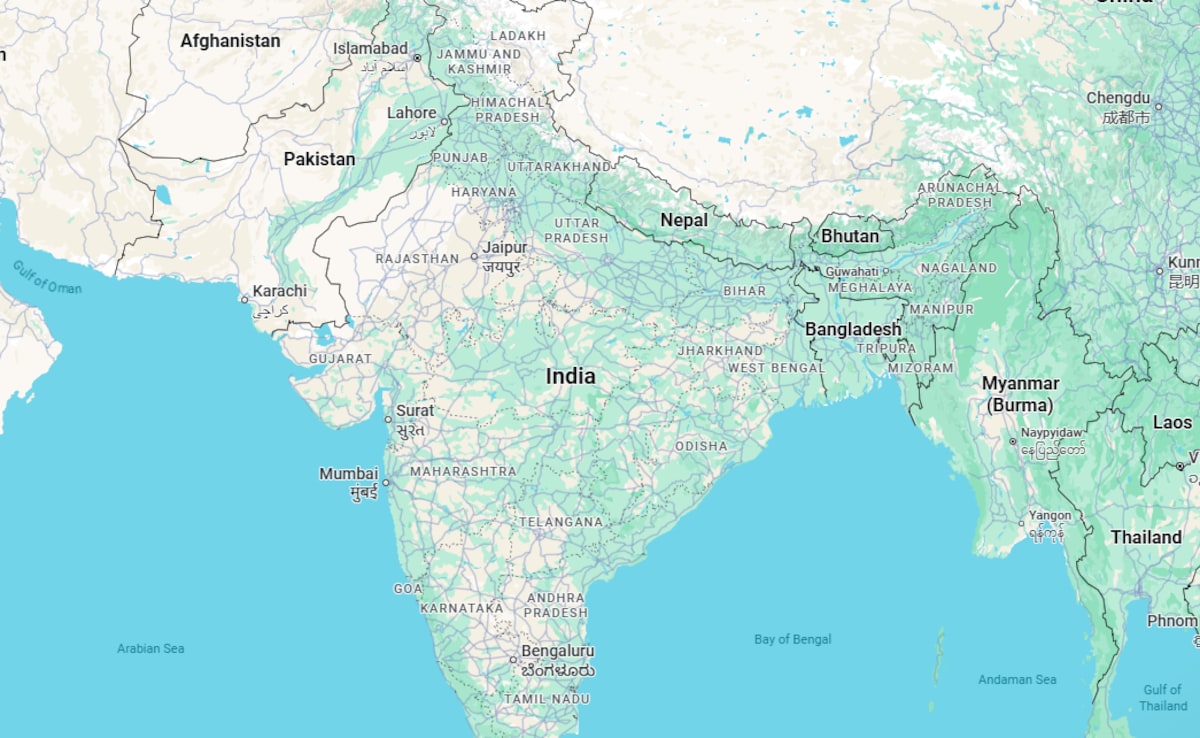
Map of South Asia. Photo: Google Maps
Also in play are border and internal security implications, arising from concerns like illegal migration (and the fallout on domestic politics, particularly before the Bengal and Assam elections), and anti-Hindu sentiments that erupted after the fall of Sheikh Hasina.
Trade is also a factor to be considered, though perhaps less important than the above three given India enjoys a nearly US$10 billion surplus and supplies over 80 per cent of raw cotton to Bangladesh's readymade garments industry, a key driver of its national economy.
The baseline
Delhi and Dhaka were seen as having a stable relationship with Hasina in power.
The Awami League boss - barred from this election and facing a death penalty - ran a 'pro-India' government that focused on trade, transport, border security, and water-sharing agreements.
While Delhi would obviously prefer Hasina in charge, geopolitical analysts have admitted the Indian government recognises the changing of the guard, if for the foreseeable future, in Dhaka.
The BNP in power, therefore, will not unduly worry India; Rahman has said he will respect India's interests, signalling a potential shift from his mother's 'Bangladesh first' policy.
What this will mean in practice is a wait-and-watch game at this time.
The good news for India is handling the BNP would have been a different proposition had hardline Islamic outfit Jamaat-e-Islami entered the equation as a coalition partner.
But that has been ruled out with the BNP heading for a clear majority win.
Why India is watching: the Pak-China link
For India, a Bangladesh government that included the Jamaat had the potential to destabilise bilateral ties. More significantly, it could have pivoted closer to Pakistan, opening the unwelcome possibility of Bangladesh becoming a launchpad for Pak-linked or supported terrorist groups to strike the northeast, adding to Delhi's dual security load in the west.
The knock-on effect of a Pakistan nosing around India's northeast is that any resulting destabilisation could play into China's hands as it looks to illegally claim Arunachal Pradesh.
But without the Jamaat, a Rahman-led government may be inclined, analysts believe, towards a less antagonistic stance with India, though history suggests it will be more transactional than friendly. That may not a bad thing since such a relationship will be largely predictable.
That Dhaka may still be interested in doing business with Pakistan is possible; indeed, last month there were reports (unconfirmed) about talks over a fighter jet deal involving the JF-17.
China's footprint is already visible courtesy investment in big-ticket infrastructure projects like the modernisation of the Mongla Port, the country's second-largest sea port.
While these are framed as commercial projects, analysts see them as Beijing's push to secure dual-use military bases. That China already has such facilities - in Sri Lanka and Pakistan - is part of what must be a larger security concern for India, linked to incremental Chinese access to enhanced logistical and surveillance capabilities in the Indian Ocean Region.
Why India is watching: the border issue
How decisive Rahman's government will be on border control - will he clamp down on illegal crossings and cross-border killings, and also on drug smuggling - could impact internal politics.
Bengal and Assam - both of which share that border - will hold an Assembly election this year and illegal migration is a core campaign issue in both; the Trinamool is under fire for 'shielding' foreign migrants in Bengal and the BJP has vowed a crackdown if voted back in Assam.
India and Bangladesh share a 4,100-km border that is densely populated and politically sensitive. Under Hasina, Dhaka was seen as more open to enforcing hard checks on its India borders. But post-Hasina, i.e., after July 2024, data indicates over 1,000 infiltration attempts.
Why India is watching: the Hindu concern
After Hasina was deposed attacks on Bangladesh's Hindu communities - which account for about eight per cent of the population - escalated sharply; some reports suggest there were over 2,000 that targeted homes, businesses, and temples, and prompted thousands to flee.
There are varying reports of how many Hindus were killed; the Bangladeshi interim administration led by Nobel laureate Mohd Yunus acknowledged the deaths but said most were related to non-religious and non-communal issues, such as land disputes and personal enmity.
READ | "Attack On Hindus Worrisome": India After 2 Men Lynched In Bangladesh
India has said at least 23 Hindus have been killed in Bangladesh since Hasina fled, and has made strong public demands, including visible policing and protection for Hindus.
Rahman has promised to do just that but the BNP's historic alignment with more conservative elements is something Prime Minister Modi and his government will be watching closely.
Why India is watching: Trade disruptions
Bilateral trade is worth US$14 billion annually with India recording a nearly US$10 billion trade surplus in FY24 and FY25. That large number offsets 3.4 per cent of India's overall trade deficit.
A nearly US$10 billion trade surplus in India's favour means Bangladesh is structurally depending on Delhi and its imports, the biggest of which is cotton yarn for its readymade garments sector. Indian cotton yarn accounts for over 80 per cent of Bangladesh's imports.
An unfriendly Dhaka could turn away from Delhi (and to Beijing) under the guise of supplier diversification and that could impact India's export gains, particularly for cotton growers.
But Bangladesh's RMG sector is a key driver of the national economy and post-election the new government might prefer stability and assured supply over immediately shaking things up, which could even mean a boost for Indian exports as Dhaka looks to rebuild its economy.
Why India is watching: The bottom line
India's focus is on capability and intent, specifically on the new Bangladesh government cooperating on issues like border control and infiltration, and maintaining the balance of power in the South Asia and Indian Ocean regions.
-
Blog | The Dantewada Massacre, And What India Needs To Do To Stay Maoist-Free

In 2010, I was Assistant Chief of the Air Staff controlling transport aircraft and helicopters, and on April 6 that year had to arrange An-32 aircraft to carry coffins of 75 CRPF jawans.
-
Opinion | How Iran Has Pierced The One 'Shield' That Protected America For 30 Years
In the past, US campaigns in Iraq, Afghanistan and Libya were conducted against relatively weak air defences. That has not turned out to be the case with Iran, puncturing the long-held myth of America's 'indomitable' air power.
-
Opinion | The Quiet 'Upheaval' Within US Military Over The Iran War
General Randy George's ouster carries echoes of a similar episode in 2003, in the run-up to the Iraq war. But much more is happening within the US military, courtesy Hegseth.
-
How Iran Sucker-Punched Trump Into 'Escalation Trap' 'Hellhole'
Trump is now under pressure, not just from allies but also within; the President's approval rating is the lowest it has ever been with mid-term elections in November.
-
Eagle Down: How US Carried Out Precision Search And Rescue Op In Hostile Iran
How the United States transformed a tactical failure into a narrative of national resolve.
-
Opinion | 450 Missile, 2,000 Drone Attacks Later, Why Is UAE Still Not Fighting Iran?
The UAE is Iran's second-largest trading partner and also home to roughly half a million Iranians. Why, then, has it absorbed more fire than any other Gulf state?
-
In Numbers: How Has India Kept Fuel Prices Low Even As Europe Sees 70% Spikes?
India imports 88% of its crude. Why then is it not seeing massive price hikes for fuel and LPG? Inside the unique strategy it's following...
-
Opinion | India Just Decided To Let Chinese Capital In Again. But There's A Catch
In March 2026, India eased regulations that had restricted Chinese capital in local companies, in a development that marks New Delhi's cautious approach towards capital flows from Beijing.
-
Trump's Iran 'Knocked Out' Claim Blown Up By US Intel On Missiles, Drones
Donald Trump claimed this week the war would end in two to three weeks as he threatened to send Iran back to the Dark Ages. But based on these reports the fighting is far from over, even if US President wants to push a contrary narrative.
-
Opinion | Rs 30 Petrol Hike To Currency Crisis, What Oil At $150 Can Really Do To The World
At $125 per barrel, petrol and diesel retail prices will need to rise by Rs 8-14 per litre. At $150 - which experts think is now likely - these figures could touch Rs 26-30 per litre.