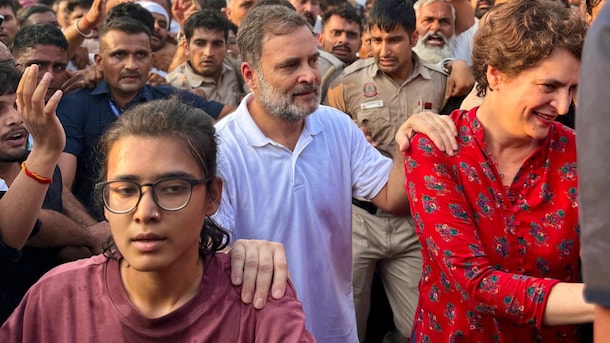
Saharanpur Showdown: For Congress MP Imran Masood It's Both Personal And Political
Saharanpur is more than just another constituency in the Congress-SP seat-sharing dispute. It is a district where geography, electoral arithmetic, community identities and family legacies intersect.
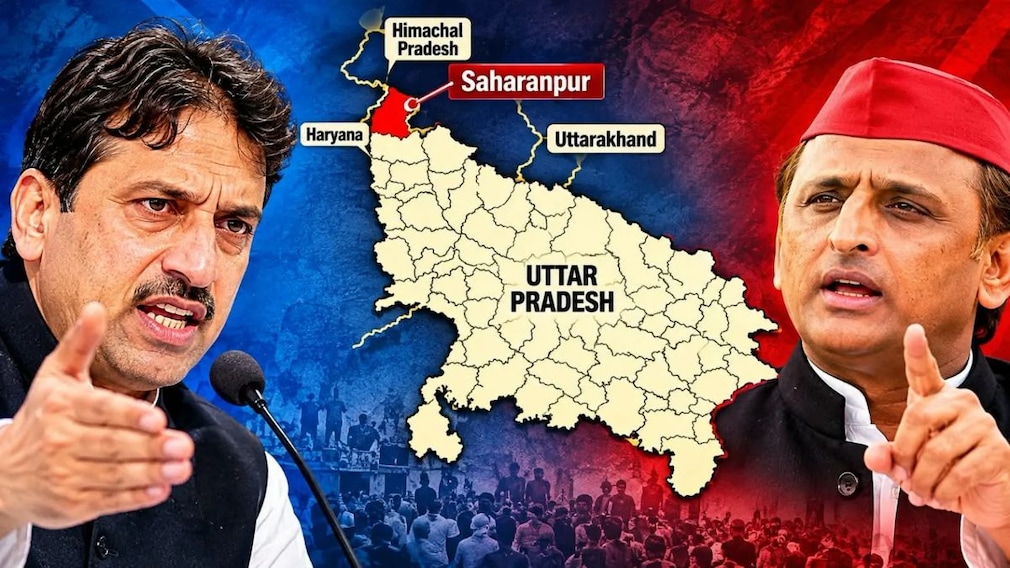
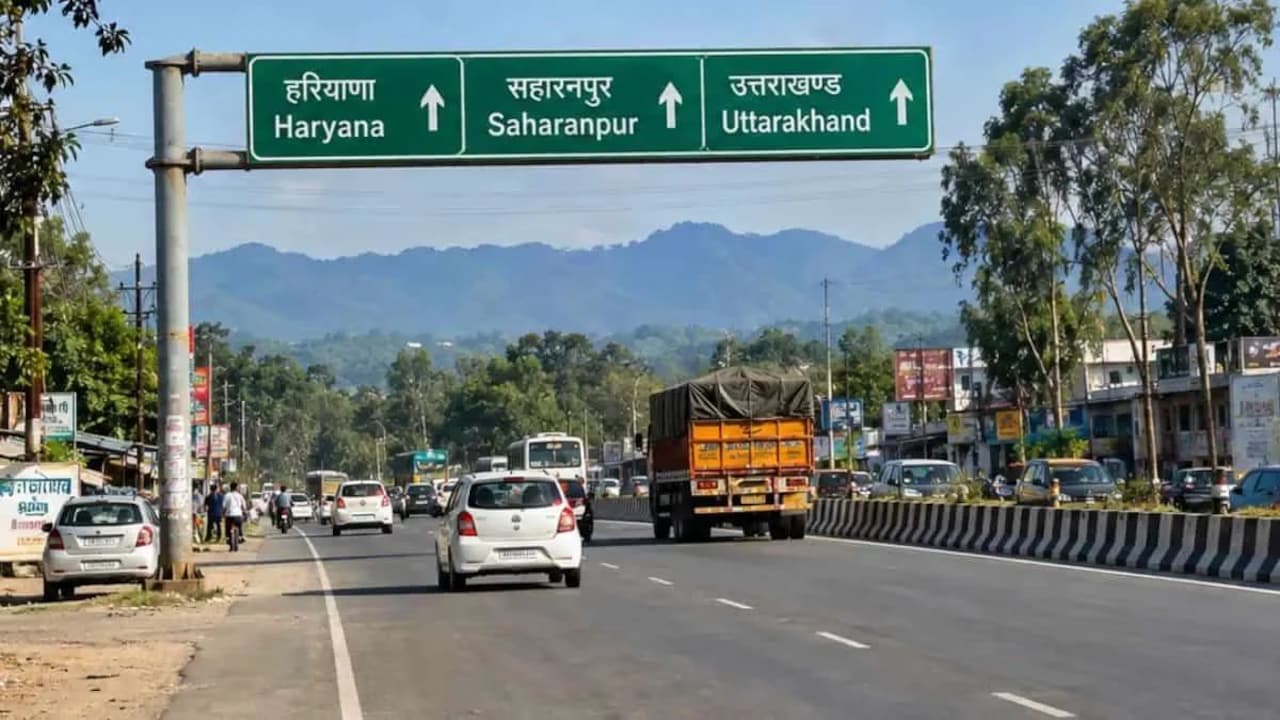
Saharanpur connects four states. The northernmost district of Uttar Pradesh shares its borders with Haryana to the west, Uttarakhand to the north and east, and Himachal Pradesh to the north. Haryana and Uttarakhand, interestingly, do not share a direct border with each other. Saharanpur is the geographical link between the two.
The district that connects has today become the source of the biggest disconnect between two INDIA bloc allies - the Congress and the Samajwadi Party (SP).
Seat-sharing talks between the two parties have hit a deadlock after the SP announced five candidates, including two from Saharanpur, where the Congress was hoping to contest.
The SP has named candidates for the Saharanpur and Behat Assembly constituencies, renominating its sitting MLAs. Congress MP Imran Masood had his eyes on these seats as part of his effort to expand his influence in the Western UP region.
Of the district's seven Assembly seats, the BJP won five in 2022 - Deoband, Gangoh, Nakur, Rampur Maniharan (SC) and Saharanpur Nagar - while the SP won the remaining two, Behat and Saharanpur.
Read | Exclusive: Angry Congress MP Repeats "Beggar" Jibe, Samajwadi Leader Slams "Ego"
The SP's unilateral announcement has triggered a war of words between the allies. Congress MP from Saharanpur, Imran Masood, has been particularly vocal, questioning the SP's seriousness about the alliance and accusing it of unilateralism.
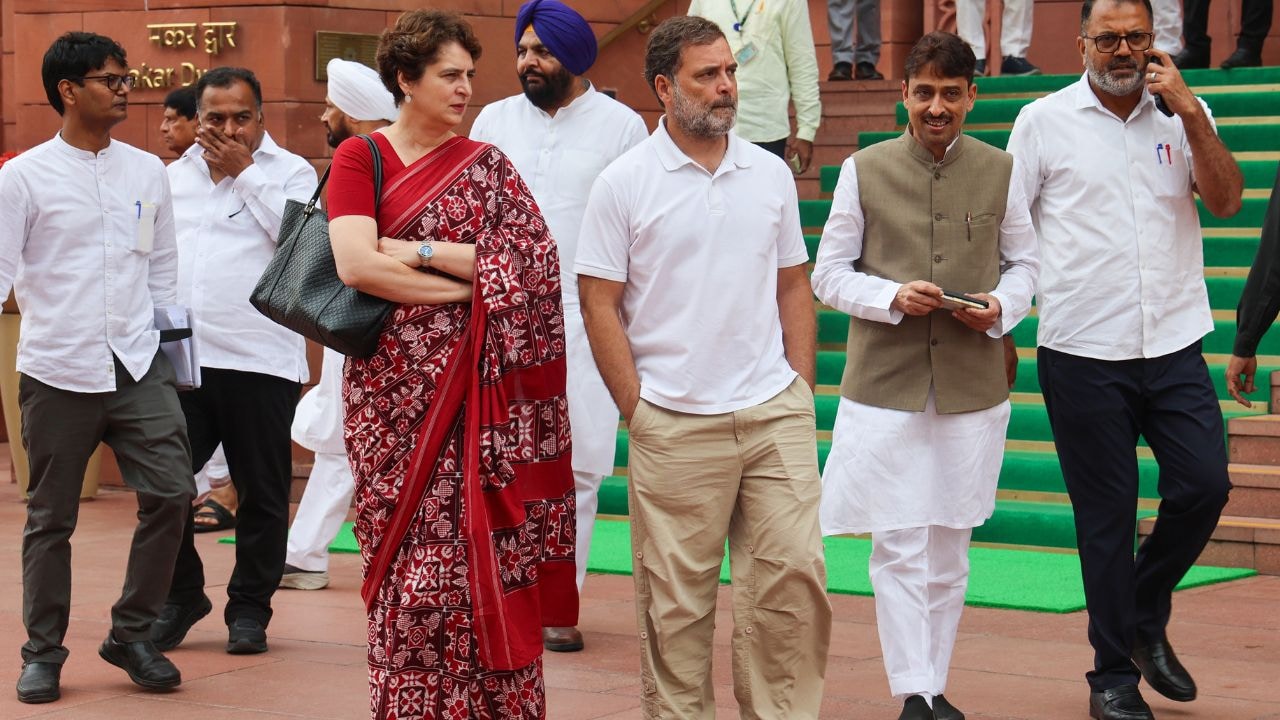
Imran Masood with Gandhi siblings
Photo Credit: IANS
The SP, for its part, maintains that having won both seats in 2022, it has a natural claim over them. Masood's counter is based on the 2024 Lok Sabha election, when he won the Saharanpur parliamentary seat and led in both Assembly segments.
It's Both Political And Personal
Masood and the SP have always shared a patchy relationship. He has frequently used harsh language against Akhilesh Yadav's party, taking regular potshots even as alliance negotiations have continued.
After making a successful electoral debut in the 2007 Uttar Pradesh Assembly elections, Imran Masood lost four consecutive elections - the 2012 Assembly polls, the 2014 Lok Sabha election, the 2017 Assembly election and the 2019 Lok Sabha election. His political fortunes revived with his victory in the 2024 Lok Sabha polls.
His family has long been associated with Saharanpur and wider Western UP politics. His uncle, Rasheed Masood, a nine-time parliamentarian (five Lok Sabha and four Rajya Sabha terms), was a towering Muslim political figure from the region.
Imran Masood has also switched parties several times in his search for a political foothold. Although he began his political career with the Congress, he joined the SP in January 2022, moved to the Bahujan Samaj Party (BSP) in October that year and eventually returned to the Congress ahead of the 2024 Lok Sabha elections.
Read | Amethi, Rae Bareli Could Be A Big Hitch In Samajwadi-Congress Seat Talks
Since the beginning of this year, Masood has repeatedly made sharp remarks against the SP over the alliance negotiations. His perceived closeness to Priyanka Gandhi Vadra and his reputation for speaking his mind have kept him in the news. SP leaders have, directly and indirectly, blamed his comments for contributing to friction between the two parties.
But the friction has not remained confined to politics. It has acquired a personal dimension as well.
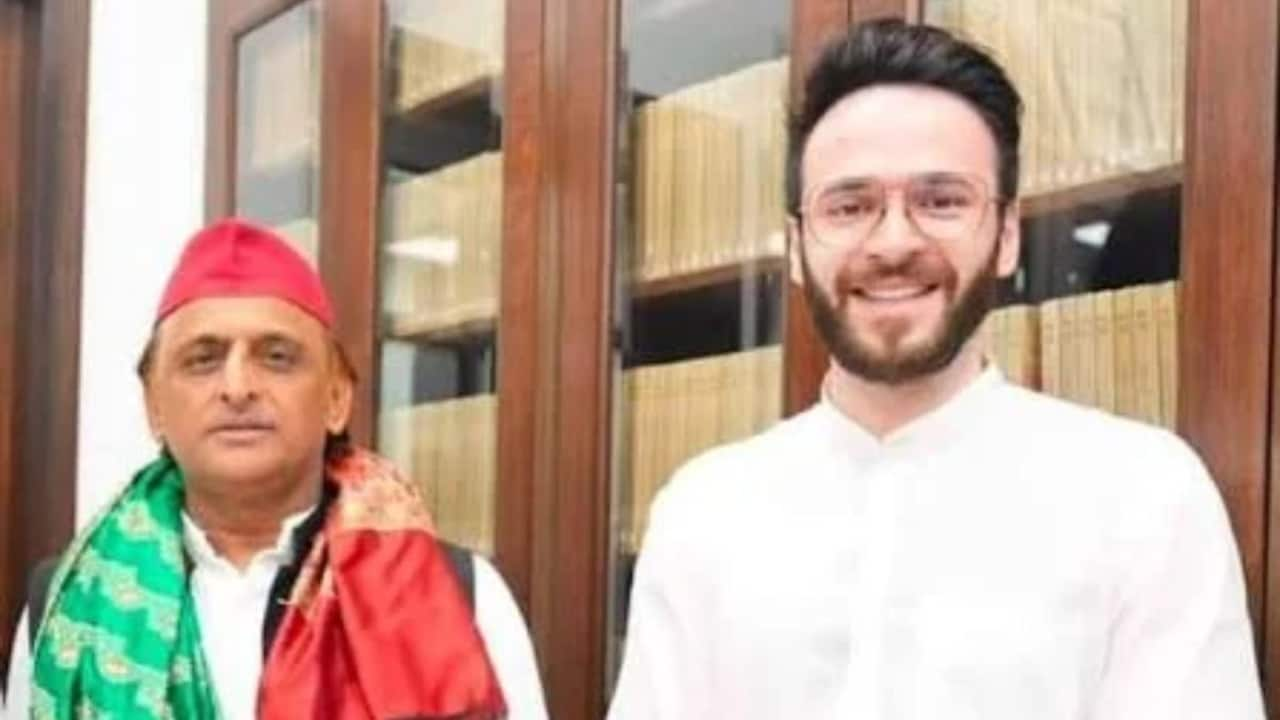
Imran Masood's son-in-law joined SP earlier this year
In August this year, Masood's son-in-law, Shayan, joined the SP and made public remarks against him. Shayan is reportedly separated from Masood's daughter, and the two share a bitter relationship. His association with the same political family also places him in the contest over the legacy of Rasheed Masood, which Imran Masood has sought to carry forward.
Then there is the rivalry with Saharanpur MLA Ashu Malik, whom the SP has renominated. Masood and Malik had a very public spat at a District Development Coordination and Monitoring Committee (Disha) meeting in Saharanpur in August. A video of their heated exchange went viral.
Interestingly, it was Masood who had pushed for Malik's candidature in 2022, when he was still with the SP. But their relationship has since soured, with both vying for political influence in the region.
Another former Masood protege, Umra Ali, the SP MLA from Behat, has also drifted away from him after winning the seat.
Read | "Forced" To Announce Seats: Samajwadi Party Sources Amid Rift With Congress
Why Saharanpur Matters
Of Saharanpur's 19 lakh voters, around 6.8 lakh (over 41 per cent) are Muslims, while the rest are Hindus. Among Hindus, Dalits constitute a formidable 22 per cent of the electorate. The combined Muslim-Dalit vote share of over 63%, therefore, makes Saharanpur an attractive political battleground for both the SP and the Congress.
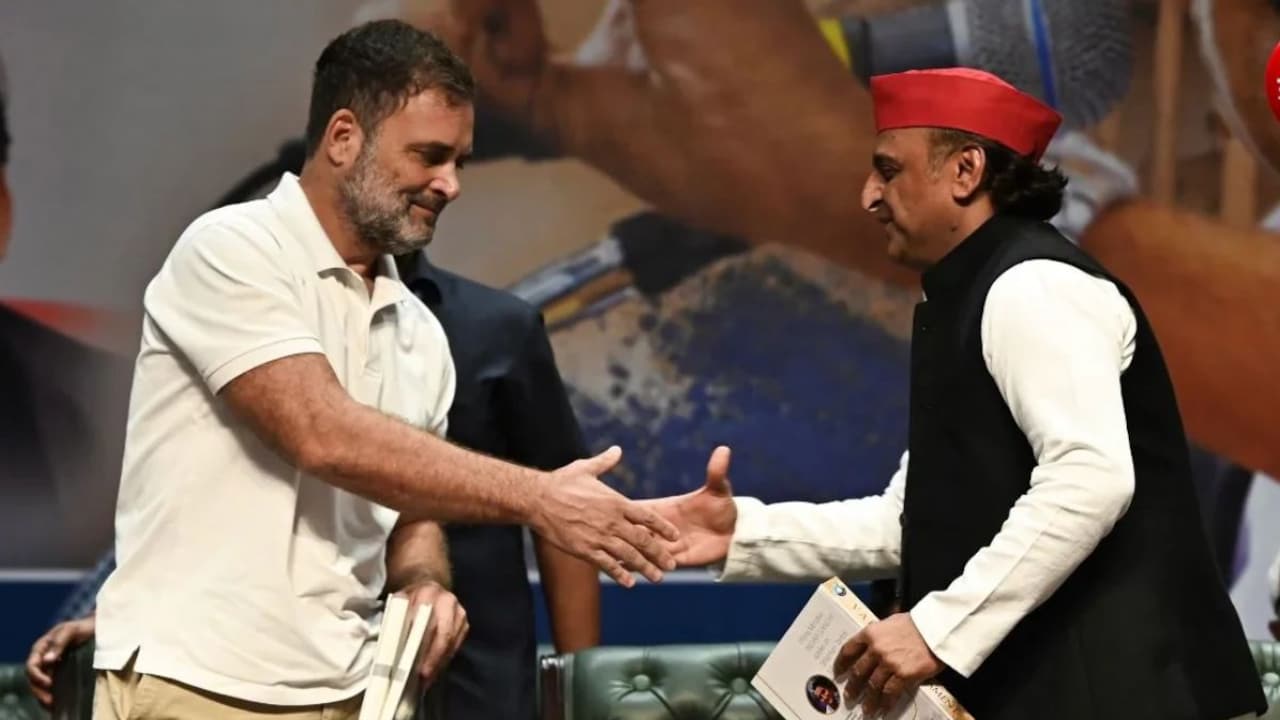
Saharanpur is key to both SP and Congress' plan
Photo Credit: NDTV Photo
Saharanpur also occupies a distinctive place in the region's Muslim politics because it is home to Deoband, one of the country's most influential Islamic seminaries.
The sizeable Muslim and Dalit electorate makes the district central to the Congress's strategy to rebuild its presence in Western Uttar Pradesh. For the SP, it is an important part of its PDA (Pichhda, Dalit, Alpsankhyak - backward classes, Dalits and minorities) coalition strategy, which seeks to consolidate these social groups across the region.
The Congress sees Masood's 2024 Lok Sabha victory as a potential springboard for rebuilding its Muslim-Dalit support base in Western UP. The political significance of the district is also reflected in the Congress's plans for the 2027 Assembly election campaign. It was recently reported that Rahul Gandhi would kickstart his Uttar Pradesh campaign with a major rally in Saharanpur next month.
The Sikhs Of Saharanpur
Another interesting aspect of Saharanpur's demography is its Sikh population. Though numerically small, accounting for less than one per cent of the population, Sikhs are a visible part of the district's social and cultural life.
In 2014, Saharanpur witnessed a dark chapter in its history when communal violence broke out between Muslims and Sikhs over a disputed plot of land near a gurdwara on Ambala Road.
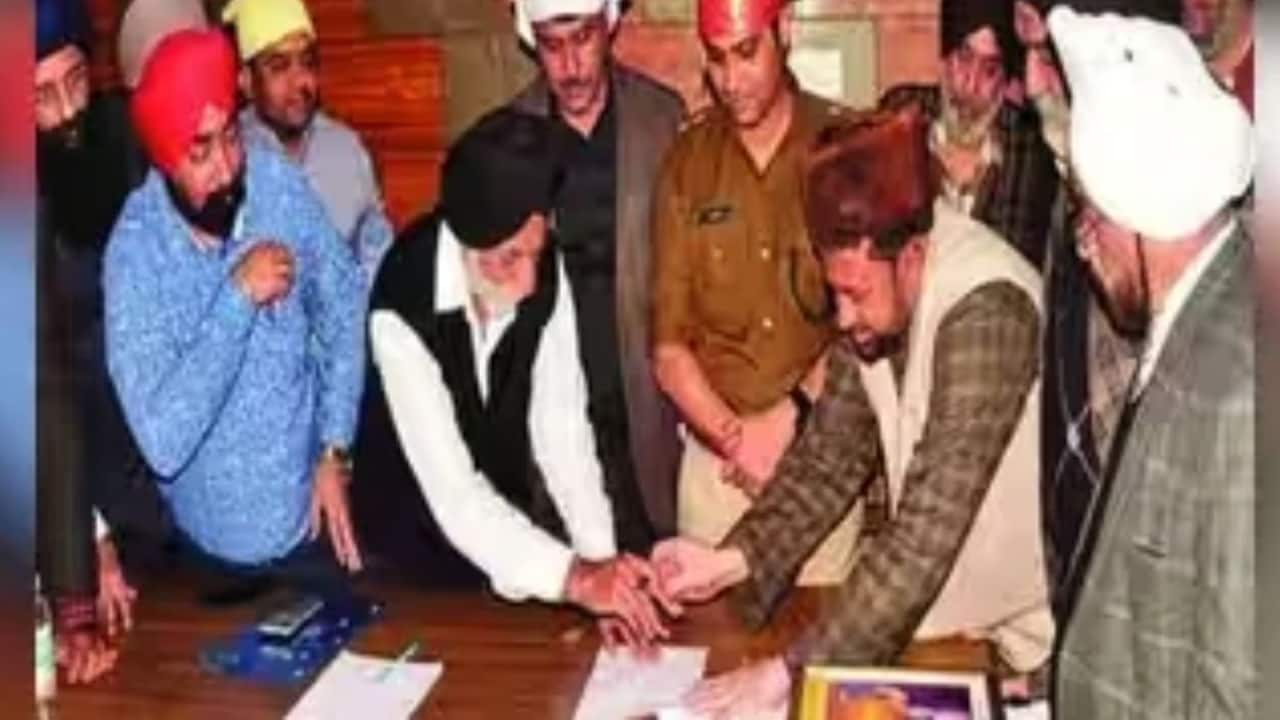
Muslim and Sikhs of Saharanpur amicably resolved an old dispute in 2020
Photo Credit: Archive
Six years later, the two communities offered an example of reconciliation by reaching an out-of-court settlement. The legal dispute was dropped, with Muslim residents offering kar seva for the construction of the gurdwara, while Sikh representatives helped facilitate the purchase of land for a mosque.
A 2020 report in The Quint noted that the Muslim side decided to relinquish its claim over the disputed land out of gratitude for the support extended by Sikhs to those affected by the communal violence in Northeast Delhi, as well as the solidarity shown by the community during the protests against the Citizenship Amendment Act.
"In view of the great service and support rendered by the Sikhs to Muslims in Delhi throughout the protests and most recently during the riots in Delhi, the Masjid committee in Saharanpur decided to give up its claim over the land as a token of gratitude and thanksgiving," the report quoted Nizam Pasha, who represented the Muslim side in the Supreme Court, as saying.
A District Of Many Contradictions
Congress and SP seem stuck in a "my way or highway" jam
Photo Credit: NDTV Photo
Saharanpur is more than just another constituency in the Congress-SP seat-sharing dispute. It is a district where geography, electoral arithmetic, community identities and family legacies intersect.
Its political importance lies in the ability of parties to bring together social groups that often have competing political aspirations. The Congress sees an opportunity in Imran Masood's electoral revival, while the SP is unwilling to surrender constituencies where it already has an established base.
The irony is hard to miss. A district that geographically bridges states and communities has become a fault line between two parties that are supposed to be fighting the same political battle.
-
Opinion | How India's Constitution Was A Rebellion Against Its Own Past

The 145,000-word document did more than just free a nation from colonial rule. It also attempted to free Indians from the shackles of a deeply illiberal past.
-
TVS Succession Battle Explained: What Lakshmi Venu Wants From Family Empire
The TVS family dispute is no longer just a disagreement over division of businesses. It has become a legal question about ownership and inheritance.
-
Opinion | Indian Firms Are Making Record Profits. Why Are Foreign Investors Still Leaving?
In the July to September quarter of 2026-27, the 50 companies in the Nifty 50 increased profit after tax by 27% over the same quarter of the previous year - the highest growth in 17 quarters.
-
Battle Of Two Babas: What's Behind Ramdev Versus Dhirendra Shastri?
Why Ramdev chose to publicly criticise Shastri soon after attending his much-publicised and well-attended Ram Katha in Uttar Pradesh for an earlier comment remains an interesting question.
-
Opinion | There Are 5 Reasons Iran Won't Drop A Dirty Bomb On The US - And One Reason It Might
Iran is entirely capable of building a dirty bomb - as are other modern states with access to industrial radioactive materials. But how far will it really go?
-
Opinion | Too Big To Fail, Too Connected To Fall: Why Trump Needed Jensen Huang
Rumours are that Trump's own business stakes in Nvidia have helped him rake in millions of dollars as the company's shares zoomed back up after the plunge that followed Huang's exit. But that's just one part of the story.
-
BJP's UP Seat-Sharing Test: Four Allies, Many Ambitions And A 50-Seat Puzzle
This time, the BJP has to accommodate all four partners, each with its own electoral ambitions and areas of influence across western and eastern Uttar Pradesh.
-
From 'Spy Affair' To 'Nothing Wrong' In 11 Days: What Brought Jensen Huang Back As Nvidia Boss
Nvidia's Jensen Huang admitted to an extramarital affair with Alice Huang, a woman who worked at his company's Hong Kong-based customer firm and is alleged to be a Chinese spy. That brought with it many investigations. But he seems to have weathered most of it for now, within days.
-
Between Nehru And Netanyahu, Rahul Gandhi Faces An Uncomfortable Question
The divergence has come to the fore after Rahul Gandhi endorsed maintaining strong ties with Israel, citing India's defence requirements and national interests.