





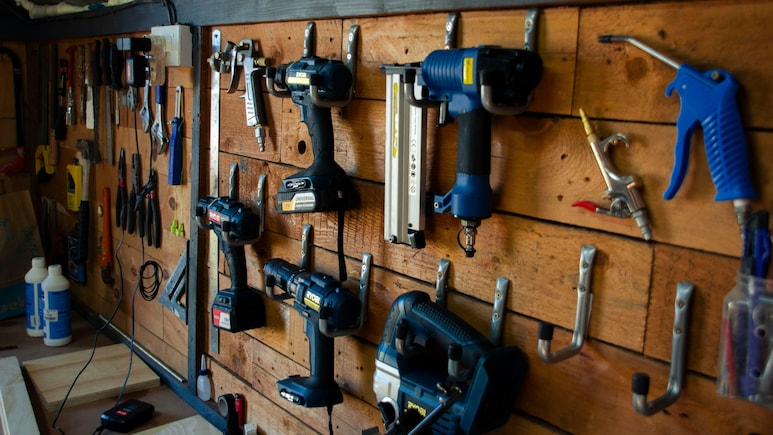
The US tariffs on China and rising costs offer a rare opportunity to India to redefine its role in the global tools export market, a Niti Aayog report has stated while suggesting measures such as the creation of world-class clusters and providing bridge support to overcome cost disabilities to promote the local tool industry.
The Niti Aayog, in a report titled 'Unlocking $25 Billion Exports: India's Hand & Power Tools Sector', said India's tools industry holds immense export potential but is hindered by challenges in infrastructure, high manufacturing costs, and inadequate scale.
-

-
 NDTV World Summit 2026: AI, Chips, Warfare And The Future Of The World | Key Conversations
-
 Kriti Sanon On Situationships, Open Relationships And Being Old-School
-
 'AI Scares Me': Kriti Sanon On Personality Rights And Need For Laws
-
 'This Time I Wanted Gold': Savita Punia Reflects On Historic Asiad Success
-
 Favourite Bollywood Actor To 5-Year Plan, Kriti Sanon Interviews AI Actor Tilly Norwood
-
 Neeru Dhanda Carried Homemade Churma To Asiad, Returned With Two Gold Medals
-
 Inside The Mind Of Archer Kumkum Mohod, Who Dared To Challenge South Korea
-
 India's Golden Girls: Asian Games Champions On Sacrifice, Success And LA 2028
-
 RBI Governor Was Asked About Tata Sons' Listing. He Read The Rulebook
-
 "High Inflation Is Like Tax On Everyone": RBI Governor At NDTV World Summit
According to the report, India stands at a critical juncture, presented with a remarkable opportunity to transform its hand and power tools industry into a global export powerhouse, targeting a potential worth over $25 billion by 2035.
"To unlock this potential, three key interventions are essential--creating world-class clusters, implementing structural reforms, providing bridge support to overcome cost disabilities," the report said.
According to the report, while the global trade market for tools stands at $100 billion in 2022, projected to reach $190 billion by 2035, India's share remains a fraction, with exports of $600 million in hand tools and $425 million in power tools.
China's near-50% market dominance underscores the scale of the challenge, yet recent shifts, such as tariffs on Chinese goods and rising costs, offer India a rare window to redefine its role.
By 2035, the report said four clusters spanning approximately 4,000 acres cumulatively should be established for the hand tools industry, providing the necessary ecosystem for enhancing production efficiency and attracting investment. It also proposed a public-private partnership (PPP) model to ensure effective governance of the tools cluster.
The report noted that research and development centres in the clusters should be governed by an independent governing council. It also pitched for changes in current labour laws to reduce labour costs in India such as allowing 300 quarterly overtime hours, increasing allowable working hours to 10 hours per day and 60 hours per week, and by capping overtime wages to 1.25-1.5x rather than the current 2x, in line with international standards.
The report noted that seizing this $25 billion-plus opportunity is not merely about export figures; it is about generating approximately 3.5 million jobs, fostering innovation, empowering countless MSMEs, strengthening India's industrial ecosystem, and solidifying the nation's position as a reliable, high-quality global manufacturing hub.
"The time to act is now; the potential rewards for India's economy and its people are immense," it said.
(Except for the headline, this story has not been edited by NDTV staff and is published from a syndicated feed.)
Track Latest News Live on NDTV.com and get news updates from India and around the world

