How a baby is fed in the first six months of life can shape health outcomes in the years that follow. The World Health Organization (WHO) recommends that infants should receive only breast milk during this period. However, India is moving away from this recommendation, with exclusive breastfeeding rates declining over years.
The National Family Health Survey (NFHS-6) found that 55.8 per cent of children under six months were fed only breast milk in 2023-24, down from 63.7 per cent in NFHS-5 (2019-21). The decline was larger in rural areas. Exclusive breastfeeding in rural India fell from 65.1 per cent to 56.2 per cent, while urban areas recorded a decline from 59.6 per cent to 54.5 per cent.
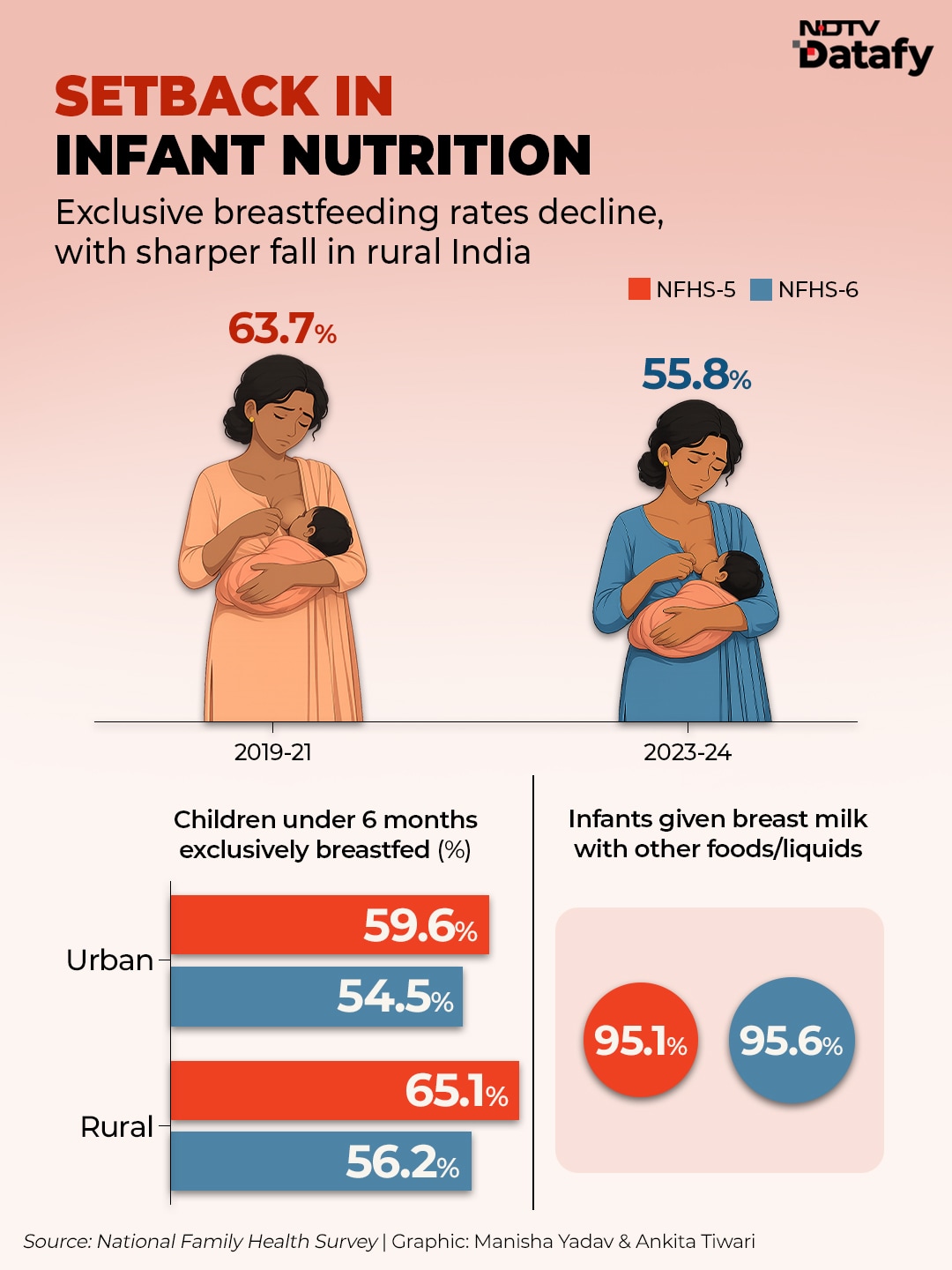
The decline is despite the fact that breastfeeding is a common practice in the country. Around 95.6 per cent of infants under six months received breast milk in some form in NFHS-6. However, many babies were also given water, formula milk, animal milk or other foods before completing six months of age. As a result, the share of infants receiving only breast milk declined.
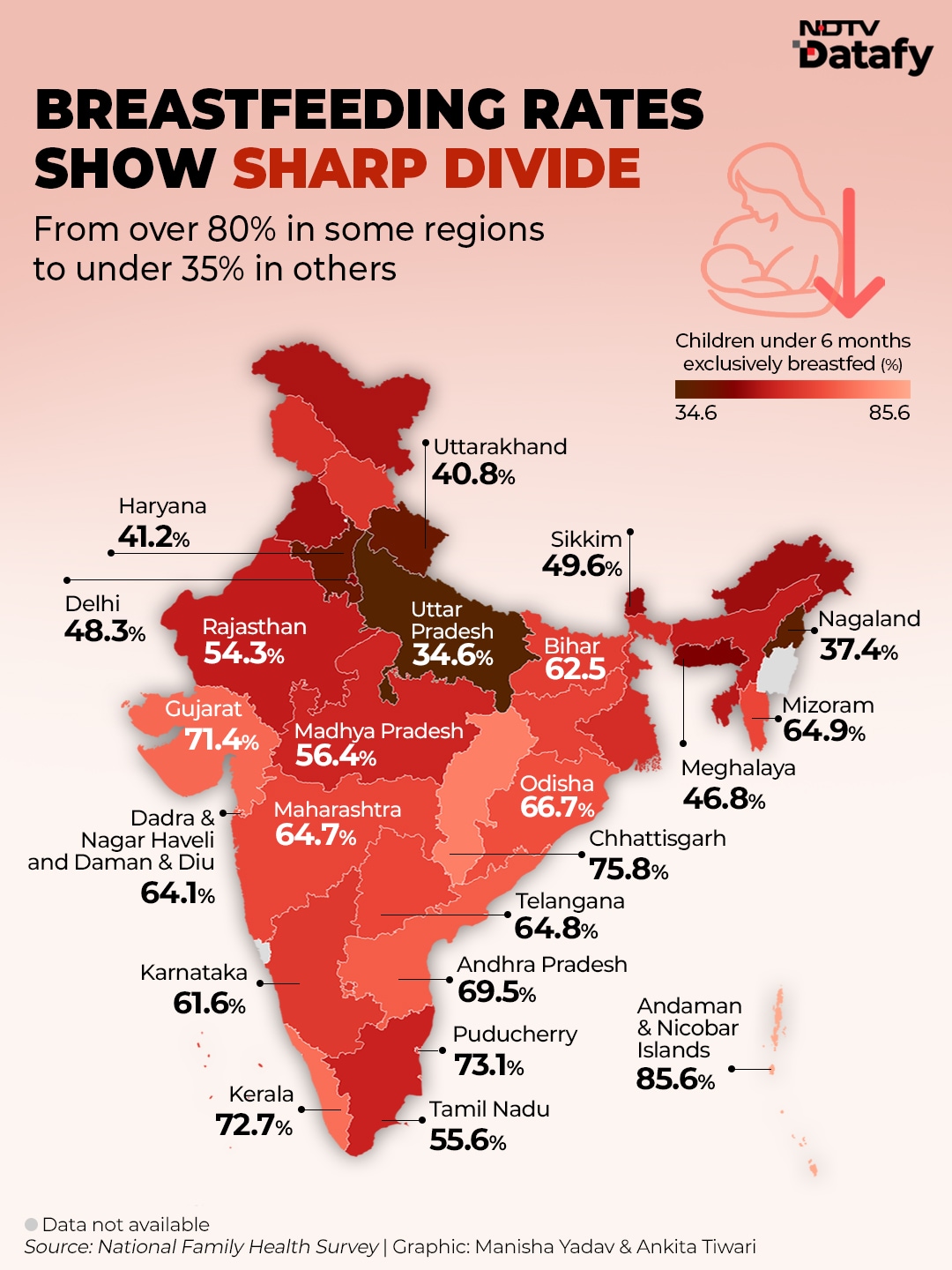
The survey also points to differences across states and Union Territories. Andaman and Nicobar Islands reported the highest rate of exclusive breastfeeding at 85.6 per cent, followed by Chhattisgarh (75.8 per cent) and Puducherry (73.1 per cent). Uttar Pradesh recorded the lowest rate at 34.6 per cent, followed by Nagaland (37.4 per cent) and Uttarakhand (40.8 per cent).
Why Mother's Milk is Important
WHO and UNICEF recommend that breastfeeding should begin within one hour of birth and that infants should be exclusively breastfed for the first six months of life. This means that babies should receive no food or drink other than breast milk, including water. After six months, children should receive complementary foods while breastfeeding continues up to two years of age or beyond.
According to WHO, breast milk provides all the energy and nutrients an infant needs during the first few months of life. It contains antibodies that help protect children against common illnesses, including diarrhoeal diseases and respiratory infections. WHO also notes that breastfeeding is linked to lower risks of overweight and diabetes later in life, while mothers who breastfeed have a lower risk of breast and ovarian cancers.
Breastfeeding Situation in Delhi
Despite being one of India's most urbanised and educated cities, Delhi's data reflects concerns across several child nutrition indicators. The share of children under six months who were exclusively breastfed fell from 64.3 per cent in NFHS-5 to 48.3 per cent in NFHS-6. Fewer children aged 6-8 months received both breastmilk and complementary food, while the proportion of children aged 6-23 months receiving an adequate diet also declined.
At the same time, the prevalence of wasting increased from 11.2 per cent to 15 per cent, and the share of underweight children rose from 21.8 per cent to 27.4 per cent. The findings suggest that challenges extend beyond breastfeeding practices. The overall quality of infant and young child nutrition has deteriorated.
The Paradigm Shift
While NFHS-6 does not explain the reasons behind the decline, a 2021 study titled "Determinants of optimum exclusive breastfeeding duration in rural India: a mixed method approach using cohort and content analysis design", conducted by researchers from the National Institute of Cholera and Enteric Diseases (NICED) and the Indian Council of Medical Research (ICMR), identified several barriers to exclusive breastfeeding in India.
The study found that 'lack of self-conviction about exclusive breastfeeding among mothers, significant family members' influence and cultural beliefs' were major socio-environmental barriers that led to the early interruption of exclusive breastfeeding.
Mothers' perceptions that breast milk alone was insufficient and the early introduction of other liquids such as honey, water and cow's milk also contributed to shorter durations of exclusive breastfeeding. But repeated counselling by healthcare providers and supportive family environments could help improve breastfeeding outcomes.
Underweight Children
India has continued to reduce the proportion of underweight children under the age of five, but the pace of improvement has slowed. The share of underweight children fell from 35.8 per cent in NFHS-4 (2015-16) to 32.1 per cent in NFHS-5, a decline of 3.7 percentage points.
Between NFHS-5 and NFHS-6, however, the reduction was only 0.3 percentage points, with the prevalence standing at 31.8 per cent.
Disclaimer: This content including advice provides generic information only. It is in no way a substitute for a qualified medical opinion. Always consult a specialist or your own doctor for more information. NDTV does not claim responsibility for this information.