- Gaming addiction activates brain reward, causing anxiety, depression, and isolation
- Parents should set screen limits, encourage activities, and maintain open communication
- Professional help and early intervention are vital for managing gaming addiction risks
Three minor sisters, aged 12, 14 and 16, jumped from their ninth-floor apartment in Uttar Pradesh's Ghaziabad on Wednesday morning. According to the investigations, the girls were addicted to an online Korean task-based game, which is being linked to their suicide. The police said that they were reportedly neglecting school and routine life before the tragedy. Their gaming addiction reportedly began during the Covid-19 pandemic. Afterwards, they became irregular in school and finally stopped going altogether. For the past few days, they had been denied access to a mobile phone, a restriction that appeared to have affected them, a senior police officer mentioned.
While online gaming, scrolling and use of digital screens may seem harmless and common, this fixation could spiral into something so distressing that it is beyond parents' imagination. Such incidents highlight the need to focus on the repercussions of excessive online gaming on children's mental health.
Online gaming addiction, clinically known as Internet Gaming Disorder (IGD), is defined by a pattern of persistent gaming that takes precedence over daily activities despite negative consequences. The World Health Organisation (WHO) in its ICD-11(International Classification of Diseases) had recognised it as a mental health condition.
"Gaming addiction is a behavioural disorder that results when gaming interferes with the daily life of the gamer. It affects the brain reward system, leading to reduced impulse control and increased anxiety, depression, and loneliness. When associated with failure at school, conflicts with family members, or being bullied, children may feel there is no hope for them, thereby increasing the risk of suicide," explains Dr. Samant Darshi, Interventional Psychiatrist at Yatharth Hospitals and Psymate Healthcare.
What leads to addiction in children or teenagers?
"Online games are programmed in such a way that they activate the reward system, leading to the release of dopamine. Children, whose brains are still developing self-control, may turn to online games as a means of escaping stress, loneliness, or failure. Online gaming becomes their only source of happiness and emotional regulation," Dr. Darshi explains.
What can parents do to keep their children safe from the negative impacts of online gaming?
The line between enthusiastic hobby and problematic habit can be thin. Protecting your child involves a mix of proactive boundaries and open communication. Here's a guide to the warning signs and actionable steps parents can take.
Warning signs for parents
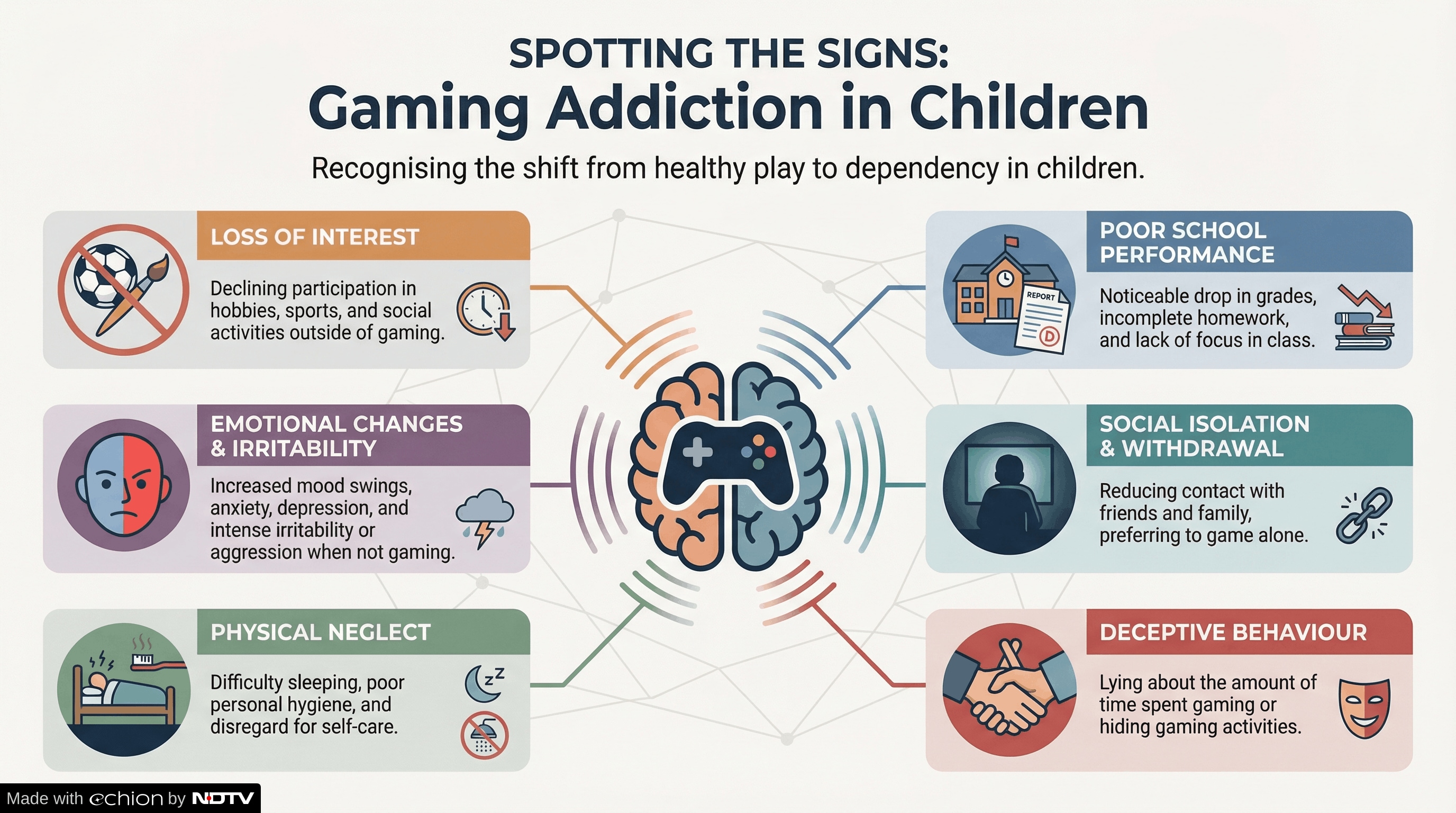
Recognising the shift from play to dependency is key. Look for these behavioural and physical shifts:
- Loss of interest in other activities
- Irritability when not gaming
- Poor performance at school
- Difficulty sleeping
- Lying about gaming
- Social isolation
- Poor personal hygiene and aggression
- Changes in emotional behaviour, such as anxiety, depression, or mood swings, are particularly important
In an extreme addiction case, "child may prefer to avoid going to school and can experience withdrawal symptoms, such as irritability, when they are not playing. They might play these online games for 6 to 7 hours straight, neglecting other responsibilities. When addiction occurs, everything else takes a backseat, and the game along with the character they are controlling becomes the centre of their attention," says Dr. Vineet Pali, MD ( NIMHANS), Consultant, Neuropsychiatrist, Maarga Mind Care, Gurgaon.
Proactive strategies for parents
"To foster a healthy relationship with technology, it is vital to implement well-defined screen time limits for children, ensuring they engage in a balanced lifestyle. Encouraging them to participate in various sports and physical activities not only promotes fitness but also instils teamwork and discipline. Additionally, nurturing open lines of communication about their gaming experiences can create a supportive environment where children feel safe to express their feelings and concerns."
"It is equally important to supervise the games they play, carefully selecting age-appropriate content. Rather than using screens as rewards for good behaviour or achievements, which can create dependency, parents should promote alternative forms of positive reinforcement and activity," advises Dr. Darshi.
"Furthermore, teaching children effective emotional management strategies equips them with the tools to navigate life's challenges. Stressing the significance of adequate sleep is crucial; a well-rested mind can better handle both academic and personal pressures. Seek professional help early if gaming impacts behaviour, emotions, or academics," he adds.
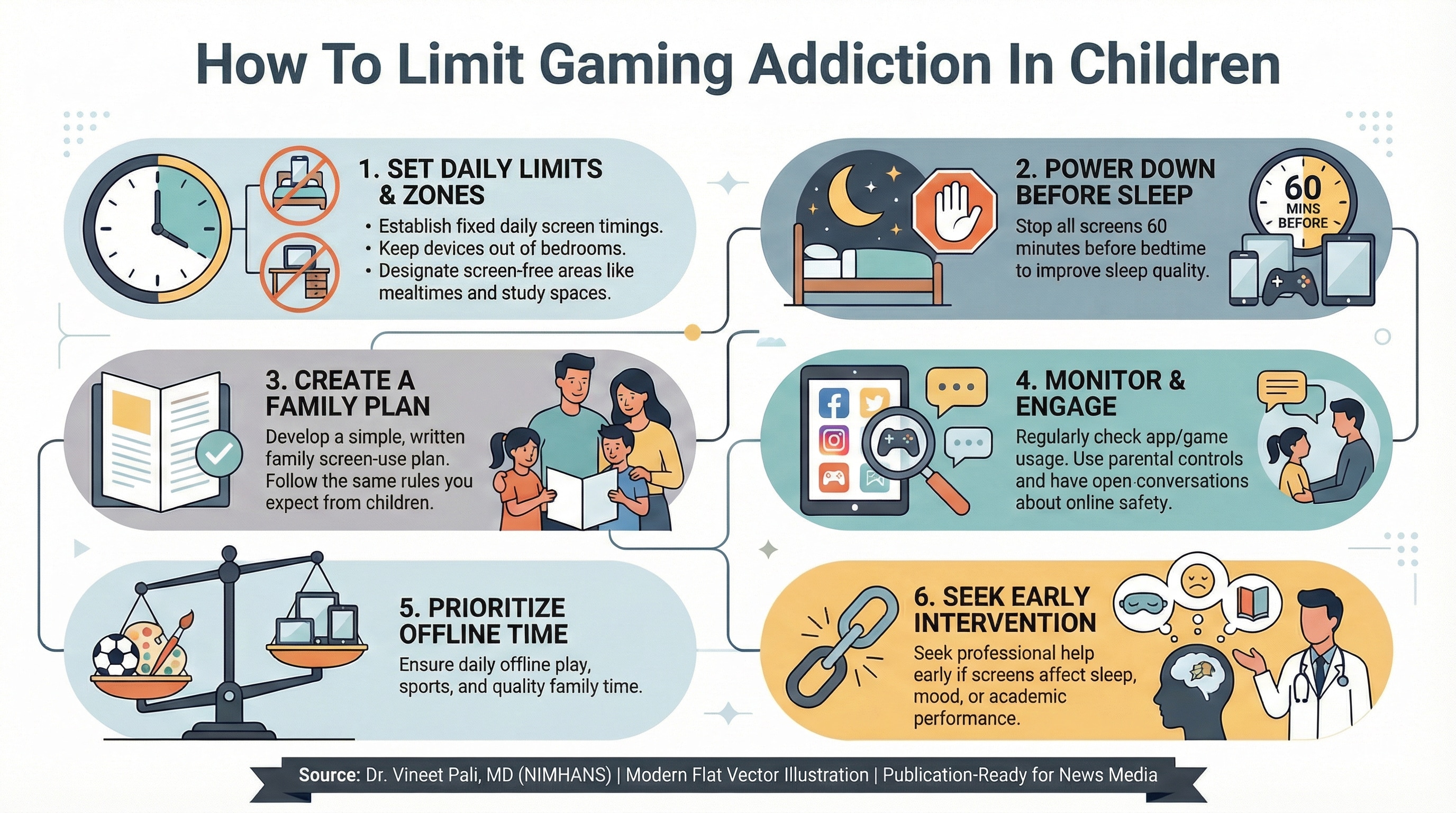
Dr. Pali also shared some tips for parents, including:
- Fix daily screen limits and timings
- Keep phones and gaming devices out of bedrooms
- Stop all screens 60 minutes before sleep
- Make mealtimes and study areas screen-free
- Create a simple written family screen-use plan
- Regularly check what apps/games they use and with whom
- Ensure daily offline play, sports and family time
- Use parental controls plus open conversations about safety
- Seek help early if screens affect sleep, mood or studies
What should be done in extreme cases?
Seeking professional help allows both parents and children manage distress and prevent the consequences of digital addiction. "Cognitive behavioural therapy (CBT), family therapy, behavioural therapy, and in some cases, treatment for anxiety or depression should be considered. Digital detox camps and child psychologists who specialise in addiction are also available. Early intervention is very effective, especially if the parents are actively involved in the therapy process," says Dr. Darshi.
Disclaimer: This content including advice provides generic information only. It is in no way a substitute for a qualified medical opinion. Always consult a specialist or your own doctor for more information. NDTV does not claim responsibility for this information.
| Helplines | |
|---|---|
| Vandrevala Foundation for Mental Health | 9999666555 or help@vandrevalafoundation.com |
| TISS iCall | 022-25521111 (Monday-Saturday: 8 am to 10 pm) |
| (If you need support or know someone who does, please reach out to your nearest mental health specialist.) | |