- Metformin directly affects the brain's hypothalamus, influencing glucose regulation and metabolism
- The drug suppresses Rap1 protein and activates SF1 neurons to lower blood sugar via brain pathways
- Long-term metformin use may impact cognition, with mixed evidence on memory and brain metabolism
For decades, metformin has been considered the gold standard treatment for type 2 diabetes, widely prescribed, affordable, and generally safe. However, new research is reshaping how scientists understand this common drug. A recent study highlighted in Science Advances has revealed that metformin does more than regulate blood sugar, it also directly affects the brain. This discovery is significant because most diabetes medications are thought to act primarily on the liver, gut, or pancreas. The finding that metformin influences neural pathways opens up new possibilities for treatment, but also raises questions about unintended effects on brain function.
While metformin has long been associated with benefits such as improved metabolic health and even potential anti-ageing effects, emerging evidence suggests its impact on cognition and brain metabolism may be more complex than previously believed. Some studies point to protective effects, while others indicate possible negative outcomes, especially under certain conditions or prolonged use.
Experts stress that patients should not panic or stop medication without medical advice. Instead, the new findings highlight the importance of understanding both the benefits and risks of long-term metformin use. Here's a detailed breakdown of what the latest research reveals, and what it means for patients.
What The New Study Found About Metformin And The Brain
The latest study shows that metformin directly influences the brain, specifically a region called the hypothalamus, which regulates energy balance and glucose levels.
Researchers discovered that:
- Metformin suppresses a protein called Rap1 in the brain
- It activates specific neurons (SF1 neurons) involved in metabolism
- Even very small doses in the brain can significantly lower blood sugar
This suggests that metformin's glucose-lowering effects are partly driven by brain mechanisms, not just peripheral organs. Importantly, scientists note that few diabetes drugs act on the brain, making this a surprising and potentially transformative finding.
Also Read: Metformin Cuts Risk Of Long COVID By 64%: Why The Diabetes Pill Is Not For Everyone
The Negative Side of Metformin: What Concerns Are Emerging?
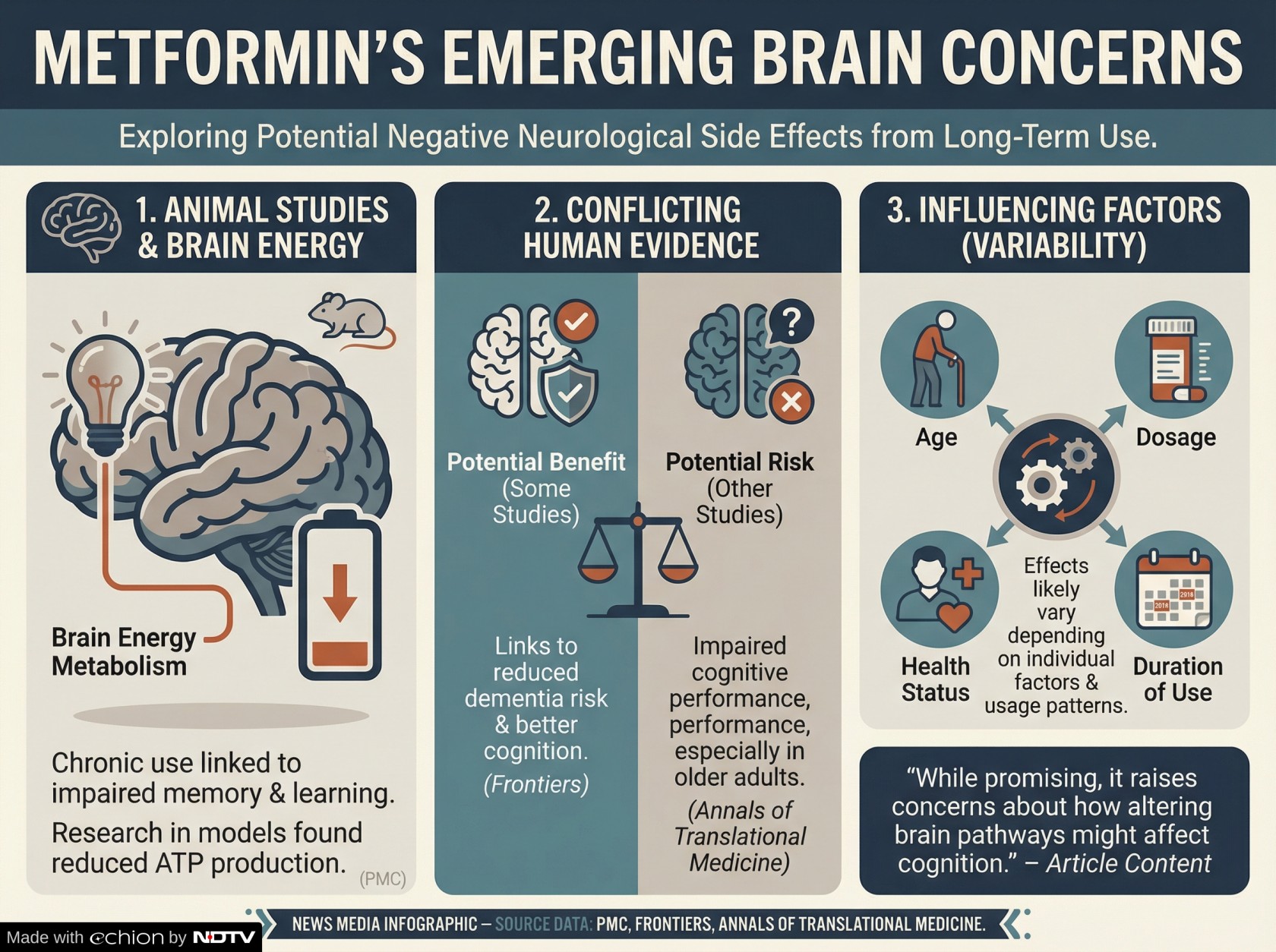
While the discovery is promising, it also raises concerns about how altering brain pathways might affect cognition and neurological health.
1. Possible Cognitive Effects
Some experimental studies suggest that long-term metformin use may influence brain energy metabolism and cognitive function.
- Research in animal models found impaired memory and learning with chronic use
- Changes in brain energy production pathways were observed
- Reduced ATP production and altered metabolism may affect brain performance
2. Mixed Evidence In Humans
Human studies show conflicting results:
- Some research links metformin to reduced dementia risk and better cognition
- Others report impaired cognitive performance in certain populations, especially older adults
This inconsistency suggests that effects may vary depending on age, dosage, health status and duration of use.
Known Side Effects Of Metformin Beyond The Brain
Even before these findings, metformin was known to have several side effects, most of which are manageable but important to recognise.
Common side effects:
- Nausea and diarrhoea
- Abdominal discomfort
- Loss of appetite
These affect a large proportion of users, especially when starting treatment.
Serious but rare risks:
- Lactic Acidosis: A potentially life-threatening condition where lactic acid builds up in the body. More likely in people with kidney or liver disease. Can cause fatigue, confusion and breathing difficulty
- Vitamin B12 Deficiency: Long-term use of metformin has been linked to reduced absorption of vitamin B12 and risk of anaemia and nerve damage.
- Gastrointestinal Intolerance: Up to 75% of users may experience digestive side effects to varying degrees.
Why These Findings Matter
The discovery that metformin acts on the brain fundamentally changes how we understand the drug.
Key implications:
- New treatment targets: Brain pathways could be used to develop better diabetes therapies
- Broader health effects: May explain links between metformin and ageing, cognition and metabolism
- Safety considerations: Long-term neurological effects need further investigation
Scientists emphasise that while metformin is still considered safe, its full-body effects are more complex than previously thought.
Also Read: Common Diabetes Drug Metformin Works By Acting On Brain: Study
Should Patients Be Worried?
Health experts advise against panic. Metformin remains one of the most studied and widely used diabetes drugs globally, with a strong safety profile.
However, certain precautions are important:
- Always take metformin under medical supervision
- Monitor kidney function regularly
- Check vitamin B12 levels during long-term use
- Report unusual symptoms such as fatigue, confusion or memory issues
The key takeaway: Benefits still outweigh risks for most patients, but awareness is crucial.
The latest research showing that metformin directly affects the brain marks a major shift in our understanding of this widely used drug. While the findings open doors to new therapies, they also highlight potential risks, particularly related to cognitive function and long-term use.
Importantly, the science is still evolving. Evidence remains mixed, with some studies suggesting benefits for brain health and others pointing to possible downsides. For now, metformin continues to be a safe and effective treatment for diabetes, but one that deserves closer scrutiny as new data emerges. Patients should not discontinue the drug without consulting their doctor. Instead, informed use, regular monitoring and personalised care remain the best approach.
Disclaimer: This content including advice provides generic information only. It is in no way a substitute for a qualified medical opinion. Always consult a specialist or your own doctor for more information. NDTV does not claim responsibility for this information.