- Vision problems may adversely impact a child's performance at school.
- Unhealthy diet and sedentary lifestyle may cause vision problems.
- Cataract, childhood tearing and double vision are common eye problems.
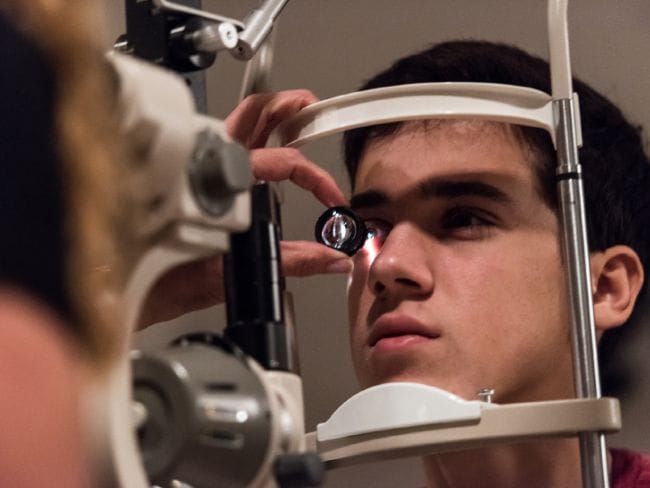
Amblyopia: Also referred to as lazy eye, Amblyopia means reduced vision in one eye owing to misalignment of the eyes (strabismus), or requirement for glasses (refractive error). If detected early, Amblyopia is easily treatable whereas if recognized later (after 9-10 years of age), Amblyopia becomes way more difficult to treat and there's even risk for permanent vision loss. Signs and symptoms include misaligned eyes, squinting one eye, head tilting, and double vision. Treatment comprises using glasses, patching, eye drops, and surgery.
Cataract: Opacity, clouding, or blurriness in eyes means that your child may be suffering from cataract. As soon as he complains of having such an issue, do pay a visit to your doctor.
Astigmatism: It is a condition wherein objects placed both at distance and near appear blurred. This happens due to uneven curvature of the cornea and/or lens, thus obstructing the light rays entering the eye from focusing on a single point on the retina, therefore causing blurriness.
Double Vision: Normally caused because of misalignment of the eyes (strabismus), Double vision forces the patient into viewing a single object at two different places at the same time. Treatment may include prism glasses, strabismus surgery, and Botox injection.
Childhood Tearing: When there's excessive tearing in the eyes, it is called epiphora or childhood tearing. It is a common vision problem among children. Medical treatment comprises of tear sac massage and eye-drops, but if tearing remains, surgical probing of the eye's drainage system may be needed.
Also Read: 6 Eye Allergies You Should Be Aware Of