- Seasonal change in India is causing a spike in aggressive H3N2 influenza cases across North India
- H3N2 flu symptoms include sudden high fever, severe body aches, dry cough, and extreme fatigue
- Warning signs needing urgent care are chest pain, confusion, low oxygen, and persistent high fever
Season change in India often becomes a time when influenza viruses cause everything from mild sniffles to full-blown viral infections that take weeks to recover from. Currently, doctors from across North India are reporting a spike in H3N2 influenza cases. But as flu cases surge across India, many people are brushing off early symptoms as "just a cold." Doctors, however, are warning that H3N2 influenza is far more aggressive and potentially dangerous than the common cold, especially for children, older adults and those with chronic illnesses. So, the care you need to take especially during season change needs to increase.
While both illnesses may begin with a runny nose or sore throat, the difference often lies in the speed and severity of symptoms. Influenza viruses, particularly H3N2 strains of Influenza A, are known to cause more hospitalisations and complications compared to milder respiratory viruses like rhinoviruses, according to the World Health Organization (WHO).
With seasonal transitions, cold weather and crowded indoor spaces aiding viral spread, physicians say recognising warning signs early can prevent serious complications such as pneumonia, respiratory failure and kidney injury. Here's how to tell the difference, and when you must not delay medical care.
H3N2 Influenza Hits Hard And Fast
Dr. Arjun Bhatnager, Consultant Pulmonary and Critical care, Regency Health, Kanpur, explains: "While many people dismiss early respiratory issues as 'just a cold,' H3N2 influenza is far more aggressive from the very beginning. A common cold usually develops slowly, whereas with H3N2, it tends to hit all at once, defined by a sudden onset of high fever, intense chills and deep muscle aches that can leave you feeling completely bedridden within hours."
Unlike the gradual onset of a cold, influenza symptoms often appear abruptly. The US Centers for Disease Control and Prevention (CDC) notes that flu typically causes high fever, severe body aches, headaches and extreme fatigue, symptoms that are uncommon in a cold.
Also Read: Why H3N2 Flu Cases Are Rising Even Before Peak Summer: Doctors Share Why, Preventive Tips
Cold Vs H3N2: Key Differences Seen In Symptoms
1. Fever
Dr. Nupur Jain, Consultant Physician, Kailash Hospital, Noida, says: "Both can start the same way, but a common cold stays mild and improves in 3-7 days with rest and fluids. H3N2 hits hard and fast, with a high fever above 101 degrees Fahrenheit, that lasts several days."
- Common Cold: Rare or mild (below 100.4 degree F / 38 degree C)
- H3N2 Flu: High fever above 101degree F (38.3 degree C), lasting 3-5 days
2. Body Aches and Fatigue
- Cold: Mild discomfort
- H3N2: Severe muscle pain, exhaustion
3. Cough
Dr. Bhatnagar warns: "Unlike the superficial cough of a cold, H3N2 often causes a dry, persistent cough paired with chest tightness or even shortness of breath." Dr. Jain adds: "This is very different from a cold's wetter cough that clears up quickly."
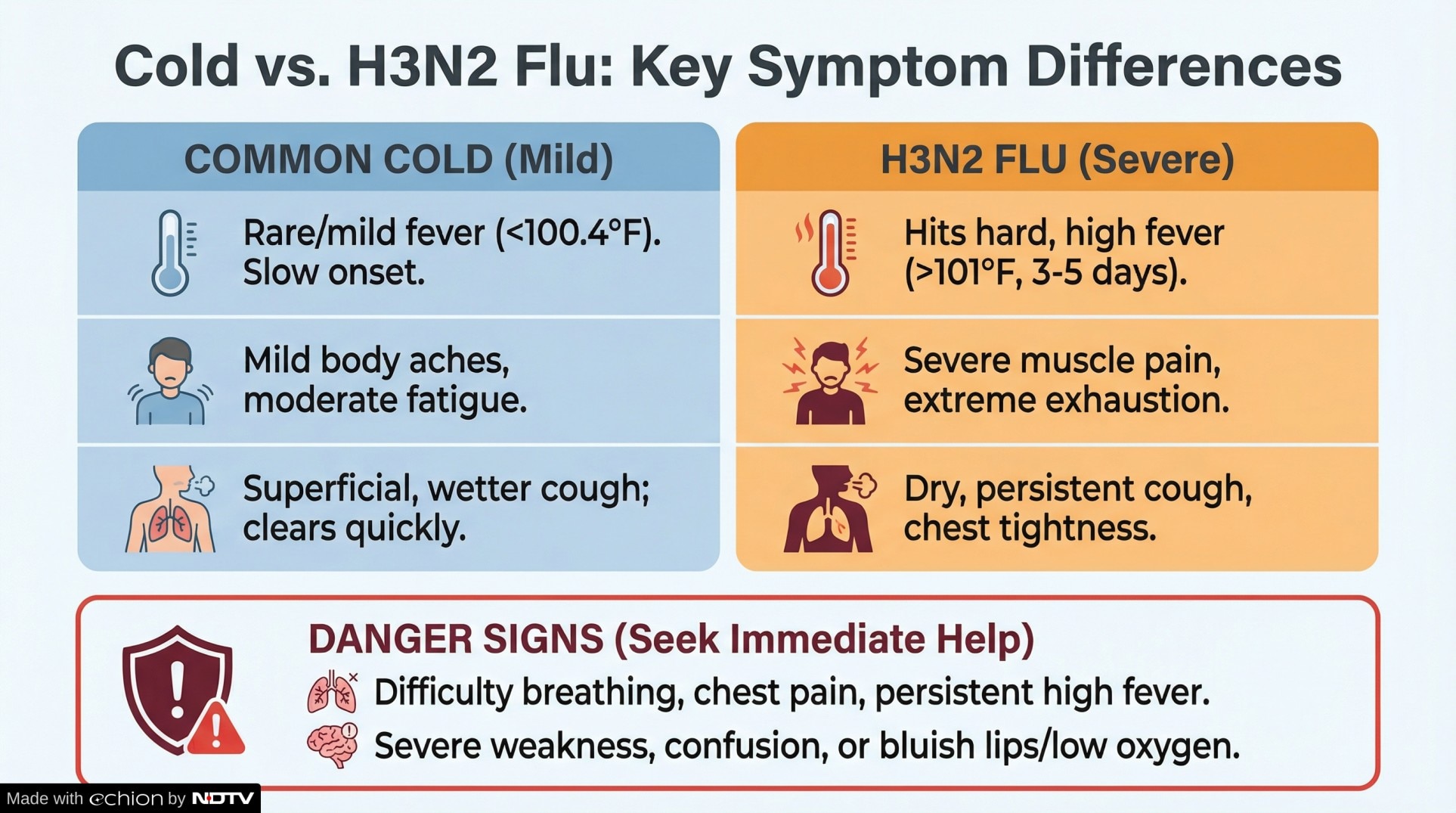
Danger Signs You Should Never Ignore
Doctors emphasise that some symptoms require immediate evaluation.
Dr. Bhatnagar says: "You should be especially alert for warning signs like persistent chest pain, mental confusion, or symptoms that seem to improve but return with greater severity."
Dr. Jain lists additional red flags: "Watch for low oxygen under 92%, blue lips, confusion, cough with blood, rapid breathing in children or weakness that won't go away."
According to WHO and CDC guidelines, emergency warning signs of flu include:
- Difficulty breathing
- Chest pain
- Persistent high fever
- Severe weakness
- Altered mental state
- Children under 5, adults over 65, pregnant women and people with asthma, diabetes, heart or kidney disease are at higher risk of complications.
Complications Of H3N2
Influenza A (H3N2) has historically been associated with higher hospitalisation rates, particularly among elderly populations. Dr. Jain cautions: "They can face pneumonia, blood infections or breathing failure. High fever can also dehydrate you and harm your kidneys by raising creatinine levels quickly." Secondary bacterial pneumonia is one of the most common complications, especially in vulnerable groups.
Treatment: Timing Is Critical
Antiviral medications such as oseltamivir (Tamiflu) can reduce illness duration and complications if started within 48 hours of symptom onset, according to CDC recommendations. Dr. Jain notes: "Antiviral drugs like oseltamivir, started within 48 hours, can cut symptoms by 60%." However, antibiotics are ineffective against viruses. "Never use antibiotics, they don't help viruses and can cause resistance," she adds.
Prevention: What Actually Works
Vaccination remains the most effective preventive tool. The CDC states that annual flu vaccination reduces the risk of flu-related hospitalisation by 40-60% during well-matched seasons. Dr. Jain advises: "Get your yearly flu shot. Wash hands for 20 seconds, wear N95 masks in crowds, and maintain distance from infected individuals." Additional preventive steps include:
- Staying hydrated
- Adequate sleep
- Avoiding crowded indoor spaces during outbreaks
- Wearing masks in high-risk settings
- Vitamin D and zinc may support general immunity, but they are not substitutes for vaccination or medical treatment, as per NIH guidance.
Also Read: Flu Shots For Winter: Who Needs Them, When To Take Them And Why
When To See A Doctor
Seek medical care immediately if:
- Fever lasts more than 3 days
- Breathing becomes difficult
- Oxygen drops below 92%
- Symptoms worsen after initial improvement
- Severe weakness or confusion occurs
Dr. Bhatnagar emphasises: "Recognising that 'sudden and severe' feeling early on is essential for a safe recovery."
While the common cold is usually mild and self-limiting, H3N2 influenza is a far more serious respiratory infection that can escalate rapidly. High fever, intense body aches, chest tightness and extreme fatigue are warning signs that should not be ignored.
Early diagnosis, timely antivirals and vaccination remain the most effective strategies to reduce complications. If symptoms feel sudden and severe, do not assume it's "just a cold." Acting early could prevent hospitalisation, or even save a life.
Disclaimer: This content, including advice, provides generic information only. It is in no way a substitute for a qualified medical opinion. Always consult a specialist or your own doctor for more information. NDTV does not claim responsibility for this information.