- About 67% of Indians suffer from vitamin D deficiency, including 75% of females and 59% of males
- Fortified milk contains about 400 IU of vitamin D per quart, aiding calcium and protein intake
- Egg yolks provide 37-40 IU of vitamin D, covering about 5-6% of adults' daily needs
About 67% of the Indian population suffers from a vitamin D deficiency, out of which 75% of females and 59% of males suffer from it. Surprisingly, the research published in the International Journal of Life Sciences, Biotechnology and Pharma indicates that teenagers and those below the age of 25 years are deficient in vitamin D. While the diet and necessary daily sun exposure are required to supply the body with enough vitamin D, most people tend to ignore their vitamin D levels until they suffer from the consequences. Be it fatigue, poor nutrient absorption, or the inability to be in the sun, people need to reassess how much vitamin D-rich food they are eating daily and whether they are getting morning sun daily. While milk and eggs are everyday foods that are often linked to supplying the body with vitamin D, people need to be aware of their actual levels to figure out whether they need to increase their intake to attain the proper balance.
While milk and eggs are common sources of vitamin D, people need to know the exact level of vitamin D that their body needs, along with their current consumption habits that affect its absorption rate. To know which food source has a better vitamin D dose, you need to look at its individual nutritional profile.
Why Vitamin D Is Important For The Body
Vitamin D is an essential vitamin that is needed in the body for nutrient absorption. So, knowing its exact levels is necessary. The vitamin is responsible for a lot more than people realise, and it can support the following if the dose of vitamin D in the body is at the desired level:
- Supports bone strength and calcium absorption, as most nutrients that are extracted from food consumed in the body require vitamin D to be properly absorbed in the body.
- Plays a role in immunity and muscle health, as the immune system requires a steady and regular flow of vitamin D to maintain its functioning.
- Deficiency linked to fatigue, bone pain, and fractures, as the cyclic non-absorption of nutrients leads to overall deficiencies and loss in mineral density.
Vitamin D In Fortified Milk
Vitamin D in fortified milk means that the commonly consumed cow milk has additional vitamin D in it, and it makes the milk a better medium to carry the vitamin D in the body. According to the Indian Council of Medical Research (ICMR), fortified milk contains about 400 IU per quart of vitamin D, whose dosage can be increased when additional vitamin D is added to it.
This is especially beneficial as the fortified milk has additional benefits that supply the body with calcium and protein. And in India, this can be great, as a majority of the population suffers from a vitamin D deficiency. Be it children, teenagers, or adults, people need their extra dose of vitamin D in any way they can get it. But their body should be able to absorb its nutritional benefits to avail the health benefits from the additional vitamin D.
Also Read: Is Your Brain Shrinking? Why Your Current Vitamin D Levels Could Matter In 20 Years
Vitamin D In Egg Yolks
Egg yolks contain 37-40 IU (1 microgram) of vitamin D, contributing roughly 5-6% of the daily recommended intake for adults. So, eating two whole eggs as advised in the ICMR and National Institute of Nutrition (NIN) is needed, as people of all ages need their vitamin D from egg yolks.
Naturally occurring vitamin D is common in hard cheese, salmon, herring, rainbow trout, and many other food items. But the access, cost, and awareness are factors that limit their consumption, especially in daily diets.
So, switching from normal cow milk to vitamin D-fortified milk can prove helpful for people, as it can easily become a part of their everyday diet.
Besides vitamin D, other nutrients in egg yolk provide the body with essential amino acids that are necessary for its health and daily functioning.
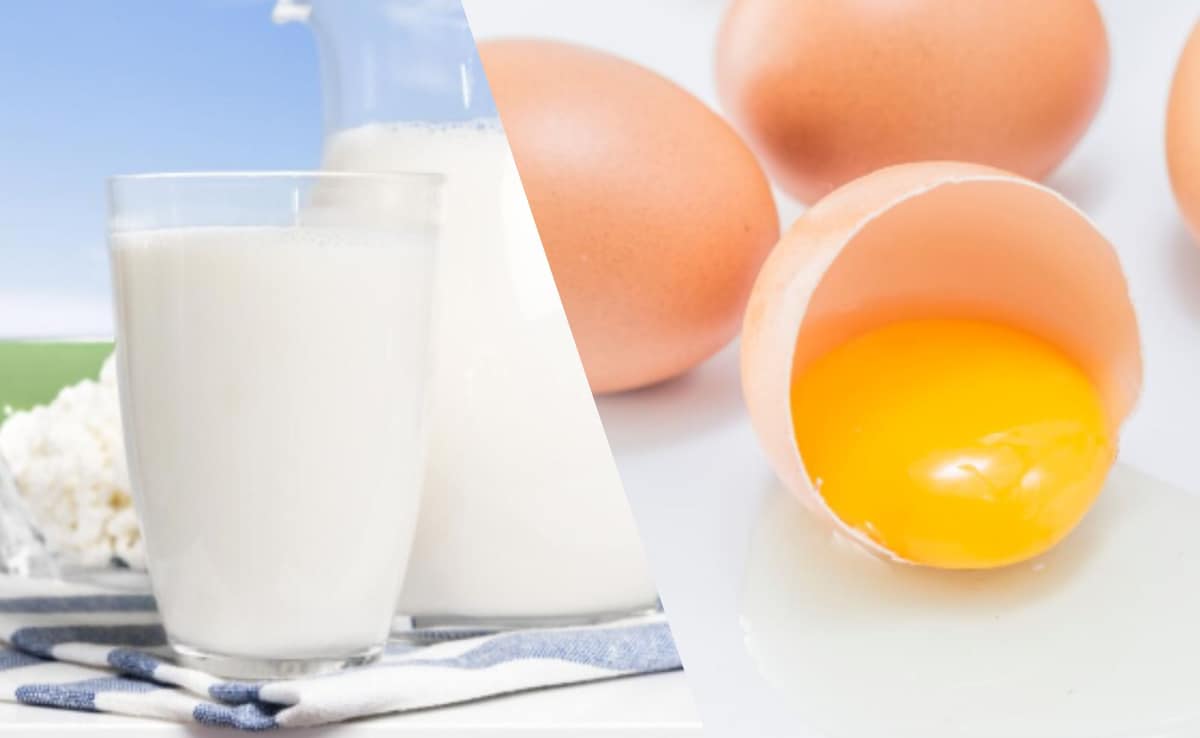
Fortified milk and egg yolks contain vitamin D
Photo Credit: Freepik
Fortified Milk vs Egg Yolks
When the exact levels of vitamin D are compared, fortified milk has more vitamin D, while egg yolks have a small amount. But the thing with fortified milk is that the quality of its preparation matters, along with its ability to be absorbed by the body. But both sources are easy to consume for vitamin D content. The cost and availability are two factors that can influence your choice between these sources, but balancing their intake is advisable, as per the nutritionist Lovneet Batra, who clarifies which food sources provide vitamin D2 vs D3, which affects absorption.
Vitamin D3 (more effective):
- Fatty fish
- Egg yolks
- Animal-based fortified foods
Vitamin D2:
- UV-exposed mushrooms
- Plant-based fortified foods
This distinction is important because D3 is more effective at raising blood vitamin D levels, even when sourced from food.
Which Is Better For Vitamin D Intake?
To know which source of vitamin D is for you, firstly, you need to get your vitamin D levels tested. Once you know the exact levels, then you need to figure out whether you need to increase the intake, and then consulting a nutritionist is needed for a personalised approach. Here are some additional factors on which your vitamin D food source should depend:
- It depends on the diet pattern and quantity, as every individual needs an individualised approach for effectiveness.
- Milk alone may not meet daily needs, as many food sources are needed for correcting the levels of vitamin D in the body.
- Eggs can boost intake, but in moderation, as eating too much will not increase the level of vitamin D suddenly; consistent and the right sources will do it.
Also Read: Vitamin D Deficiency: What Happens To Your Body When You Lack This Crucial Vitamin
Can Either Replace Sunlight?
This is not possible, as the human body needs a daily supply of sunlight or natural light to balance the mood of people, regulate their emotions, support energy levels, heal inflammation, and provide many other wide-ranging health benefits.
Sunlight remains a major source of vitamin D, and it is necessary that people prioritise their daily exposure to it to avoid serious health issues.
Consuming vitamin D-rich foods is not enough; your body needs a balance of sunlight as well.
How To Improve Vitamin D Levels Safely
If you are worried about your vitamin D levels, then you need to practise these tips consistently to see visible results:
- Combine foods with sun exposure to maximise the vitamin D in your body.
- When vitamin D is dangerously low, then active supplementation is needed to correct the levels.
But after medical testing, blood work is needed along with a nutritionist's or dietician's expert advice to make sure your vitamin D levels are adequate.
Disclaimer: This content, including advice, provides generic information only. It is in no way a substitute for a qualified medical opinion. Always consult a specialist or your own doctor for more information. NDTV does not claim responsibility for this information.