- Cats can contract bird flu by hunting or eating infected birds or raw food
- Pet birds risk infection if exposed to wild birds or contaminated environments
- Symptoms in pets include respiratory issues, lethargy, and neurological signs
Avian influenza, commonly known as bird flu, has become a widespread concern in many regions due to outbreaks in wild and domestic birds. The recent outbreaks in Darbhanga, Bihar and Chennai, Tamil Nadu underscore this quite well. In both cases, the bird flu virus was detected in wild crows, numbering in hundreds and thousands, which basically caused alarm bells to ring in state as well as Union government authorities. While the virus typically circulates among birds, recent evidence shows that some strains can infect mammals and domestic pets, including cats and pet birds, under certain conditions.
Although the risk of pets contracting bird flu remains relatively low, the possibility exists, particularly in areas where avian influenza viruses are actively circulating. For pet owners, especially those with outdoor cats or pet birds, understanding the risk, and how it can be reduced, is important for both animal and human health.
Public health organisations such as the Centers for Disease Control and Prevention (CDC) and animal health authorities emphasise that bird flu prevention, such as avoiding contact with wild birds or contaminated food, is the most effective strategy. Knowing the signs of infection, how the virus spreads, and appropriate precautions can help owners make informed choices and keep their pets safe.
Can Your Cat Get Bird Flu? What The Evidence Shows
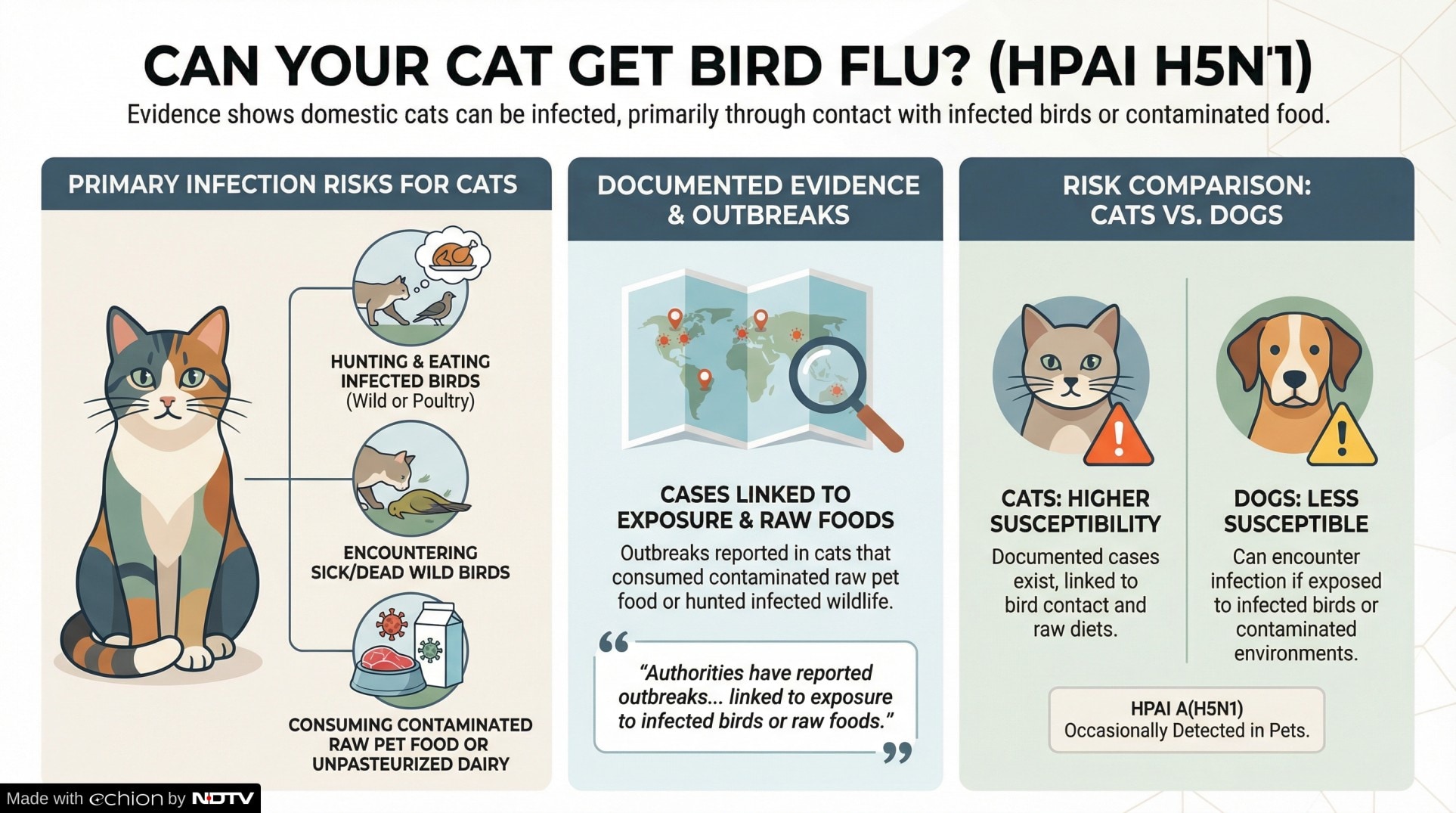
Bird flu viruses usually infect wild birds and domestic poultry, but some strains, notably Highly Pathogenic Avian Influenza (HPAI) A(H5N1), have occasionally been detected in other animals, including pets.
Cats can be infected if they:
- Hunt or eat infected birds
- Encounter sick or dead wild birds
- Consume raw pet food or unpasteurised dairy products contaminated with the virus
There have been documented cases where domestic cats developed bird flu, particularly linked to exposure to infected birds or raw foods. In some regions, authorities have reported outbreaks in cats that had eaten contaminated raw pet food or hunted infected wildlife.
While dogs appear less susceptible than cats, they can encounter infection if exposed to infected birds or contaminated environments.
Also Read: Nipah Virus Vs Bird Flu In India: Which Viral Infection Is Deadlier For Humans?
Can Pet Birds Get Bird Flu?
Birds kept as pets, especially species that have direct contact with wild birds or outdoor environments, can also be at risk, though documented cases are less common than in cats. Wild birds and domestic poultry are the primary reservoirs of avian influenza, so indoor pet birds with no contact with wild birds are generally at lower risk.
It's important for pet bird owners to prevent any interaction with wild birds or their droppings and ensure that cages, food and water sources are well protected and clean.
Signs Your Pet Might Be Infected
If a pet does become infected with an avian influenza virus, symptoms can vary but may include:
In Cats or Mammals
- Fever and lethargy
- Loss of appetite
- Respiratory signs (coughing, sneezing, difficulty breathing)
- Eye irritation or discharge
- Neurological signs such as tremors, incoordination or seizures
In Pet Birds
- Sudden death
- Lethargy or reduced activity
- Respiratory distress
- Lack of appetite
- Ruffled feathers or weakness
If you observe these symptoms, especially after possible exposure to wild birds or infected poultry, contact your veterinarian immediately. Early veterinary care is crucial for pets with suspected avian influenza.
How Bird Flu Spreads to Pets
Avian influenza spreads through:
- Direct contact with infected birds (saliva, faeces, respiratory secretions)
- Contaminated environments such as surfaces, soil or water
- Ingestion of infected raw food (like raw poultry or unprocessed meat)
Pets, especially cats, that roam outdoors and come into contact with sick or dead birds or contaminated environments face a higher risk. Indoor pets are less likely to get infected but can still be exposed indirectly through contaminated shoes, clothing or surfaces brought into the home.
Also Read: Bird Flu In Chennai: Surveillance Tightens, But Are Humans Safe From This Virus?
Precautions Every Pet Owner Should Take
Even though infection is uncommon, taking sensible steps can drastically reduce the risk:
- Keep Cats Indoors During Outbreaks: Keep outdoor cats inside or supervised on a leash to prevent contact with wild birds.
- Avoid Feeding Raw Food: Don't feed pets raw meat, raw pet food or unpasteurised milk, which can be sources of infection.
- Prevent Contact With Wild Birds: Prevent pets from interacting with wild birds or their droppings. Use screens, bird deterrents, or secure outdoor spaces.
- Maintain Hygiene at Home: Wash hands after handling pets, clean bowls, bedding and cages frequently and disinfect areas where pets roam.
- Monitor For Symptoms: If pets show flu-like or unusual symptoms, especially after exposure to birds or contaminated surfaces, seek veterinary care promptly.
Can Pets Spread Bird Flu to Humans?
Human bird flu infection from pets is extremely rare, but not impossible. CDC notes that rare instances of transmission from infected animals to people have occurred, typically after prolonged, close, unprotected contact with a sick animal.
For example, a veterinarian in New York developed mild symptoms after caring for infected cats without protective equipment, illustrating that direct exposure to an infected animal without precautions can pose a risk. However, everyday interaction with healthy pets, including cuddling, touching or playing, is not generally considered a high risk for transmission. The main prevention remains avoiding contact with sick or exposed animals and following good hygiene.
Bird flu may have started as a bird-specific virus, but it has shown an ability to cross species barriers in rare cases. Cats and pet birds can become infected, particularly if exposed to sick wild birds, contaminated environments, or raw food. Keeping pets protected, avoiding risky exposures, and recognising early symptoms are key to keeping them, and yourself, safe. Regular veterinary guidance and commonsense precautions can significantly reduce risk even in areas where bird flu viruses are circulating.
Disclaimer: This content, including advice, provides generic information only. It is in no way a substitute for a qualified medical opinion. Always consult a specialist or your own doctor for more information. NDTV does not claim responsibility for this information.