- Tamil Nadu government urged to enhance surveillance, biosecurity, and disease control measures
- No human cases reported; public advised to avoid contact with sick or dead birds and report deaths
- A One Health approach coordinates animal, wildlife, and human health sectors to manage risk
Chennai and the wider state of Tamil Nadu are facing a heightened avian influenza (bird flu) alert after hundreds of dead crows were found across the city and laboratory tests confirmed the presence of the highly pathogenic H5N1 virus. The Union government has asked the Tamil Nadu administration to intensify surveillance, biosecurity and disease-control measures to prevent further spread among wild birds, domestic poultry and, in rare instances, humans. Reports of crow deaths from areas including Adyar, Velachery, Thiruvanmiyur and Old Mahabalipuram Road (OMR) triggered investigations by animal health teams in late January. Samples collected were sent to the ICAR-National Institute of High Security Animal Diseases (NIHSAD) in Bhopal, where tests confirmed H5N1 avian influenza in dead birds.
Given the potential for the virus to spread to other bird species and, in rare cases, to humans through direct exposure, authorities are taking precautionary action. While no human cases have been reported so far, public health departments are urging people to follow safety advice and report unusual bird deaths immediately. These steps aim to protect public and animal health without causing panic.
Why Bird Flu Is a Concern
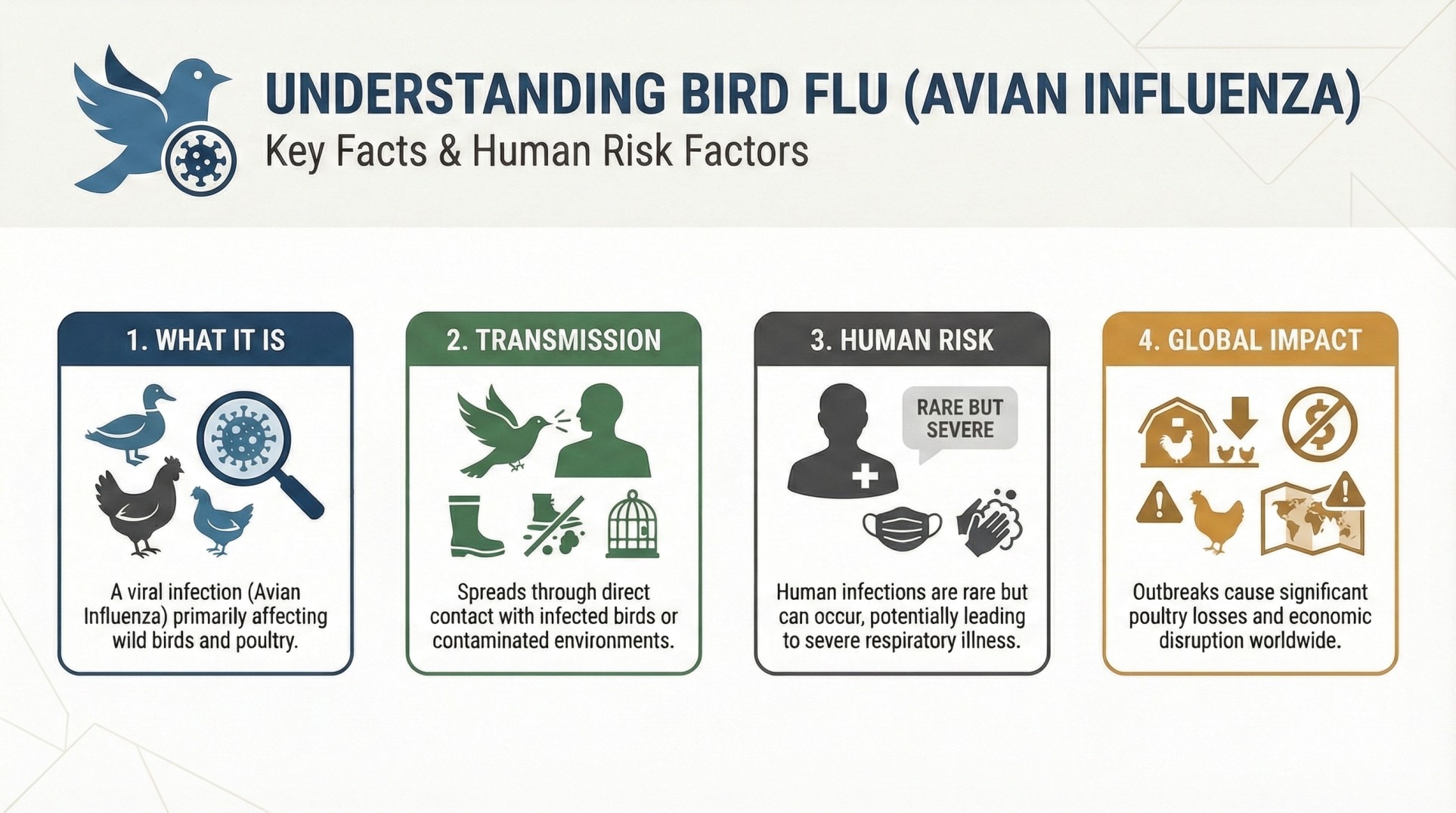
Avian influenza, often called bird flu, is caused by influenza A viruses that naturally circulate among wild waterfowl and other birds. One strain, H5N1, is classified as highly pathogenic, meaning it can spread rapidly among bird populations and cause high mortality rates in domestic poultry.
Although bird flu viruses primarily infect birds, they can occasionally infect mammals, including humans, usually through direct contact with infected birds or their secretions (saliva, mucus and droppings). Human infections generally occur when people handle sick or dead birds without protective equipment.
According to public health authorities, human infection with H5N1 remains rare, and there is no evidence of sustained human-to-human transmission. However, when infections do occur in people, they can be serious, potentially leading to severe disease or death if untreated. Close monitoring and rapid response are therefore critical to prevent any escalation.
What Authorities Are Doing in Chennai and Tamil Nadu
Following confirmation of H5N1 in crows, Tamil Nadu's animal husbandry and health departments have activated a coordinated response involving:
- Enhanced Bird Surveillance: Teams are monitoring wild bird populations, domestic poultry farms, and urban bird habitats for unusual sickness or deaths in birds.
- Biosecurity Protocols: Officials have directed strict biosecurity practices in farms and wet markets. This includes limiting access to bird areas, disinfecting footwear and equipment, and ensuring protective gear for workers in at-risk settings.
- Safe Disposal of Carcasses: Dead birds must be buried deeply or incinerated to prevent scavengers from spreading the virus. The public is strongly advised not to handle dead birds bare-handed.
- Public Advisory and Reporting: Residents are urged to report any unusual bird deaths to local animal husbandry departments and to avoid direct contact with sick or dead birds.
- Health Monitoring: Health authorities are tracking influenza-like illnesses in both government and private healthcare facilities, especially among individuals who may have been exposed to birds.
- One Health Approach: Officials are also emphasising a One Health approach by coordinating animal, wildlife and human health departments to manage risks effectively.
Also Read: Bird Flu Alert In Chennai: What's Happening In Tamil Nadu And How People Can Stay Safe
Are Humans Safe From Bird Flu or Avian Influenza Virus?
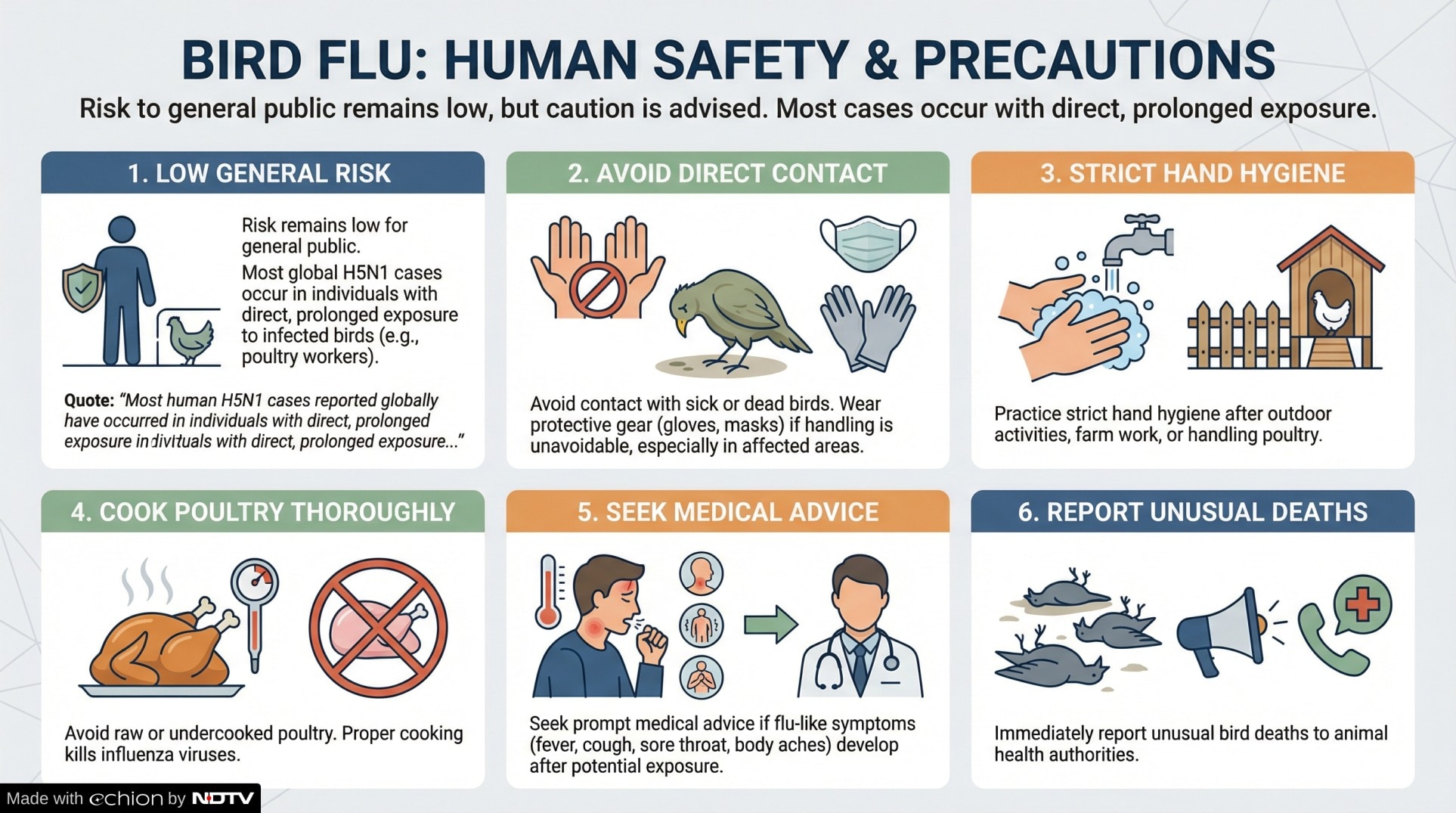
According to health advisories issued in Tamil Nadu, the risk of bird flu spreading to the general public remains low. Most human H5N1 cases reported globally have occurred in individuals with direct, prolonged exposure to infected birds, such as poultry workers or handlers of dead birds.
Nonetheless, authorities recommend the following precautions against bird flu:
- Avoiding direct contact with sick or dead birds, especially in affected areas.
- Wearing protective gear (gloves, masks) if handling birds is unavoidable.
- Practising strict hand hygiene after outdoor activities, farm work or handling poultry.
- Reporting unusual bird deaths immediately to animal health authorities.
- People who develop flu-like symptoms, fever, cough, sore throat, body aches or shortness of breath, after potential exposure should seek medical advice promptly. Early diagnosis and supportive care are crucial for any influenza virus infection.
- It is also recommended to avoid consumption of raw or undercooked poultry products, as proper cooking kills influenza viruses.
The bird flu alert in Chennai highlights the importance of early detection, coordinated surveillance and public health vigilance in controlling zoonotic diseases like H5N1. While the immediate risk to humans is low, authorities are intensifying efforts to monitor bird populations, strengthen biosecurity, and protect both animal and human health. Residents are encouraged to follow official guidance, report unusual bird deaths, and practise hygiene measures to reduce any possible risk. Continued collaboration between animal, wildlife and health departments will be essential to ensure that this outbreak is contained and does not pose a broader threat to public health.
Disclaimer: This content, including advice, provides generic information only. It is in no way a substitute for a qualified medical opinion. Always consult a specialist or your own doctor for more information. NDTV does not claim responsibility for this information.