- Excessive heat can slow digestion and increase risks of bloating and acidity
- Dehydration from summer heat leads to constipation and slower digestive processes
- Avoid sugary drinks, fried foods, and skipping meals to maintain gut health
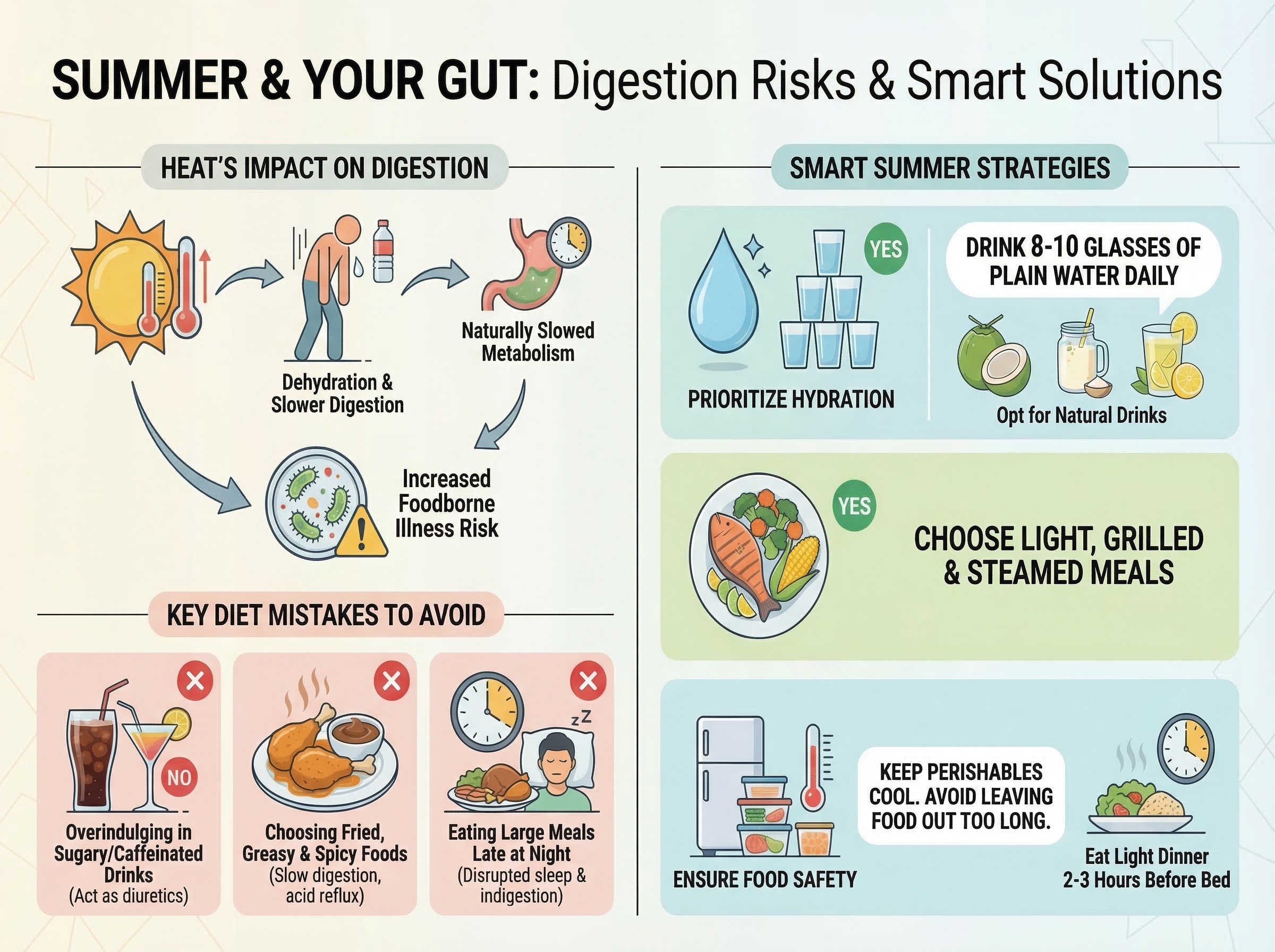
Excessive sweating, fatigue, unusual tiredness and reduced appetite are quite common during the hot summer days. The summer season can have a significant impact on health, particularly concerning digestion. Warmer temperatures and seasonal changes can impact dietary habits and hydration levels, which in turn affect the overall functioning of your digestive system. In the summer, your body naturally slows its metabolism to reduce internal heat, making your digestive system more susceptible to issues such as bloating, acidity, and food poisoning. Here's how summer can affect digestion and some common diet mistakes to avoid for optimal health.
Effects of summer on digestion:
1. Heat increases the likelihood of dehydration, which can lead to slower digestion and constipation.
2. Your digestion naturally slows down during summer, which can cause significant discomfort, especially after consuming heavy meals.
3. The warmth can accelerate bacterial growth in food, which increases the risks of foodborne illnesses.
Diet mistakes to avoid in summer:
Avoiding certain dietary habits is essential to maintaining your gut health during high temperatures.
1. Not drinking enough water
Failing to drink enough water can lead to dehydration, affecting both digestion and overall health. Aim to drink plenty of fluids, especially water, throughout the day.
2. Overindulging in sugary drinks
While it's tempting to consume sugary sodas or alcoholic beverages, these can lead to bloating and digestive discomfort. Opt for room-temperature or mildly cool natural drinks like coconut water, buttermilk (chaas), or lemon water.
3. Skipping meals
With busy summer schedules, it can be easy to skip meals or eat at irregular times. Skipping meals can lead to overeating later or choosing unhealthy options. Try to maintain a regular eating schedule.
4. Choosing fried or greasy foods
Deep-fried snacks and heavy gravies are dense and slow to digest, often leading to sluggishness and acid reflux. Spices like chilli, pepper, and garlic have a thermogenic effect that raises your body temperature further. Choose grilled, boiled, or steamed dishes with minimal oil and mild seasoning.
5. Ignoring food safety
With warm weather, it's crucial to keep food safe to eat. Ensure that perishable items are kept cool and never leave food out for too long to avoid spoiling.
6. Mistaking caffeinated or sugary drinks for hydration
Tea, coffee, and sugary sodas act as diuretics, which can actually increase fluid loss and lead to dehydration. Drink 8-10 glasses of plain water daily. You can also try a fibre supplement if you struggle with constipation due to summer dehydration.
7. Eating large meals late at night
Metabolic activity is lowest at night. Eating a heavy meal and sleeping immediately can cause severe indigestion and disrupted sleep; instead, have a light dinner at least 2-3 hours before bedtime.
Some other tips for optimal digestion in summer:
- Focus on fresh vegetables, fruits, and whole grains that are easier to digest. These foods can help keep you cool and provide essential nutrients.
- Regular exercise supports digestion. Activities like walking, swimming, or yoga can help stimulate digestive processes.
- Take the time to enjoy meals, chew thoroughly, and avoid distractions while eating. Mindful eating can enhance digestion and increase satisfaction.
- Serve smaller portions to avoid overloading your digestive system.
Maintaining good digestive health during the summer is about balance, staying hydrated, and being mindful of food choices. By avoiding common diet mistakes and implementing healthy habits, you can enjoy the season while supporting your well-being.
Disclaimer: This content including advice provides generic information only. It is in no way a substitute for a qualified medical opinion. Always consult a specialist or your own doctor for more information. NDTV does not claim responsibility for this information.