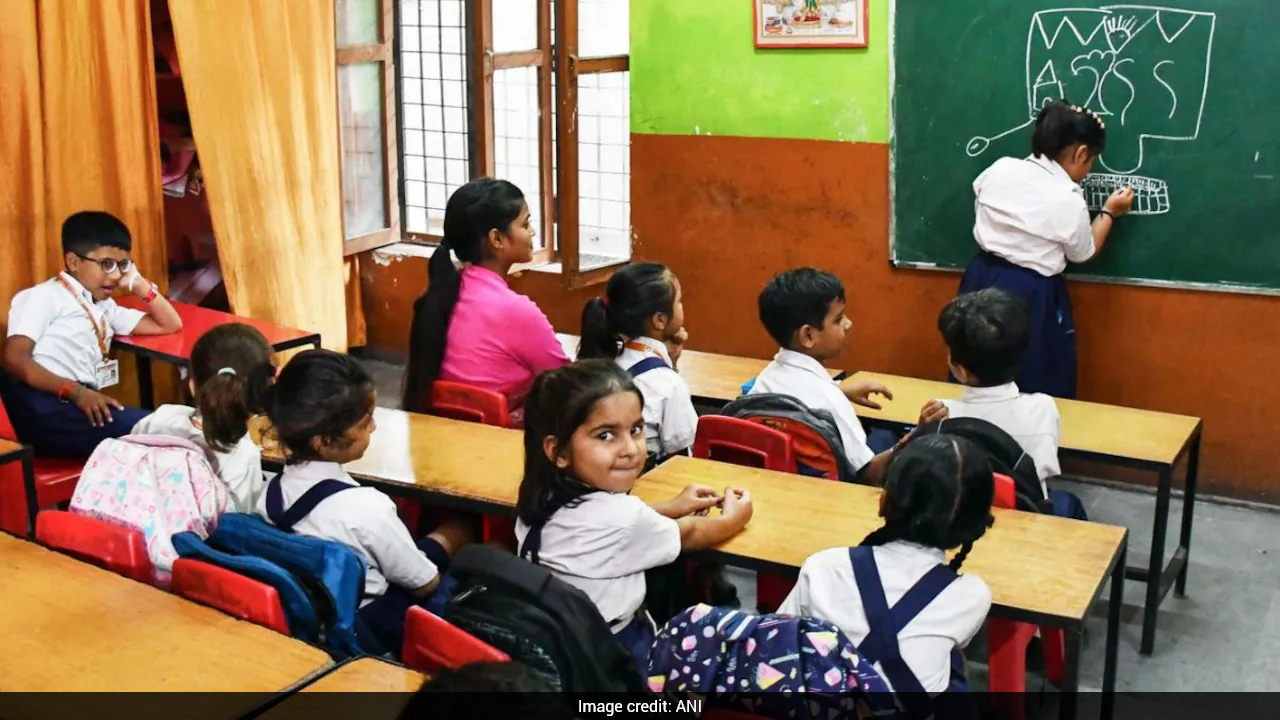

Joyful Learning: The National Education Policy (NEP) 2020 has asserted that pedagogy (the method and practice of teaching) must evolve to make education more experiential, holistic, integrated, inquiry-driven, discovery-oriented, learner-centred, discussion-based, flexible, and enjoyable.
According to the Central Board of Secondary Education's 'Handbook of Joyful Learning', it is becoming increasingly critical that children not only gain knowledge, but more importantly understand how to learn. Therefore, the board noted that education must move towards less content and more towards learning about how to think critically and solve problems, how to be creative and multidisciplinary, and how to innovate, adapt, and absorb new material in novel and changing fields.
In alignment with the NEP, the CBSE has taken several measures to make learning at schools holistic, skilldriven, competency-oriented, and joyful.
Based on the definition given in the handbook, joyful learning means positive intellectual and emotional state of learners. This state or experience is achieved when an individual or a group is deriving pleasure and a sense of satisfaction from the process of learning.
The initiative aims to bring the element of happiness and joy while learning. According to the official document, the method enables learners and teachers to experience teaching and learning in a stress-free environment.
21st Century Skills For Joyful Lessons
Skills highlighted by the board for joyful lessons:
- Critical Thinking
- Problem Solving
- Creativity and Innovation
- Collaboration
- Communication
- Flexibility and Adaptability
- Leadership and Responsibility
- Initiative and Self-Direction
- Productivity and Accountability
- Social and Cross-Cultural Interaction
Common Strategies
Some common methods and strategies include:
1. Rally Robin
In this strategy, the facilitator will give such questions to learners which have several answers. Learners will be divided into groups and write their answers and then, one by one, each answer will be discussed by the facilitator in the class.
2. DRTA
Directed Reading Thinking Activity is a comprehensive activity in which the teacher will read a text and ask children to make questions and do predictions. Students will read further to see if their predictions are correct or not. This activity can be done in groups, on individual basis or with the whole class depending on the topic and teacher
3. Crack the Code
In this activity, the facilitator can make some codes for children to decode and get the teacher's message. Later children can also make their own codes to give information to each other.
4. Visual Artwork
This will help children to understand the text better by seeing images, sculptures and making collages on the topic.
5. Graffiti Board
This is a writing space provided by the teacher where everyone shares and writes their thoughts on different topics. This will help children to learn about each other's ideas.
According to the official handbook, one of the objectives of joyful learning is to ensure that learners with varied abilities meaningfully interact with the educational content individually, as well as in group.
