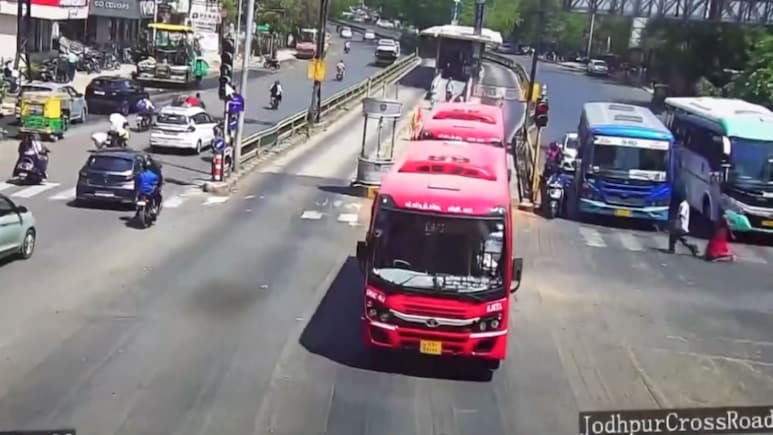
- Ahmedabad launched an AI-powered traffic system at 10 key junctions in a pilot project
- The Adaptive Traffic Control System adjusts signal timings based on real-time traffic data
- Sensors and cameras track vehicle density and lane usage to manage signal durations
Ahmedabad has taken a major step towards smarter urban mobility with the rollout of an AI-powered traffic management system aimed at reducing congestion and long signal waits. The new Adaptive Traffic Control System (ATCS) has been deployed at 10 key junctions across the city as part of a pilot project.
What Is The Adaptive Traffic Control System?
The newly introduced system is designed to dynamically manage traffic signals based on real-time conditions. Unlike conventional traffic lights that follow fixed timers, this AI-driven setup continuously analyses on-ground traffic and adjusts signal durations accordingly.
VIDEO STORY | AI-Driven traffic system launched in Ahmedabad to cut delays and ease congestion
— Press Trust of India (@PTI_News) April 23, 2026
WATCH: https://t.co/N7OSa9HpM5
Subscribe to PTI's YouTube channel for in-depth reports, exclusive interviews, and special visual stories that take you beyond the headlines. #PTIVideos
Officials have confirmed that the system relies on a network of cameras and sensors installed at major intersections. These devices track vehicle density, speed, and lane usage to determine how traffic is flowing at any given moment.
How The AI- Powered Traffic Management System Works?
At the core of the system is its ability to respond instantly to changing traffic conditions. For instance, while a maximum signal time of around 50 seconds may be set, the AI can shorten it significantly if traffic clears earlier.
If a lane is cleared within 20 seconds, the system reallocates the remaining time to other congested signals. This continuous recalibration ensures smoother vehicle movement and prevents unnecessary waiting at empty intersections.The goal is to maintain a steady traffic flow rather than forcing vehicles to stop and wait due to pre-set signal timings.
Benefits For Daily Commuters
Early observations of the project suggest noticeable improvements in traffic conditions. Officials claim that congestion levels have reduced, resulting in shorter travel times for commuters.
Additionally, the system is helping cut down fuel consumption, as vehicles spend less time idling at signals. This is particularly beneficial during peak summer months, when long waits at traffic lights can be both uncomfortable and inefficient. Preliminary data also indicates that traffic flow has improved by up to 18 percent in areas where the system is active.
The current rollout is part of a pilot phase, and authorities are closely monitoring its performance. If the results continue to be positive, the AI-based traffic control system could be expanded to more junctions across Ahmedabad.
Track Latest News Live on NDTV.com and get news updates from India and around the world
