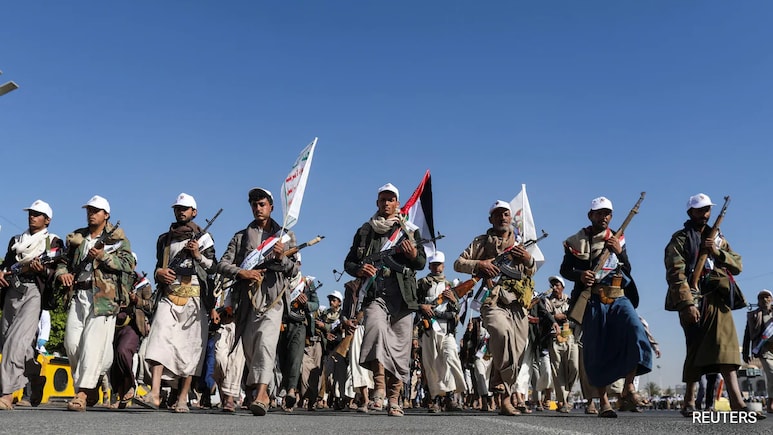
For nearly four years, Yemen's war appeared to be frozen rather than finished.
A fragile truce between Saudi Arabia and the Iran-backed Houthi rebels had largely halted large-scale fighting, but it failed to resolve the issues that fuelled the conflict. The Houthis wanted greater control over Yemen, including access to the country's oil wealth, while negotiations over a long-term peace repeatedly hit dead ends.
Then the US-Iran conflict happened, which changed everything. As tensions between Washington and Tehran escalated, Yemen once again became a battleground. Over the past few weeks, fighting between the Houthis and Saudi Arabia has intensified, raising fears that the country could slide back into another devastating war.
"The Houthis have one solution for every problem in the world, which is go to war," Farea al-Muslimi, a Yemen-focused fellow at the London-based research group Chatham House, told The New York Times. "The Saudis solve every problem by trying to shower it with money," he added, "and the Houthis by shooting at it."
Why Both Sides Are Heading Back To Conflict
The last Saudi-Houthi war pushed Yemen to the edge of famine before a UN-backed truce took effect in 2022. While the ceasefire stopped much of the fighting, negotiations for a permanent peace gradually collapsed.
Saudi Arabia, dealing with multiple regional crises, appeared content to keep the calm alive. The Houthis, however, saw little reason to wait.
Officials and diplomats familiar with the group say the rebels believe another confrontation could strengthen their grip over Yemen and give them access to oil revenues currently outside their control.
"Our souls are content with any level of sacrifice," Houthi leader Abdulmalik al-Houthi said in a televised speech on July 16 after tensions with Saudi Arabia escalated.
Saudi Arabia has publicly called for restraint.
Saudi ambassador to Yemen Mohammed al-Jaber said the kingdom wanted to reduce tensions but accused the Houthis of "insisting on a path of escalation and violence" and serving foreign interests in an apparent reference to Iran.
Missiles, Drones And A New Phase
According to the report, the Houthis are supporting their key ally Iran while also trying to force Saudi Arabia and the international community into making political concessions inside Yemen.
In recent days, the group has launched missiles and drones toward Saudi Arabia and targeted ships in the Red Sea, adding fresh uncertainty to already volatile global energy markets.
Saudi-led forces have responded with airstrikes inside Houthi-held territory for the first time in years.
"There is a real concern that the internal Yemeni war could reignite," April Alley, a former United Nations peace process official who is now a senior fellow at the Washington Institute, told the publication.
Why Saudi Arabia Is In A Weaker Position
The report states that the Houthis have chosen their moment carefully. With Iran effectively blocking the Strait of Hormuz during the wider regional conflict, Saudi Arabia has become increasingly dependent on the Red Sea to export its oil.
That makes attacks in the region far more costly than before.
"The Houthis are good at smelling blood in the water," said Alley.
Saudi Arabia has so far tried to avoid a wider military confrontation.
Ahmed Nagi, a senior Yemen analyst at the International Crisis Group, said Riyadh is attempting to strike a balance between restraint and deterrence.
"The Saudis were cornered, and they feel like there will be a higher cost if they stay silent," he said.
How Yemen Reached This Point
The Houthis emerged from Yemen's mountainous north as a small Shiite rebel movement with an anti-US and anti-Israel slogan.
In 2014, backed by Iran, they seized the capital Sanaa and forced out the internationally recognised government, triggering a civil war.
Saudi Arabia viewed the rise of an Iran-backed militia on its border as a major security threat and launched a military intervention alongside regional allies.
Years of fighting followed, creating one of the world's worst humanitarian crises before international pressure and battlefield fatigue pushed both sides toward a ceasefire.
Today, the Houthis effectively govern northern Yemen, while the internationally recognised government controls much of the south with Saudi military and financial support.
The Peace Deal That Never Happened
There was a point when lasting peace appeared within reach.
In late 2023, Saudi Arabia and the Houthis, with UN support, came close to agreeing on a political roadmap that could have ended years of conflict.
One of its biggest components involved restarting salaries for government employees living in Houthi-controlled areas.
The plan was expected to release between $1 billion and $2 billion every year, funded largely through Yemen's oil revenues with Saudi financial support covering any shortfall.
But before the agreement could be signed, the Hamas attack on Israel in October 2023 and the war in Gaza reshaped the region.
The Houthis launched attacks on Israel and commercial ships in the Red Sea, claiming solidarity with Palestinians.
Although they avoided attacking Saudi Arabia during that period, their campaign drew military responses from Western countries.
When Donald Trump returned to office in 2025, he designated the Houthis a foreign terrorist organisation and ordered airstrikes against the group.
Researchers say the move deepened economic hardship in Houthi-controlled areas and increased public frustration.
For months, the Houthis largely stayed out of the direct US-Iran confrontation, but that changed after the ceasefire between Washington and Tehran collapsed.
The report states that Iranian pressure played a role, although joining the conflict also aligned with the Houthis' own ambitions inside Yemen.
The latest dispute centred on Iranian flights into Sanaa.
The Houthis insisted an Iranian aircraft should be allowed to land after flights had been suspended for nearly a year, calling it an attempt to break what they described as a blockade.
Asserting they are Yemen's legitimate government, they demanded all restrictions on flights and shipping into their territory be lifted, including UN inspections.
Western diplomats say negotiations were held to restore flights, but no agreement was reached.
When another Iranian plane attempted to land, the Houthis accused Saudi Arabia of bombing Sanaa airport.
The Saudi-backed Yemeni government said it carried out airstrikes to force the aircraft to divert, alleging it was transporting Iranian weapons. The Houthis denied the accusation.
Soon afterwards, the Houthis announced a blockade on Saudi ships in the Red Sea, with both sides claiming fresh attacks against one another.
Whether Yemen slips back into full-scale war may now depend partly on Washington.
A senior Trump administration official said the United States wants regional allies to take greater responsibility for security while continuing to support a diplomatic solution in Yemen.
But Trump has also warned of military consequences. On July 23, he threatened "major military punishment" if the Houthis continue attacking Saudi oil tankers.
He also expressed disappointment with the militia, saying they had, "until now, acted very professionally and smart."
Track Latest News Live on NDTV.com and get news updates from India and around the world


