







- US Vice-President JD Vance called the Iran peace proposal the final and best offer from Trump
- The talks in Islamabad ended without agreement but no immediate hostilities resumed
- Trump’s “final offer” phrase has been used before in negotiations with North Korea and Ukraine
When Donald Trump or his inner circle declares something the "final or best offer," it usually lands with all the finality of a Las Vegas casino telling you "this is your last chance to double down", right before the dealer quietly shuffles the deck again. It is meant to sound decisive, even irreversible, yet those who have tracked his negotiations over the years have learned to treat it with caution.
On Sunday, after 21 hours of talks in Islamabad produced no agreement with Iran, US Vice-President JD Vance invoked the phrase on Trump's behalf. The United States and Iran had failed to strike a deal to end the war in the Middle East. There was no immediate return to hostilities, and the region clung to hope that a fragile truce would hold.
The encounter was the highest-level meeting between the two sides since the 1979 Islamic revolution in Iran. Once again, the question arises -- when Trump or his administration labels something a "final and best offer", how final is it really?
READ | "Locked And Loaded": Trump Turns Up Heat On Iran After Talks Fail In Pak
The latest episode unfolded after prolonged negotiations in Pakistan. Vance left the country and stated that Washington had made Tehran its "final and best offer" for a deal.
US President Donald Trump attends UFC 327: Jiri Prochazka vs Carlos Ulberg at Kaseya Center in Miami, on April 11, 2026.
Photo Credit: AFP
"We leave here with a very simple proposal, a method of understanding that is our final and best offer. We'll see if the Iranians accept it," he said.
Vance made around a dozen calls to Trump during the peace talks process. Trump had instructed the negotiators to "come here in good faith and make your best effort to get a deal". Multiple outlets reported that he backed or endorsed the offer. No direct quote from Trump himself used the words "final offer" or "best offer". Separately, he told reporters that a deal "makes no difference" to the United States because "we've totally defeated that country".
READ | Trump Orders Blocking All Ships Trying To Enter Or Leave Strait Of Hormuz
This is not the first time the language has appeared in Trump's dealings. He has used "final offer" phrasing before, with North Korea, with China, and repeatedly with Ukraine.
On April 22, 2025, a one-page US proposal presented to Ukrainian officials in Paris was explicitly labelled in the document itself as President Trump's "final offer". The text required major Ukrainian concessions, including acceptance of Russian control of Crimea and parts of Donbas. Trump did not personally utter the phrase in any available quotes or transcripts from that period. The White House indicated it was prepared to walk away if the proposal was not accepted.
A woman walks past a giant billboard reading 'The Strait of Hormuz remains closed' at the Revolution Square in Tehran on April 12, 2026.
Photo Credit: AFP
An Axios report from April 22, 2025 provides one of the closest direct uses by Trump himself. He was quoted saying: "I would say this is a final offer, but if they propose a different offer that I like, we will consider it."
The "final offer" here was for Ukraine to accept Russian occupation in order to achieve lasting peace.
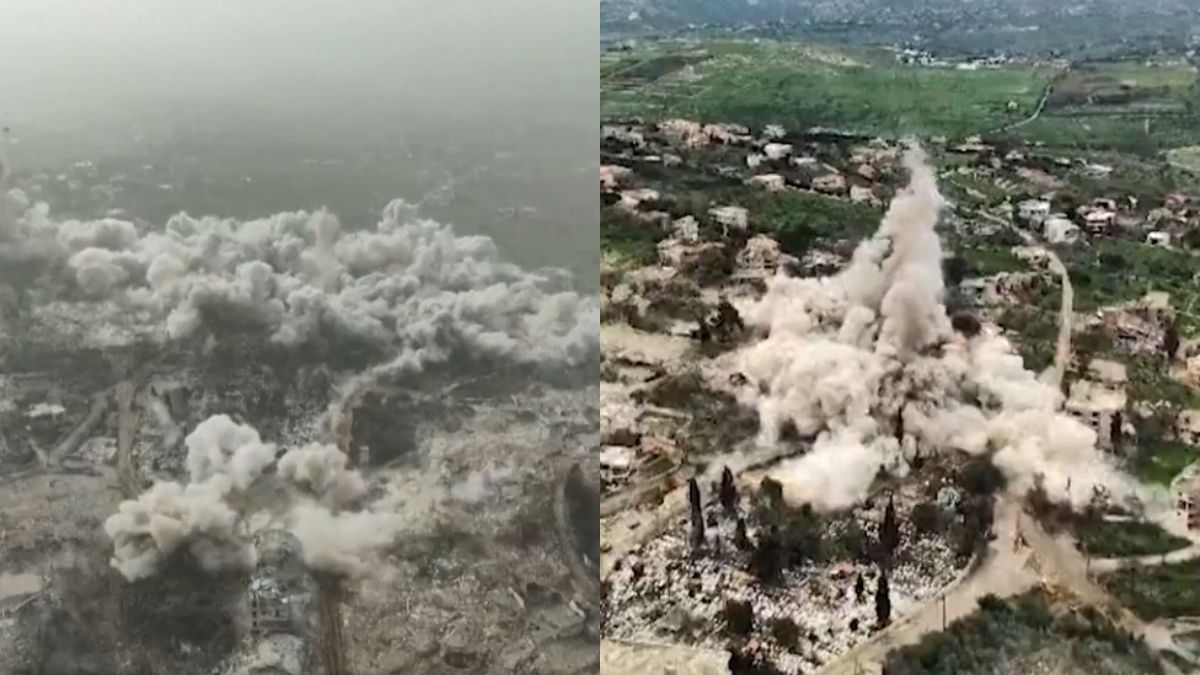
READ | Israel Wiped Out Entire Lebanese Villages By Rigging Homes With Explosives
Similar phrasing appeared in trade-deadline coverage where the US administration pressed countries for their "best offers".
On March 26, 2026, during Senate negotiations to avert a Department of Homeland Security shutdown that would have affected TSA agents and airports, Senate Majority Leader John Thune described the Republican and White House position as a "last and final" offer to Democrats.
Trump publicly stated he would sign an emergency order to pay TSA workers amid the impasse. He did not personally use "final offer" or "best offer" in available quotes. The White House floated emergency measures while talks centred on the framework described as "last and final".
In 2017, during negotiations over the repeal and replacement of Obamacare, the White House presented the House Freedom Caucus with a "final offer" on amendments to the American Health Care Act. Trump met with the group, but the phrase itself came from White House officials or intermediaries. It was framed as an "accept or reject" proposition. Trump did not directly use the wording in reports from the time.
In Gaza ceasefire proposals throughout 2025, Trump termed certain offers -- including a 60-day framework and a separate 100-word, five-point ultimatum to Hamas -- as his "last warning" or an effective final push. He used language such as "This is my last warning, there will not be another one!"
He posted on Truth Social that Israel had agreed to conditions and that mediators were delivering the "final proposal". Media and analysts described elements of the proposals as the "best offer" Hamas could expect from the US and Israel. Trump did not use the precise terms "final offer" or "best offer" himself.
Trump's use of "final offer" has a track record of not being truly final. In the Ukraine case, the document labelled his "final offer" in April 2025 was explicitly walked back by Trump himself in November 2025, when he told reporters it was "not my final offer."
Speaking to reporters outside the White House, Trump was asked whether the US 28-point peace proposal to end the Russia-Ukraine war was his final offer. He replied: "No, not my final offer." He added that peace should have happened "a long time ago" and "one way or another, we have to get it ended".

